


Resident Evil finally found its soul by leaving the main characters behind

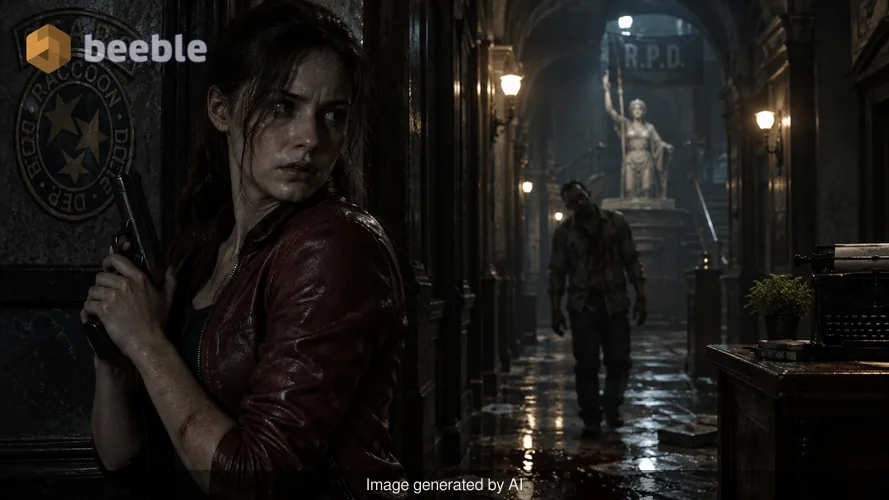
There is a specific, cold dread that settles in the stomach of a gamer when a new adaptation announcement hits the social media feed. It is a mix of cynical exhaustion and a faint, traitorous hope that this time, just maybe, the writers actually played the game. For years, Resident Evil fans lived in this cycle. We watched the Milla Jovovich era turn into a high-octane fashion show. We saw the 2021 reboot try to cram two games into ninety minutes of dark, muddy hallways. The 2022 Netflix series felt like a teen drama with a T-virus coat of paint. The frustration was not about accuracy. It was about the hollow feeling of seeing a familiar world stripped of its atmosphere for the sake of brand recognition.
The industry treats intellectual property like an architectural foundation. If the foundation is a recognizable name, the studio assumes the structure will stand. But audiences recognize when the materials are cheap. When a studio attempts to replicate a thirty-year-old franchise, they often prioritize the iconography over the experience. They include the red herbs, the typewriter, and the STARS badges, but they forget the feeling of being trapped in a hallway with three bullets and one green herb. Director Zach Cregger understands that survival horror is a mechanical conversation between the player and the environment. His Resident Evil reboot succeeds because it stops trying to be a Wikipedia entry and starts being a movie.
the specific misery of the intellectual property treadmill
To understand why Cregger’s film is a relief, we must look at the wreckage of previous attempts. The Paul W.S. Anderson films were commercial juggernauts, but they were derivative of the action genre rather than the horror genre. By the time Resident Evil: The Final Chapter arrived, the series was a bloated mess of clone plotlines and superhuman acrobatics. The 2021 reboot, Welcome to Raccoon City, was a response to fan complaints. It promised a return to the roots of the series. However, it suffered from a fragmented narrative that tried to please everyone and satisfied no one. It grossed $42 million against a $25 million budget, which is a failure in the eyes of a major studio.
Behind the scenes, the Resident Evil brand was in crisis. The 2022 Netflix series lasted only one season before cancellation. The audience was tired. We were scrolling through streaming libraries for forty minutes on a Friday night, passing over these titles because they felt like homework rather than entertainment. The industry call to "pivot to video games" after the success of The Last of Us and Fallout was loud, but Resident Evil remained the difficult child of the family. It is a franchise that balances camp and terror, a difficult mixture to get right. Cregger’s approach was the disruptive force the series required.
zach cregger and the foot journey philosophy
Zach Cregger is a name that commands respect in modern horror. His 2022 film Barbarian was a masterclass in subverting expectations. His 2025 follow-up, Weapons, proved he could handle a larger scale without losing his grip on tension. Cregger is a fan of the games, specifically Resident Evil 2, but he is not a slave to them. He told the audience at CinemaCon that his vision involves no narrative acrobatics or disorienting time jumps. He prefers a protagonist on a foot journey through a world hell-bent on destroying them.
This choice is a direct critique of the "cinematic universe" model. Most modern blockbusters feel like sprawling cities where the audience is intimidated until they find a map. They are so busy setting up the next three films that they forget to make the current one interesting. Cregger rejects this. His film is a streamlined, linear experience. It is a horror movie first and an adaptation second. By stripping away the baggage of Chris Redfield, Jill Valentine, and Leon Kennedy, Cregger allows the audience to feel the stakes. When a legendary character is the lead, we know they have plot armor. When the lead is a medical courier named Bryan, we are genuinely afraid he will die.
why an everyman beats a superhero every time
Bryan, played with a frantic, relatable energy by Austin Abrams, is the heart of the film. He is a courier who just learned his girlfriend, Michelle, is pregnant. He is not a trained soldier. He does not know how to do a roundhouse kick. He is just a man who made the mistake of taking a final delivery run into Raccoon City during a heavy snowstorm. This is the everyman trope done right. It grounds the abstract horror of a zombie outbreak in an everyday scenario.
Historically, the best Resident Evil moments involve vulnerability. The original 1996 game was frightening because the characters were clunky and the resources were scarce. Over time, the games and the movies turned the characters into superheroes. Cregger reverses this trend. When Bryan hits a woman on the road and realizes she is an infected monster, he reacts with panic, not tactical precision. Even the local sheriff, played by Johnno Wilson, feels like a real person rather than a plot device. Their journey to a local farmhouse captures the claustrophobia that the 2021 film missed entirely.
the evil dead ii blueprint for survival horror
Cregger describes his vision as closer to Evil Dead II than a standard action movie. This comparison is the key to the film's success. Evil Dead II is famous for its seamless blend of slapstick humor and gruesome horror. Resident Evil has always had a streak of absurdity. The games feature giant spiders, shark tanks, and villains who give long monologues about global saturation. If you play it too straight, it becomes boring. If you play it too silly, it loses its edge.
Cregger finds the balance. There are moments of over-the-top gore that make the audience wince, but they are often followed by a beat of dark, observational humor. The film uses practical effects whenever possible, which gives the infected a tactile, gross presence that CGI often lacks. The T-virus outbreak is not a digital wave of gray monsters. It is a messy, visceral breakdown of biology. Through this lens, the horror feels resonant because it is physical. We see the snow, we feel the cold, and we smell the decay of the farmhouse.
the farmhouse as a masterclass in spatial tension
In everyday terms, the second act of the film is a home renovation nightmare. Bryan and the sheriff take refuge in a local farmhouse that becomes a pressure cooker. This segment is where Cregger’s understanding of game mechanics shines. Even though it is a movie, the farmhouse feels like a level in a survival horror game. We understand the layout of the rooms. We know where the back door is and why the windows are a liability.
Narratively speaking, this is where the film builds its most profound tension. The geography of the house is clear, so when a zombie breaks in, the audience knows exactly how trapped Bryan is. There is no need for exposition. The architecture of the scene does the work. This is a lesson many directors forget. A great action scene is a conversation between the character and the room. Cregger keeps the camera close to Abrams, making the viewer feel every frantic search for a weapon or an exit.
lessons for the next wave of game adaptations
Zooming out to the industry level, Cregger’s Resident Evil is a sign that the era of the "Easter egg movie" is ending. For a decade, studios thought that referencing a game was the same as adapting it. They thought that if they put a character in a blue shirt, the fans would be happy. But audiences are smarter than the algorithms suggest. We want stories that stand on their own. We want films that respect the spirit of the source material without being derivative of its surface-level details.
This reboot is a successful home renovation of a crumbling franchise. It kept the foundation—the T-virus, the Raccoon City setting, the survival horror tone—but it replaced the rotten pillars of convoluted lore and superhuman protagonists. It is an immersive experience that does not require a wiki search to understand. Paradoxically, by making a Resident Evil movie that is for everyone, Cregger made the best Resident Evil movie for the fans. It is a reminder that in an age of endless digital buffets and fragmented streaming libraries, a simple, well-told story is still the most valuable thing in the room.
We should look at our own consumption habits and ask why we settled for mediocrity for so long. We accepted bloated franchises because they were familiar. Cregger’s success suggests we should demand more from the IP that we love. A game adaptation should be a new way to experience a world, not just a reminder that the world exists. As we move into the next era of media, the best stories will be the ones that dare to leave the icons behind to find the human heart underneath the gore.
Sources:
Box Office Mojo: Welcome to Raccoon City (2021) earnings report.
CinemaCon 2026: Director Zach Cregger interview transcript.
Variety: Report on the cancellation of the 2022 Resident Evil Netflix series.
Hollywood Reporter: Production notes for Weapons (2025).



See you on the other side.
Our end-to-end encrypted email and cloud storage solution provides the most powerful means of secure data exchange, ensuring the safety and privacy of your data.
/ Create a free account
