


Spain’s New SMS Registry: Why Your Phone is Finally Learning to Filter the Truth

Ever wonder why a text message from your bank arrives at three in the morning, urging you to click a link, even though you have their official app installed and your account is perfectly fine? We have lived through a decade where our digital inboxes became a psychological minefield. For the average user, the simple act of receiving an SMS shifted from a helpful notification to a moment of wary hesitation. This erosion of trust is not just a personal annoyance; it is a systemic failure of the invisible backbone that supports our digital social contract.
On March 27, 2026, the Spanish National Commission on Markets and Competition (CNMC) took a decisive step toward repairing this broken trust. By creating a centralized registry of messaging aliases, the regulator is effectively putting an end to the anonymous 'Wild West' of alphanumeric sender IDs. This move is more than just a technical update; it is a foundational shift in how we verify identity in an increasingly volatile digital landscape.
Behind the Jargon: What is a Messaging Alias?
To understand why this matters, we need to look under the hood of how text messaging actually works. When you receive a text from a friend, you see their phone number. However, when you receive a message from a delivery service or a government agency, you often see a name—like INFO_CORREOS or BANK_SECURE. This is an alphanumeric alias, or a Sender ID.
Historically, these aliases have been remarkably easy to spoof. Because the global messaging system was built for speed rather than security, a malicious actor could simply tell a messaging gateway that their 'name' was your bank, and the system would deliver it to your phone without asking for an ID. It was the digital equivalent of someone scribbling a fake return address on an envelope and the post office delivering it without question. The CNMC registry changes this by requiring a verified 'ID card' for every name that wants to land in your inbox.
The Mechanics of Verification
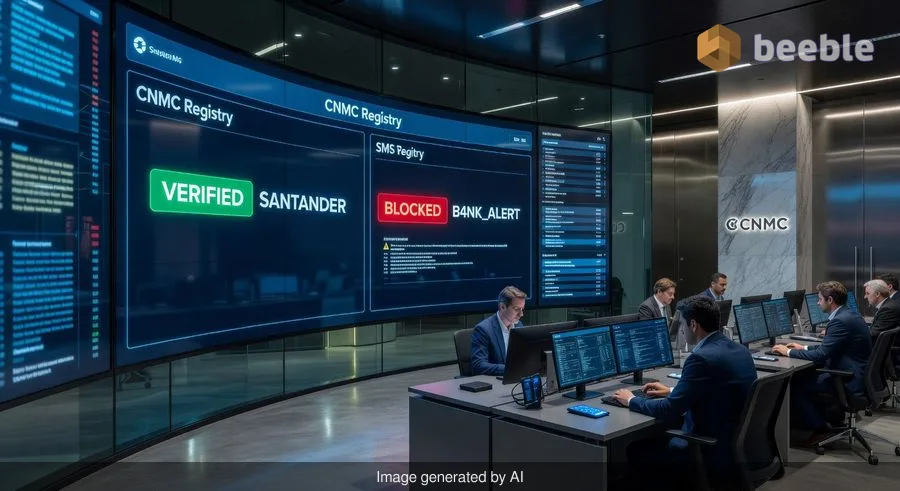
Looking at the big picture, the registry acts as a robust gatekeeper. Under the new rules, organizations that rely on messaging must register their specific aliases with the CNMC. This creates a transparent digital ledger where telecommunications operators can cross-reference a sender’s name against a verified database before the message ever reaches your device.
Practically speaking, if a scammer tries to send a mass blast using the name of a Spanish utility company, the operator will check the registry, see that the sender is not the authorized owner of that alias, and block the communication. It is a streamlined approach to a complex problem, moving the burden of proof from the vulnerable consumer to the infrastructure itself. This shift is essential because, as we have seen with the rise of social engineering, expecting every individual to be a cybersecurity expert is a failing strategy.
On the Market Side: A New Era of Accountability
For businesses, this news is both a relief and a new compliance hurdle. On one hand, legitimate companies have seen their brand reputation tarnished by 'smishing' campaigns that impersonate them. A bank’s marketing efforts are far less effective when customers are conditioned to delete every text they receive. By cleaning up the ecosystem, the CNMC is making the SMS channel more resilient and valuable for honest commerce.
Conversely, this means that the days of decentralized, unregulated messaging are over. Companies will need to audit their current use of sender IDs and ensure they are properly documented. This is a cyclical trend in tech: an innovation begins in a chaotic, open state, and as it becomes foundational to society, it eventually requires the stabilizing hand of regulation to remain viable. For the enterprise, this is simply the cost of doing business in a mature digital economy.
From a Consumer Standpoint: Reclaiming the Inbox
In everyday life, this registry represents a tangible win for digital privacy. We often talk about the attention economy—the way tech companies design products to capture our focus—but we rarely talk about the 'anxiety economy' created by scammers. Every fraudulent text is a micro-stressor, a tiny withdrawal from our mental well-being.
What this means is that, over time, the 'noise' in our pockets should decrease. While no system is a silver bullet—scammers are notoriously agile and will likely pivot to other platforms like encrypted messaging apps—securing the SMS gateway is a massive hurdle for them to clear. It restores the alphanumeric alias to its original purpose: a user-friendly way for trusted institutions to reach us quickly.
What This Means for You
Ultimately, the success of the CNMC’s registry depends on how quickly operators integrate these checks into their networks. For the resident in Spain, the impact will be gradual but significant. Here is how you should view this change:
- Expect a Transition Period: As the registry is populated, you may still see some fraudulent messages, but the volume of 'high-quality' spoofs (those using exact brand names) should drop.
- Stay Vigilant: Even with a registry, a scammer might use a 'look-alike' alias (e.g., B4NK instead of BANK). The registry makes it harder to lie, but it doesn't stop people from being creative with the truth.
- Verify the Source: If you are a business owner, start reviewing your communication protocols now. Ensure your messaging providers are prepared to comply with the CNMC’s upcoming technical guidelines to avoid having your legitimate alerts blocked.
As we move forward, we should appreciate these invisible industrial mechanics. We rarely think about the regulatory frameworks that keep our water clean or our electricity stable, and soon, we will likely take for granted that the name on our phone screen is who they say they are. In a world of deepfakes and digital shadows, a little bit of verified transparency goes a long way.
Sources
- CNMC (Comisión Nacional de los Mercados y la Competencia) Official Press Release, March 2026.
- European Union Digital Services Act (DSA) guidelines on consumer protection.
- Industry reports on telecommunications fraud and SMS 'smishing' trends in Southern Europe.



See you on the other side.
Our end-to-end encrypted email and cloud storage solution provides the most powerful means of secure data exchange, ensuring the safety and privacy of your data.
/ Create a free account
