


The 2035 Power Struggle: Why Your AI Future is Stuck in a Turbine Waitlist

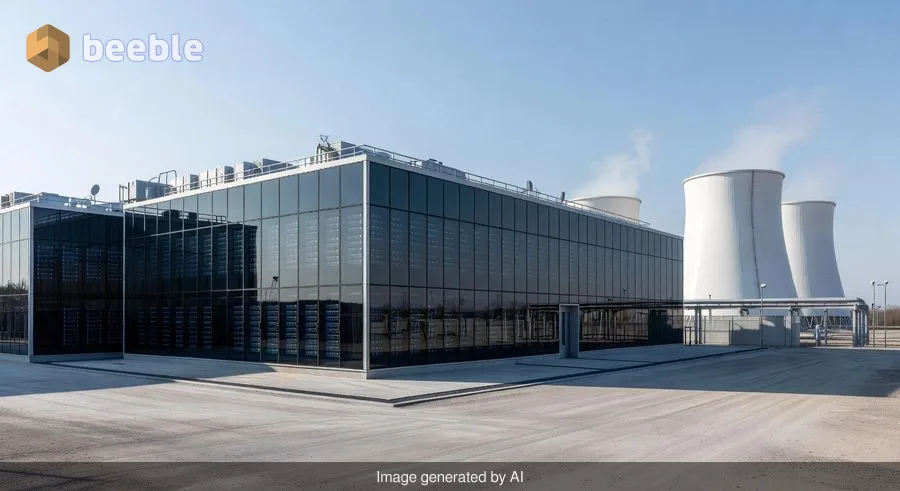
Despite the endless hype around digital transformation and virtual worlds, the reality of the 2030s is being shaped by something far more visceral: the lead time on a heavy-duty gas turbine. Today, if a utility company wants to build a new natural gas plant to meet the surging demand of AI data centers, they are looking at a waitlist that stretches into the early 2030s. This isn't just a corporate logistical headache; it is a systemic bottleneck that threatens to stall the very technological revolution we were promised.
Looking at the big picture, we are witnessing a collision between the ephemeral world of software and the rigid, slow-moving world of heavy industry. For decades, heavy industry has served as the invisible backbone of modern life, uncomplainingly providing the baseload power required to keep our lights on and our devices charged. But as AI evolves from a novelty into a tireless intern—fast, capable, but requiring an immense amount of energy to function—that backbone is beginning to show cracks. The race to power the grid in 2035 is no longer a theoretical debate about green energy; it is a desperate scramble for industrial capacity.
The Fragility of the 'Easy' Answer
For years, natural gas was the pragmatic choice for 24/7 power. It was the bridge fuel—inexpensive, relatively clean compared to coal, and, most importantly, tested. However, recent geopolitical shifts have revealed how volatile this reliance can be. The 2024 Iranian drone strikes on Qatari infrastructure didn't just disrupt a local supply chain; they sent a shockwave through the global energy market, proving that even the most robust exporters are vulnerable to modern asymmetric warfare.
In simple terms, the natural gas industry is currently a global relay race where one dropped baton—be it a drone strike in the Middle East or a manufacturing delay in a turbine factory—delays the entire process. In the U.S., where 40% of natural gas is consumed by the power sector, this vulnerability is a direct threat to price stability. For the average user, this translates to a more volatile monthly utility bill, as the cost of keeping the 'digital lights' on becomes tethered to global conflict zones.
Under the Hood: The Rise of the SMR
As the waitlist for gas turbines grows, tech giants are losing patience. They are increasingly looking toward Small Modular Reactors (SMRs) as a disruptive alternative. Unlike the massive, bespoke nuclear plants of the 20th century, which often took decades and billions of dollars to build, SMRs are designed to be scalable and decentralized. Think of them as the Lego sets of the energy world: factory-built modules that can be shipped to a site and plugged together.
On the market side, the logic is sound. SMR startups like NuScale and TerraPower are aiming to have their first commercial units online by the early 2030s—the exact same timeframe a company would wait just to get the parts for a new gas plant. This creates a fascinating industrial crossroads. If a tech company has to wait seven years for power regardless of the source, the perceived risk of 'new' nuclear technology begins to look a lot more like a calculated investment in energy independence.
Fusion: The Long Shot Getting Shorter
Conversely, we have fusion—the holy grail of energy. Historically, fusion has been the 'technology of the future' that stays thirty years away. But the landscape is shifting. Fueled by unprecedented private investment from the same companies driving the AI boom, fusion startups are moving with a speed that defies traditional industrial cycles.
Practically speaking, fusion aims to replicate the process that powers the sun, providing virtually limitless energy with no long-lived radioactive waste. While still in the experimental phase, companies like Helion Energy and Commonwealth Fusion Systems are targeting commercial demonstrations before 2030. While a healthy dose of skepticism is warranted when reading corporate PR about 'limitless energy,' the sheer volume of capital flowing into this sector suggests that the timeline is no longer a punchline. For the consumer, a breakthrough here would be foundational, potentially decoupling economic growth from carbon emissions for the first time in human history.
Comparing the Contenders for 2035
To understand how these technologies stack up, we have to look at their practical readiness and the hurdles they face over the next decade.
| Energy Source | Availability | Reliability | Main Hurdle |
|---|---|---|---|
| Natural Gas | Immediate (Fuel) / 2030s (Turbines) | High (Baseload) | Supply chain vulnerability & Carbon footprint |
| SMR Nuclear | 2030–2032 (Estimated) | High (Baseload) | Regulatory approval & Public perception |
| Fusion | 2032–2035 (Optimistic) | Potentially Infinite | Technical feasibility at scale |
| Renewables + Battery | Available Now | Variable (Intermittent) | Battery mineral supply & Land use |
What This Means for You
Ultimately, the energy race of the next decade will dictate more than just the climate; it will dictate the cost of your digital life. Behind the jargon of 'baseload power' and 'grid stability' lies the reality of your wallet. If the grid fails to adapt to the AI-driven demand surge, we could see a tiered energy system where industrial users (like data centers) outbid residential consumers for reliable power.
From a consumer standpoint, the shift toward SMRs and fusion represents a move toward a more resilient, decentralized grid. This could eventually lead to more transparent pricing and a reduction in the systemic shocks caused by global oil and gas fluctuations. However, the transition period—the 'gap' between now and 2035—will likely be characterized by higher costs as we pay for the construction of this new infrastructure.
As we look toward 2035, it is worth remembering that the digital tools we use every day—the smartphones, the AI assistants, the cloud storage—are only as robust as the heavy industry that powers them. We are entering an era where the most important 'tech' update won't be a new software version, but a new way to boil water and spin a turbine.
In the coming years, pay less attention to the flashy AI demos and more to the construction permits for power plants in your region. The real revolution isn't happening on your screen; it’s happening in the concrete and steel of the power grid, the invisible backbone that holds everything else up.
Sources
- International Energy Agency (IEA) World Energy Outlook 2025
- U.S. Energy Information Administration (EIA) Annual Energy Outlook
- Nuclear Energy Institute (NEI) SMR Progress Report 2026
- Global Gas Turbine Market Analysis (Industry Research Group)
- Fusion Industry Association Annual Report 2025



See you on the other side.
Our end-to-end encrypted email and cloud storage solution provides the most powerful means of secure data exchange, ensuring the safety and privacy of your data.
/ Create a free account
