


The $500 billion bet on AI factories will change how the world builds infrastructure

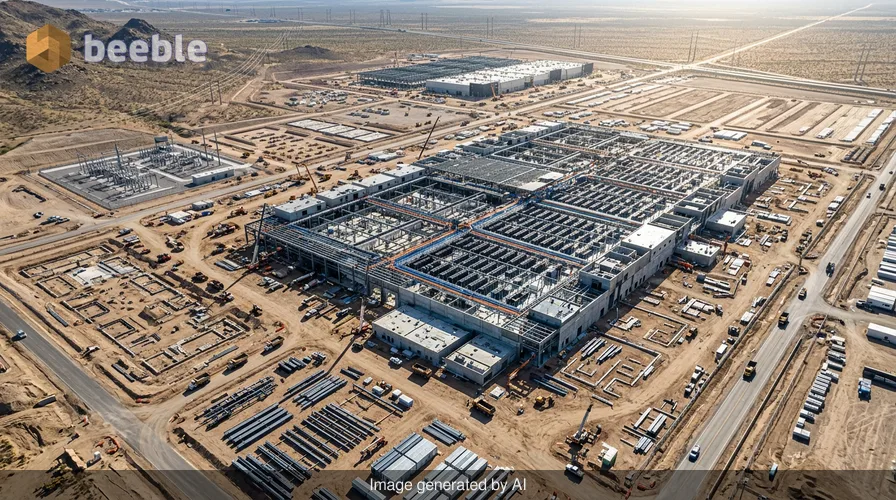
Every time you interact with an AI model to draft an email or generate an image, a massive physical supply chain springs into action. This process begins with raw materials like silicon and copper, moves through high-precision manufacturing plants in Taiwan, and eventually lands in massive, power-hungry buildings known as data centers. These facilities are the physical homes of the digital world. However, building them has become so expensive that even the largest technology companies are looking for new ways to pay the bill.
On Monday, Nvidia announced a partnership with six of the world's most powerful financial institutions to address this problem. The group includes names like BlackRock, Goldman Sachs, and KKR. Together, they aim to raise $500 billion in private capital. This money will fund the construction of AI infrastructure, which Nvidia CEO Jensen Huang describes as the AI factories of the future. The sheer scale of this number is hard to grasp. To put it in perspective, $500 billion is roughly equivalent to the annual economic output of a country like Norway or Thailand. This is a massive shift in how we build the backbone of our digital lives.
The shift from silicon to financial architecture
Nvidia is widely known for designing the high-end chips that make modern AI possible. For years, their business was simple: they designed the hardware, and customers like Microsoft or Google bought it. But as AI models grow more complex, the cost of the hardware and the buildings required to house it has skyrocketed. A single cutting-edge AI chip can cost as much as a luxury car, and a large data center requires thousands of them.
By partnering with Wall Street, Nvidia is moving beyond hardware design. They are now acting as a financial architect. The company signed memorandums of understanding with Apollo, BlackRock, Blackstone, Brookfield, Goldman Sachs, and KKR to launch these financing platforms. The goal is to create dedicated pools of money that offer attractive rates to customers who want to build AI infrastructure but lack the immediate cash to do so.
Nvidia is not just a passive partner in this deal. Jensen Huang noted that the company has the option to backstop up to $125 billion of the potential deals. This means Nvidia is willing to use its own balance sheet to guarantee 25% of the financing. This move provides a safety net for the big banks and asset managers, making them more comfortable lending massive sums for projects that are still relatively new and volatile.
Why private equity wants a piece of the server rack
For large asset managers like BlackRock and KKR, this partnership is about more than just technology. These firms are always looking for long-duration, stable investment opportunities. In the past, this usually meant investing in toll roads, bridges, or power plants. Today, data centers are the new essential infrastructure.
These financing platforms will create usage-linked investment opportunities. Essentially, the investors put up the money to build the data center and buy the Nvidia chips. In return, they receive a steady stream of income as companies and governments pay to use that computing power. This setup makes the high-tech world of AI look a lot like the traditional world of real estate or utility companies.
The demand for this capacity is tangible. Big Tech companies have already indicated that their spending on AI infrastructure is increasing. Combined outlays are expected to exceed $730 billion this year alone. However, many smaller companies, startups, and even national governments want to build their own AI capabilities. These entities often struggle to secure the billions of dollars needed to compete with giants like Amazon or Meta. This new $500 billion fund provides a bridge for those players to access the same high-end technology.
Building the factories for every industry
Jensen Huang often uses the term AI factory to describe these new data centers. In his view, the previous era of computing was about retrieving stored information. You clicked a link, and a server sent you a file. The AI era is different. It is about generation. These new facilities do not just store data; they produce intelligence.
This distinction is important for the average user. While you might see AI as a chatbot on your phone, industry leaders see it as a tool for streamlining complex processes. This includes everything from discovering new drugs and predicting weather patterns to managing global shipping routes. To do this at scale, every country and every major industry will eventually need its own dedicated computing power.
The financing platform is designed to make this technology more decentralized. By broadening access to Nvidia-based infrastructure, the initiative allows smaller developers and regional governments to build localized AI systems. This could prevent a future where only a handful of Silicon Valley companies control the most powerful digital tools. It also ensures that the physical infrastructure—the wires, the cooling systems, and the chips—is spread across more locations.
Behind the jargon of third-party capital
When we hear about third-party capital and backstopping deals, it can feel disconnected from our daily lives. Practically speaking, this is about who owns the tools we use every day. Historically, tech companies owned their own servers. As the cloud grew, we started renting space from a few giant providers. Now, we are entering a phase where the ownership is shared with the same firms that manage your pension fund or 401(k).
This shift has several implications for the tech market. First, it suggests that the high cost of AI chips is here to stay. Nvidia is not lowering the price of its hardware; it is creating a way for more people to borrow money to buy it. Second, it indicates that the physical footprint of the internet is about to grow significantly. We will see more data centers built in more places, which will have a real impact on local power grids and water supplies used for cooling.
The lack of a strict timetable for deploying the $500 billion shows that this is a long-term play. Nvidia and its partners are preparing for a decade of construction. They are betting that the demand for digital crude oil—raw computing power—will only increase as AI becomes a standard part of how we work and live.
What this means for your digital future
For the average consumer, this massive injection of Wall Street cash into AI hardware might seem like a distant corporate maneuver. But the effects will eventually show up in your subscriptions and your workplace. As the cost of building these AI factories remains high, the companies providing AI services will need to find ways to pay back their investors.
You can expect the following shifts in the coming years:
| Area of Impact | Practical Change |
|---|---|
| Subscription Fees | Free AI tools may become more limited as companies prioritize paid tiers to recover infrastructure costs. |
| Speed and Access | Increased infrastructure means fewer outages and faster response times for complex AI tasks during peak hours. |
| Localized AI | More governments may launch national AI initiatives, leading to tools that are better tailored to specific languages and local laws. |
| Device Longevity | As more processing happens in these massive data centers, your local device might need less power, potentially extending the life of your phone or laptop. |
Looking at the big picture, the partnership between Nvidia and Wall Street confirms that AI is no longer just a software trend. It is now a massive heavy-industry project. The transition from digital novelty to foundational infrastructure requires an unprecedented amount of money and materials.
Ultimately, you should shift your perspective on the apps and services you use. Each interaction is supported by a global web of private equity, high-end silicon, and industrial-scale energy. While the software feels weightless, the $500 billion price tag reminds us that the physical reality of the AI era is heavy, expensive, and deeply interconnected with the global financial system. Observe how your favorite tools change over the next year. You will likely see the results of this investment in the form of more robust features, but also in more transparent attempts by companies to monetize the immense power they are now building.
Sources: Nvidia Official Newsroom, Reuters Markets Report, Financial Times Analysis.



See you on the other side.
Our end-to-end encrypted email and cloud storage solution provides the most powerful means of secure data exchange, ensuring the safety and privacy of your data.
/ Create a free account
