


The Academy’s Human-Only Mandate and the Reassertion of the Living Actor

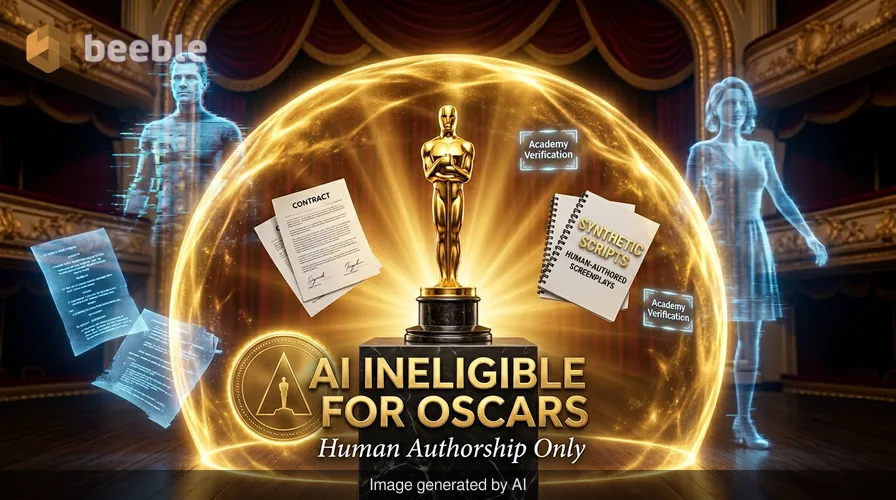
There is a specific, hollow ache that settles in the chest when you realize the person on screen isn’t actually there. It’s a subtle form of betrayal, a realization that the tear rolling down a cheek was rendered by a GPU rather than a grieving heart. You might feel it while scrolling through a streaming library on a Tuesday night, stumbling upon a trailer that looks too smooth, too symmetrical, and ultimately too empty. Behind this visceral reaction lies a complex set of industrial safeguards designed to preserve the scarcity of human expression. On Friday, the Academy of Motion Picture Arts and Sciences codified this sentiment into a rigorous legal framework, effectively cordoning off the Kodak Theatre from the encroaching reach of generative algorithms.
This decision marks a pivotal moment in the history of cinema. By mandating that Oscar-eligible performances must be credited in legal billing and demonstrably performed by humans with their consent, the Academy is not just updating a rulebook; it is defining the biological boundaries of art. The new regulations also dictate that screenplays must be human-authored, a move that attempts to halt the momentum of a technology that many feared would render the professional writer a relic of the pre-digital past. Through this audience lens, the move feels like a desperate, necessary grasp for authenticity in a landscape that is becoming increasingly fragmented.
The Legal Walls Around the Golden Statuette
Behind the scenes, the Academy’s maneuver is a direct response to a year of mounting tension. We are currently navigating a landscape where an independent film featuring an AI-generated version of Val Kilmer is no longer a science fiction concept, but a production reality. Meanwhile, the digital presence of Tilly Norwood, a synthesized actress who has garnered more headlines than many of her flesh-and-blood peers, has forced the industry to reckon with the possibility of a starless Hollywood. The Academy’s new rules act as a gatekeeper, ensuring that the highest honors in the land remain tethered to the human experience.
The organization has even reserved the right to request deeper information regarding a film’s usage of AI and the specifics of its human authorship. This is a significant shift toward transparency. Historically, the process of making a movie has been somewhat opaque to the general public, hidden behind the magic of post-production and marketing gloss. Now, the Academy is demanding a receipt for humanity. From a creator's standpoint, this creates a fascinating paradox: while technology allows us to build more immersive worlds than ever before, the most prestigious rewards now require a rejection of that very technology’s most disruptive capabilities.
The Tilly Norwood Paradox and the Uncanny Valley
To understand why these rules matter to the average viewer, we have to look at the current state of the digital double. There is a clunky quality to early AI that has rapidly evolved into something far more seamless. Tilly Norwood doesn't look like a video game character from 2010; she looks like someone you might pass on the street or follow on Instagram. This level of fidelity is precisely what makes the Academy’s intervention so resonant. If we cannot tell the difference between a human and a prompt, the value of the performance begins to evaporate.
Consider world-building as an architectural foundation. In a traditional film, every brick is laid by a designer, every light is placed by a cinematographer, and every line is delivered by an actor drawing from their own lived trauma or joy. When you replace one of those pillars with a generative model, the entire structure risks a loss of immersion. You might not be able to point to the exact moment the illusion breaks, but you feel the instability. The Academy is essentially betting that the audience still wants the structural integrity that only a human life can provide, even if the digital alternative is cheaper and more streamlined.
Beyond the 2023 Strike: A Cultural Autopsy
These rule changes are the downstream effects of the seismic labor shifts we witnessed in 2023. Back then, the writers’ and actors’ strikes weren't just about fair pay; they were an existential fight against the commodification of the human likeness. Zooming out to the industry level, we can see that the Academy is finally aligning itself with the protections the unions fought for. The fear was—and remains—that AI could be used to create a derivative cycle of content, where scripts are just remixes of existing IP and actors are simply skins stretched over digital skeletons.
Paradoxically, the move toward AI in other sectors of media has only made the Academy’s stance more stark. We’ve seen novels pulled from shelves because they were revealed to be the work of a machine, and writers’ groups across the globe are setting similar boundaries. The entertainment industry is effectively creating a two-tiered system. On one hand, we have the ubiquitous, high-volume content produced for the digital buffet of streaming services—much of which may eventually be AI-assisted. On the other, we have "Prestige Cinema," a category that is now legally required to be made by people. This creates a fascinating new form of elitism, where the most human-centric stories become the ultimate luxury goods.
The Content Walled Garden and the Preservation of Flaws
For many of us, media consumption has become an exercise in navigating an endless, interconnected web of franchises. We often complain about franchise fatigue, that feeling like we are listening to an overplayed pop song on a loop. AI has the potential to accelerate this fatigue to an unbearable degree. Because generative models are trained on what already exists, they are inherently nostalgic and derivative. They cannot, by definition, offer the profound, unexpected pivot that a human writer might find in a moment of genuine inspiration.
| Element of Film | Human-Centric Impact | AI-Generated Risk |
|---|---|---|
| Performance | Rooted in empathy and unpredictable emotion. | Seamless but often lacks a spiritual core. |
| Scripting | Reflects lived experience and social context. | Primarily derivative; a remix of existing data. |
| Visuals | Intentionality in every frame and shadow. | Highly streamlined but can feel sterile or uncanny. |
| Cultural Value | Acts as a mirror to the human condition. | Functions as high-fidelity background noise. |
In everyday terms, we value the flaws. We value the way an actor’s voice cracks or the way a script takes a weird, illogical turn that somehow feels right. These are the elements that make a movie stick with you long after the credits roll. A generative model is designed to find the most probable outcome, the most streamlined path from point A to point B. But art is rarely about the most probable outcome; it is about the most resonant one.
Reclaiming the Human Scale
Consequently, the Academy’s decision is an invitation for us to re-examine our own relationship with the screens in our lives. As we sit in the dark of a theater or on our couches at home, we are part of a conversation between player and developer, or creator and audience. That conversation requires two conscious entities. If one side of the dialogue is an algorithm, the interaction becomes a monologue—a mirror reflecting our own data back at us rather than a window into someone else's soul.
Ultimately, these new Oscar rules are a reminder that the most multifaceted technology at our disposal is still the human mind. While the industry may continue to flirt with the efficiency of the synthetic, the highest echelons of the craft are planting a flag in the ground for authorship and consent. It’s a move that protects the workers, yes, but it also protects the audience. It ensures that when we give our time and our emotions to a story, there is actually someone on the other side catching them.
As you look toward the next awards season, it might be worth asking why we care who wins that gold statue. Is it because they were the most efficient? Or is it because they managed to articulate something about being alive that we couldn't quite put into words ourselves? By making AI ineligible, the Academy has decided that the answer must always be the latter. It is a small, significant victory for the messy, unpredictable, and irreplaceable human spirit.
Sources:
- Academy of Motion Picture Arts and Sciences, Official Rulebook Update (May 2026).
- SAG-AFTRA Industry Report on Digital Likeness and AI Protections.
- Writers Guild of America (WGA) Annual Report on Authorial Integrity.
- Hollywood Reporter: "The Rise and Regulation of Digital Actors: From Kilmer to Norwood."
- Box Office Mojo: Comparative Data on Original vs. Franchise Performance Metrics.



See you on the other side.
Our end-to-end encrypted email and cloud storage solution provides the most powerful means of secure data exchange, ensuring the safety and privacy of your data.
/ Create a free account
