


The Agentic Gap: Inside OpenAI’s Sprint to Reclaim the Developer Desktop

By March 2026, the narrative of the AI industry has shifted. For years, OpenAI was the undisputed pace-setter, the entity that forced every other tech giant into a defensive crouch. But in the specialized, high-stakes arena of software engineering, a new reality has set in: OpenAI is playing catch-up. The catalyst for this role reversal was the release of Claude Code by Anthropic, a tool that moved the goalposts from “AI that suggests code” to “AI that writes, tests, and debugs entire repositories.”
The Shift from Chat to Agency
For much of 2024 and 2025, the industry was obsessed with “reasoning.” OpenAI’s o1-series models were a breakthrough in this regard, using chain-of-thought processing to solve complex logic puzzles. However, while OpenAI was perfecting the “brain,” Anthropic was building the “hands.”
Claude Code arrived not as a chat interface, but as a terminal-native agent. It didn't just provide a snippet of Python; it executed shell commands, navigated file systems, and performed iterative bug fixes without human intervention. This “agentic” workflow resonated with developers who were tired of the “copy-paste dance”—the tedious process of moving code from a browser window into an IDE.
OpenAI’s response, centered around the “Canvas” interface and the eventual rollout of the “Operator” system, has been a massive engineering undertaking. The challenge isn't just making the model smarter; it is making the model more reliable in a live environment where a single wrong terminal command can wipe a database.
Why the Leader Fell Behind
The irony of OpenAI’s current position is that they pioneered the very technologies that enabled their competitors. The GPT-4 series set the standard for code generation, but OpenAI’s focus on broad, multi-modal AGI (Artificial General Intelligence) may have left a flank open. While OpenAI worked on making GPT-5 a world-class polymath, Anthropic focused on the specific ergonomics of software development.
Developers are a fickle audience. They value low latency and high precision over conversational flair. Claude’s “Computer Use” capabilities allowed it to interact with the desktop in a way that felt more like a junior partner and less like a search engine. OpenAI’s internal struggle has been one of architecture: how to integrate the deep reasoning of the o-series models with the real-time responsiveness required for a CLI tool.
The Engineering Hurdle: State Management
The primary technical battleground in 2026 is state management. When an AI agent attempts to refactor a codebase, it must maintain a “mental map” of thousands of interconnected files. If the agent loses track of a dependency in one corner of the project, the entire build fails.
Anthropic’s Claude Code utilizes a massive context window paired with specialized “tool-use” tokens that keep the agent grounded. OpenAI is countering with a proprietary “Persistent Memory” layer for its coding agents. This allows the AI to remember previous architectural decisions across different sessions, theoretically preventing the “forgetfulness” that plagues many LLM-based tools.
Comparing the Contenders
As of today, the landscape for AI-native development has bifurcated. Here is how the two heavyweights stack up in the current market:
| Feature | Anthropic Claude Code | OpenAI Developer Agent (Operator) |
|---|---|---|
| Primary Interface | Terminal / CLI Native | IDE-Integrated / Canvas |
| Reasoning Engine | Claude 4.6 Sonnet / Opus | o3 based model |
| Autonomy Level | High (Self-correcting loops) | Moderate (Human-in-the-loop focus) |
| Latency | Optimized for speed | Variable (Reasoning time adds delay) |
| Best For | Legacy refactoring & testing | Green-field architecture & logic |
The Stakes of the Race
Why does this race matter? Because coding is the “North Star” for the broader AI economy. If an AI can reliably write software, it can theoretically improve its own algorithms, leading to a recursive loop of self-improvement. Furthermore, the company that wins the developer’s desktop wins the most valuable data in the world: the step-by-step logic of how complex systems are built.
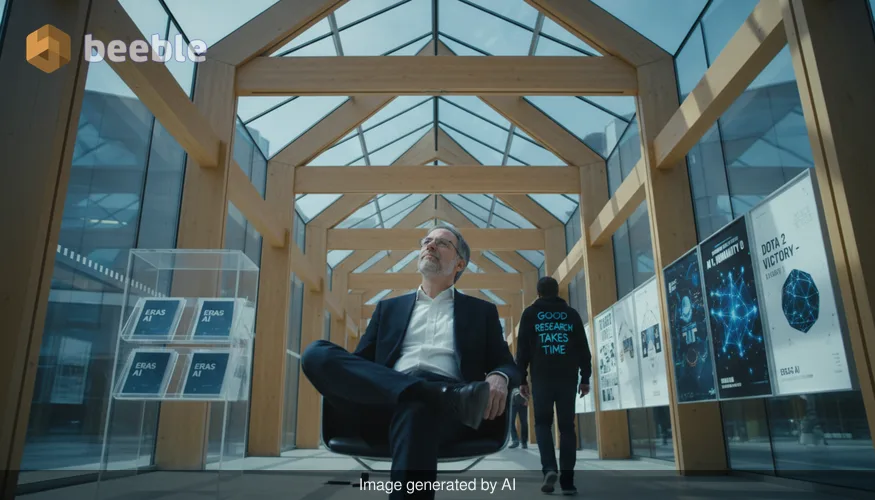
OpenAI’s Mission Bay headquarters may be a temple to the future, but the pressure in the room is palpable. The “Eras of AI” booklets in the lobby might need a new chapter—one where the pioneer had to learn to follow before it could lead again.
Practical Takeaways for Developers
If you are navigating this transition from chat-based coding to agentic workflows, consider the following steps:
- Audit your Environment: Agentic tools like Claude Code require a clean, version-controlled environment. Ensure your tests are robust, as the agent relies on test feedback to verify its work.
- Start Small: Do not let an agent refactor your entire backend on day one. Start with isolated tasks like writing unit tests or documentation for existing modules.
- Monitor Token Usage: Agentic loops can be expensive. A tool that “thinks” for five minutes and runs twenty tests can burn through a monthly quota in a single afternoon.
- Maintain Oversight: We are in the era of “Human-in-the-loop.” Always review the diffs (code changes) before committing. The goal is to be an architect, not just a spectator.
As OpenAI prepares its next major move—rumored to be a full integration of its reasoning models into a native desktop environment—the gap is closing. But for the first time in the generative AI era, the outcome is no longer a foregone conclusion.



See you on the other side.
Our end-to-end encrypted email and cloud storage solution provides the most powerful means of secure data exchange, ensuring the safety and privacy of your data.
/ Create a free account
