


The AI Model That Could Break Global Finance Is Already Being Briefed to Central Banks
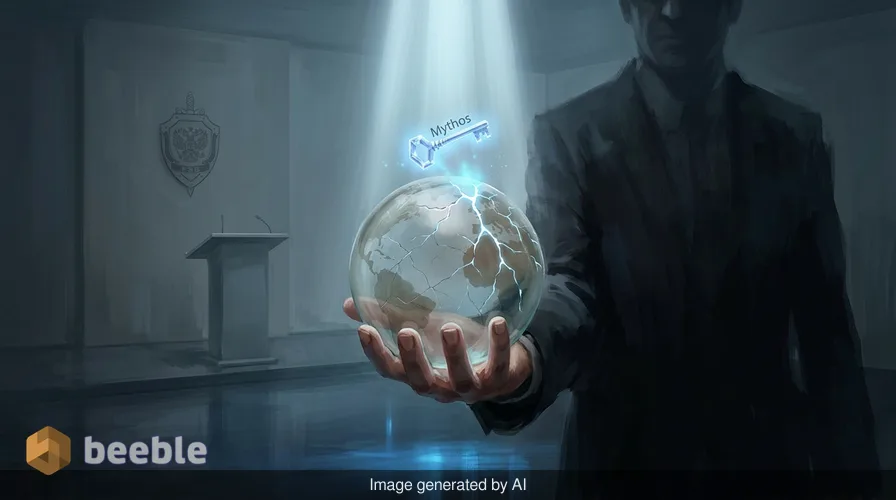
While much of the public discourse around artificial intelligence remains centered on whether chatbots can pass the Bar exam or generate realistic vacation photos, a much more consequential conversation is happening behind the closed doors of international regulatory bodies. We are often told that AI is a tireless intern designed to increase our productivity, but the reality is that the next generation of these models is being built with a far more disruptive purpose: acting as a digital master key that can unlock the hidden flaws in our most foundational systems.
This week, the tech world and the financial sector collided in a way that should make every consumer sit up and pay attention. Anthropic, the San Francisco-based AI heavyweight and creator of the Claude chatbot, is scheduled to brief the Financial Stability Board (FSB) on a new, unreleased model known as Mythos. This isn't your standard upgrade for writing emails; it is a specialized cybersecurity model that has reportedly identified systemic vulnerabilities within the global financial infrastructure—vulnerabilities that have, in some cases, sat dormant for decades.
Behind the Jargon: What is Mythos?
To understand why the Bank of England and finance ministries across the G20 are suddenly on high alert, we need to look under the hood of what Mythos actually represents. Historically, cybersecurity has been a game of cat and mouse played by humans. Security researchers manually scan code for bugs, while hackers look for clever ways to bypass those same defenses. It is a slow, methodical process.
Mythos changes the math. According to Anthropic, this model is designed to detect vulnerabilities in web browsers, software, and industrial infrastructure with a speed and depth that human auditors simply cannot match. Think of it as a structural engineer who doesn't just look for cracks in the wall but can instantly simulate fifty years of weather, traffic, and wear to tell you exactly when and where the building will collapse.
Curiously, Mythos is specifically adept at sniffing out flaws in legacy technology. In the world of high finance, legacy systems are the invisible backbone of modern life. While your banking app looks shiny and user-friendly, the servers it communicates with often rely on code written in the 1970s or 80s. These systems are interconnected in a vast, sprawling web that has become increasingly opaque as it has grown. Mythos is essentially a high-powered flashlight being shone into the dark corners of this digital cathedral, and what it’s finding has regulators worried.
The Global Watchdog Sounds the Alarm
Looking at the big picture, the involvement of the Financial Stability Board is a signal of how serious this situation has become. The FSB doesn't usually meet with startup founders to discuss cool new features; they are the group responsible for ensuring the global financial system doesn't melt down during a crisis.
Andrew Bailey, the Governor of the Bank of England and chair of the FSB, has been uncharacteristically blunt about the risks. During a recent event at Columbia University, Bailey suggested that Anthropic might have found a way to "crack the whole cyber risk world open." This isn't just hyperbole from a cautious banker. Practically speaking, if an AI can identify a flaw in the way global banks transfer trillions of dollars every day, that AI becomes one of the most powerful—and dangerous—tools on the planet.
To put it another way, the concern isn't just that a model like Mythos exists, but that the knowledge it uncovers could be used for malicious purposes. While Anthropic is briefing the good guys, the worry is that similar models, developed by less scrupulous actors or rival nations, could be used to supercharge cyberattacks. We are moving from a world where hackers use a chisel to a world where they use a laser-guided drill.
Why This Matters for the Average User
From a consumer standpoint, it’s easy to feel detached from high-level meetings between AI CEOs and central bankers. However, the stability of these systems is what allows your debit card to work at the grocery store and your paycheck to arrive on time.
If the financial system is a sprawling, ancient plumbing system, Mythos has just pointed out that several major pipes are rusted through and could burst at any moment. For the everyday user, this means the era of "set it and forget it" security is over. The banking industry is incredibly resilient, but it is also deeply interconnected. A vulnerability in one major clearinghouse or a single piece of widely used browser software can have a systemic impact, cascading through the economy in ways that are hard to predict.
| Aspect | Legacy Security Approach | The Mythos/AI Approach |
|---|---|---|
| Detection Speed | Months or years of manual auditing | Near-instantaneous analysis |
| Scope | Targeted, specific software checks | Broad, cross-platform systemic analysis |
| Risk Level | Predictable, manageable patches | Volatile, potentially "unpatchable" discoveries |
| Human Involvement | High; requires specialized experts | Low; AI directs the search for flaws |
| Legacy Support | Often ignored due to complexity | High focus on deep, foundational code |
Ultimately, what this means is that the "black box" of finance is being cracked open. On the market side, this will likely lead to a massive surge in spending on what we call "cyber resilience." Banks will have to move faster than ever to replace that decades-old digital crude oil with modern, streamlined systems that can withstand an AI-driven assault.
The Shift from Protection to Resilience
In everyday life, we are used to the idea that a software update fixes a bug and makes us safer. But when an AI finds a foundational flaw in how the internet itself handles data, a simple patch might not be enough. This is why the FSB is welcoming engagement with firms like Anthropic. They realize that the only way to defend against AI-driven threats is to use AI-driven defenses.
There is a certain level of mild skepticism warranted here, of course. For a company like Anthropic, highlighting the "danger" of their model is also a very effective way of demonstrating its unprecedented power to potential government contractors. It’s a classic Silicon Valley move: "Our product is so powerful it’s scary, so you better hire us to help you manage it."
However, even if we filter out the corporate PR, the tangible risk remains. The financial world is volatile enough without the introduction of a tool that can systematically identify every weak link in the chain. As these models become more scalable and accessible, the barrier to entry for high-level cyber warfare drops significantly.
Practical Foresight for the Road Ahead
So, where does this leave you, the person just trying to navigate a digital world that seems to be getting more complex by the hour?
First, it is time to shift your perspective on digital habits. If global central banks are worried about systemic vulnerabilities, you should be equally concerned about your personal points of failure. The emergence of tools like Mythos reinforces the need for robust personal security: using hardware security keys instead of simple passwords, diversifying where you keep your liquid assets, and being skeptical of any "too good to be true" digital service that lacks transparent security protocols.
Second, observe how your financial institutions talk about technology. In the coming years, the banks that survive and thrive won't be the ones with the best marketing, but the ones that are most transparent about their transition away from legacy infrastructure. We are entering a cyclical period of massive technological debt repayment, where the shortcuts taken in the 1990s are finally coming due.
Behind the jargon and the high-level briefings, the message is clear: the digital ground beneath our feet is less solid than we thought. But by identifying the cracks now, we have a chance to reinforce the foundation before the storm hits. It’s a wake-up call for the industry, and a reminder for the rest of us that in the age of AI, the only constant is change.
Sources:
- Financial Times: Anthropic to brief global financial watchdog on cyber flaws.
- Reuters: Anthropic to brief FSB on Mythos AI model vulnerabilities.
- Bank of England: Governor Andrew Bailey’s remarks at Columbia University (April 2026).
- Financial Stability Board (FSB): Official statement on emerging and frontier risks.



See you on the other side.
Our end-to-end encrypted email and cloud storage solution provides the most powerful means of secure data exchange, ensuring the safety and privacy of your data.
/ Create a free account
