


The AI Rebalancing: Meta Braces for Sweeping Layoffs Amid Rising Infrastructure Costs

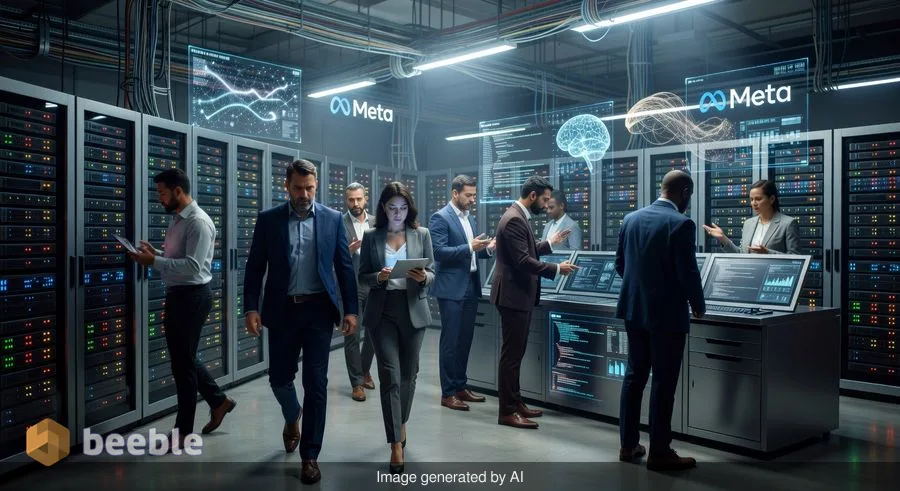
The tech industry is no stranger to the pendulum swing of expansion and contraction, but Meta’s latest strategic pivot marks a significant departure from the traditional corporate cycle. As of mid-March 2026, reports indicate that the social media giant is preparing for a new wave of layoffs that could see the company’s headcount reduced by 20% or more. This move, while jarring, is the culmination of two converging forces: the staggering capital expenditure required to maintain a lead in the artificial intelligence race and the increasing capability of AI to perform tasks once reserved for human employees.
For nearly two years, Meta has aggressively repositioned itself as an AI-first organization. However, the financial reality of this transition is becoming impossible to ignore. The cost of building, cooling, and maintaining the massive data centers required for next-generation large language models has ballooned, forcing the company to find savings elsewhere to protect its margins and satisfy investor expectations.
The Astronomical Cost of the AI Arms Race
To understand why Meta is considering such drastic cuts, one must look at the balance sheet. Training and deploying models like Llama 4 and its successors requires an unprecedented amount of compute power. The price tag for the latest high-end GPUs and custom silicon has remained high, and the energy demands of these systems have forced Meta to invest billions into proprietary power infrastructure and sustainable energy offsets.
This is not merely a matter of buying hardware. The infrastructure bets Meta is making are long-term and high-risk. By shifting capital from human payroll to silicon and electricity, the company is betting that the long-term returns of a dominant AI ecosystem will outweigh the short-term pain of a diminished workforce. It is a gamble on the efficiency of machines over the versatility of humans.
The Efficiency Paradox: AI as Both Product and Peer
Perhaps the most unsettling aspect of these planned layoffs is the role that AI itself plays in the redundancy. Unlike the 2023 "Year of Efficiency," which focused on flattening management structures and removing middle-layer bureaucracy, the 2026 cuts are driven by the integration of AI-assisted workflows.
Meta has been at the forefront of deploying internal AI tools that assist in software engineering, content moderation, and administrative operations. When a senior developer can use an AI agent to handle boilerplate code, debugging, and documentation, the need for junior support staff diminishes. Similarly, AI-driven marketing and ad-optimization tools have streamlined roles that previously required large teams of analysts. In this scenario, AI is not just a product Meta sells; it is a colleague that is gradually outperforming its human counterparts in speed and cost-effectiveness.
Comparing the Waves of Contraction
To put the current situation into perspective, it is helpful to compare this potential 20% cut to previous industry movements.
| Feature | 2023 "Year of Efficiency" | 2026 "AI Rebalancing" |
|---|---|---|
| Primary Driver | Post-pandemic over-hiring | AI infrastructure costs & automation |
| Target Areas | Middle management & non-core projects | Engineering, Ops, and Entry-level roles |
| Magnitude | Approximately 13% - 15% | Projected 20% or more |
| Strategic Focus | Leaner operations | AI-integrated workforce |
| Market Context | High interest rates | AI-driven CAPEX surge |
The Human Cost of Technical Progress
While the numbers on a spreadsheet might make sense to analysts, the human impact of a 20% reduction cannot be overstated. Thousands of highly skilled professionals face an uncertain market where the very skills they spent years honing are being automated. This creates a "skills gap" that is widening faster than traditional education systems can bridge.
Meta’s leadership has hinted that while total headcount may shrink, the company will continue to hire aggressively for hyper-specialized roles in AI research, silicon design, and ethical AI governance. This suggests a future where the tech workforce is smaller, more specialized, and more expensive on a per-capita basis, even as the total number of employees drops.
What This Means for the Tech Ecosystem
Meta is often a bellwether for the rest of Silicon Valley. When Mark Zuckerberg moved toward "efficiency" in 2023, the rest of Big Tech followed suit within months. If Meta successfully navigates a 20% reduction by leaning on AI-assisted productivity, it provides a blueprint for other firms—from Google to Amazon—to justify similar restructuring.
For professionals in the field, this is a signal to pivot. The era of the generalist software or data worker may be sunsetting, replaced by an era where "AI Orchestration" is the primary required skill. Being able to direct, audit, and integrate AI outputs is becoming more valuable than the ability to generate those outputs manually.
Practical Takeaways for Tech Professionals
As the industry prepares for this shift, there are several steps individuals can take to remain resilient in a changing job market:
- Master AI Orchestration: Don't just use AI; learn how to integrate it into complex workflows. Understanding the limitations of LLMs is as important as knowing their capabilities.
- Focus on High-Context Problems: AI excels at tasks with clear rules and vast data. It struggles with high-context, nuanced human problems. Focus on roles that require deep empathy, strategic negotiation, or cross-disciplinary synthesis.
- Monitor Capital Expenditure Trends: Keep an eye on the CAPEX reports of major tech firms. When companies spend more on hardware than people, it is a leading indicator of upcoming workforce shifts.
- Diversify Your Skill Set: If your role is primarily execution-based (e.g., writing basic code, routine data entry), begin transitioning toward architectural or oversight roles.
Looking Ahead
The magnitude and timing of Meta’s layoffs remain finalized, but the intent is clear. The company is doubling down on a future where silicon is the primary driver of value. Whether this leads to a more innovative, agile Meta or a hollowed-out version of its former self remains to be seen. What is certain is that the "AI Revolution" has moved beyond the hype phase and into the structural reality of how the world’s largest companies operate.
Sources:
- Meta Investor Relations: Quarterly Capital Expenditure Reports
- Bureau of Labor Statistics: Tech Sector Employment Trends 2025-2026
- TechCrunch: The Evolution of AI-Assisted Coding
- Bloomberg Technology: Infrastructure Costs in the Generative AI Era



See you on the other side.
Our end-to-end encrypted email and cloud storage solution provides the most powerful means of secure data exchange, ensuring the safety and privacy of your data.
/ Create a free account
