


The Anatomy of a Digital Toll: How Bitcoin is Rewiring the World’s Most Dangerous Chokepoint

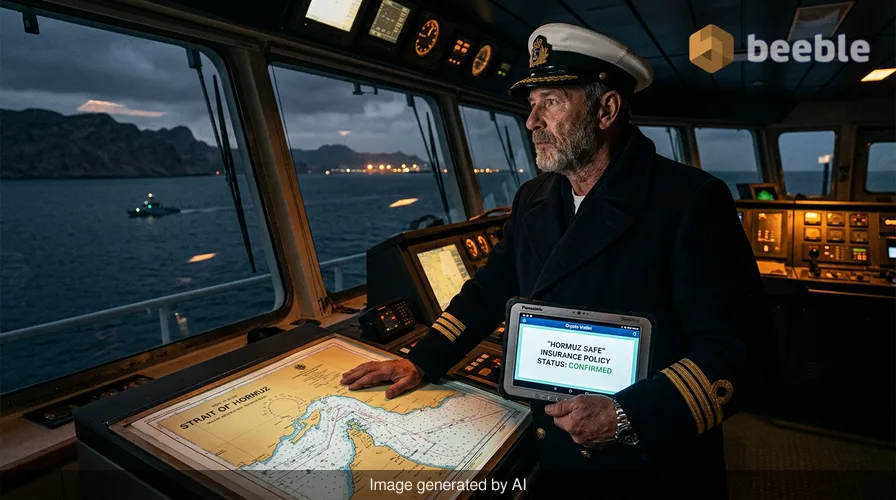
A few years ago, the average person’s interaction with the Strait of Hormuz was purely indirect—a subtle fluctuation in the price of a gallon of gas or a two-cent increase in the cost of a plastic-wrapped cucumber at the grocery store. We rarely considered the physical reality of that narrow strip of water between Iran and Oman, through which twenty percent of the world’s oil supply flows daily. But as of May 16, 2026, that distant geopolitical chokepoint has suddenly found a digital proxy in the Bitcoin wallets of international shipping firms.
With the launch of “Hormuz Safe,” a Bitcoin-settled maritime insurance platform, Iran’s Ministry of Economy has effectively turned a physical blockade into a digital gateway. While the traditional financial world relies on a central switchboard—a system where every dollar is tracked, vetted, and potentially blocked—the burgeoning decentralized market operates on a distributed map; whereas a bank can freeze an account with a keystroke, a blockchain requires a consensus that transcends national borders. This isn't just a news story about a new app; it is a profound shift in how the world’s most critical commodities are protected, taxed, and moved.
The Glass Bank Vault vs. The Iron Gate
In everyday terms, insurance is the ultimate life jacket for capital. When you buy car insurance, you are paying for the peace of mind that a momentary lapse in judgment won’t result in financial ruin. In the maritime world, this “peace of mind” is a multibillion-dollar industry governed by centuries of tradition, high-level diplomacy, and the SWIFT banking network.
Enter Hormuz Safe. According to reports from the IRGC-affiliated Fars News Agency, the platform allows vessel operators to bypass the traditional banking system entirely. Instead of waiting for a London-based bank to approve a wire transfer, a shipping company can send Bitcoin directly to the platform. From a technical standpoint, the blockchain acts as a glass bank vault: the Iranian authorities can see the payment is made, the shipping company can prove they sent it, and the transaction is finalized at the speed of light—well before the vessel even enters the Strait.
However, there is a nuanced catch. These policies explicitly exclude “war damage.” They aren't designed to protect a ship from a missile; they are designed to protect a ship from the bureaucratic friction of detention or confiscation by the very authorities providing the “insurance.” It is a paradoxical arrangement that feels less like a financial product and more like a digital passport.
The $10 Billion Micro-Tax
Zooming out to the macro level, the numbers behind this initiative are staggering. Iranian officials project that Hormuz Safe could generate upwards of $10 billion in annual revenue. To put that in perspective, that is roughly the equivalent of the entire annual GDP of some smaller nations, all collected through digital tolls.
Recent reports suggest that Iran has already been experimenting with this model, charging tankers approximately $1 per barrel of oil for “safe passage.” For a massive supertanker carrying two million barrels, that is a $2 million payment. In the past, such a transaction would have been impossible to hide from global regulators. Today, through the lens of cryptocurrency, these payments move through the global financial system like ghosts.
For the consumer, this is where the micro meets the macro. If every barrel of oil transiting the Strait carries a new $1 “crypto tax,” that cost doesn't just disappear. It ripples through the supply chain, eventually landing in the price of your commute or your heating bill. It is an inflationary pressure that is invisible to the eye but deeply rooted in the digital architecture of the Persian Gulf.
Sanctions and the Game of Financial Whack-a-Mole
Historically, the U.S. dollar has served as the global “mood ring,” reflecting the health and stability of international relations. Because most oil is priced in dollars, the U.S. Treasury has historically held the power to “turn off the lights” for any country it chooses to sanction. But Bitcoin is a different animal. It is decentralized, pervasive, and—most importantly—it does not care about U.S. foreign policy.
We are currently witnessing a high-stakes game of financial whack-a-mole. In late April 2026, U.S. authorities froze nearly $500 million in Iranian-linked crypto assets, while the stablecoin provider Tether blacklisted hundreds of millions in USDT at the request of OFAC. Yet, the Hormuz Safe platform represents a pivot toward Bitcoin—a more resilient, “unstoppable” asset.
For a shipping company, the decision to use Hormuz Safe is a psychological minefield. On one hand, you have the pragmatic need to move your cargo without being detained. On the other, you face the systemic risk of secondary sanctions from Washington. It is a choice between a tangible, immediate delay in the Gulf and a speculative, long-term legal battle in a U.S. court.
The Behavioral Economics of Necessity
From a behavioral economics perspective, Hormuz Safe exploits a fundamental human trait: the desire for certainty in a volatile environment. The maritime industry is notoriously risk-averse. When a captain is staring at the narrow horizon of the Strait, the theoretical threat of a future U.S. fine feels much less pressing than the immediate threat of a boarding party.
This platform isn't just selling insurance; it’s selling a path of least resistance. Paradoxically, by using a technology built on transparency (the blockchain), Iran is creating a more opaque shadow market for global trade. It is a classic example of how technology can be used to subvert the very systems of oversight it was originally thought to enhance.
Beyond the Strait: A Shifting Financial Map
Financially speaking, the Hormuz Safe launch might be a localized event, but its implications are global. It signals the beginning of a fragmented financial world where the U.S. dollar is no longer the only game in town. If one of the world’s most critical chokepoints can be “monetized” via Bitcoin, what stops other nations from creating their own digital toll booths?
As we navigate this new landscape, we must ask ourselves how much of our financial security is built on collective belief systems and how much is built on physical control. For decades, we believed that global trade required the permission of central banks. Hormuz Safe is a blunt, $10 billion reminder that in the digital age, permission is becoming optional.
Ultimately, this isn't just about ships and oil; it’s about the erosion of the financial borders we’ve taken for granted. Whether you are a retail investor holding a fraction of a Bitcoin or a consumer wondering why prices are rising, the digital ripples from the Strait of Hormuz are already reaching your wallet. The “Digital Wild West” is no longer a metaphor for internet forums; it is the new reality of the high seas.
Food for Thought
- Reflect on the "Convenience Tax": Think about the last time you paid a convenience fee for a faster service. How does that small, personal decision mirror the massive "toll" shipping companies are now facing in the Middle East?
- The Power of Choice: If you were a business owner, would you choose the safety of the traditional system even if it meant slower operations, or would you risk legal trouble for the speed of a decentralized alternative?
- The Invisible Leak: How often do you check the geopolitical news when looking at your monthly budget? We often blame local factors for inflation, but as we've seen, the root causes can be as narrow as 21 miles of water halfway across the world.
Sources:
- Fars News Agency (IRGC-affiliated), May 16, 2026 report on Hormuz Safe launch.
- Reuters, April 2026: Iranian official statements on maritime crypto tolls.
- Financial Times: Interview with Hamid Hosseini, Spokesperson for Iran’s Oil, Gas and Petrochemical Products Exporters’ Union.
- Benzinga: Analysis of the Hormuz Safe digital insurance platform and its Bitcoin settlement mechanics.
- MARISKS Maritime Risk Firm: Warning to shipping companies regarding Iranian crypto payment demands.
- Tether/OFAC public records: Freezing of USDT assets linked to sanctioned entities (April 2026).



See you on the other side.
Our end-to-end encrypted email and cloud storage solution provides the most powerful means of secure data exchange, ensuring the safety and privacy of your data.
/ Create a free account
