


The anatomy of a digital vault: how artificial intelligence protects the money it learned to steal

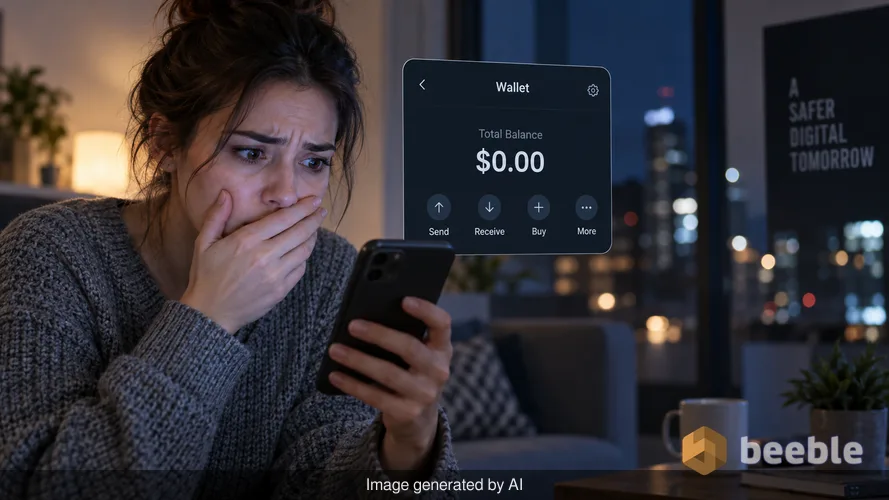
Have you ever refreshed your digital wallet and felt a cold shiver when the balance stayed at zero for a second too long? We all have. This fleeting panic is a natural reaction to the opaque nature of digital finance. You trust a combination of glass, electricity, and code to hold your life savings. Most of the time, the system works. Occasionally, it fails. When it fails, we blame the complexity of the software.
Behind every transaction at a grocery store or a crypto exchange, thousands of lines of code run in the background. Software developers write this code to move value from Point A to Point B. They test the code for common errors. They hire outside firms to look for holes. Despite these efforts, human eyes often miss small, logical contradictions that a hacker can exploit. These vulnerabilities exist because software has become too complex for any single person to fully grasp. This creates a systemic gap in our financial security.
The myth of the invincible hacker
A pervasive fear exists in the financial world that artificial intelligence is a weapon built for the thief. If an AI can write code, it can surely find the cracks in the code. We have seen the evidence of this in the Bitcoin ecosystem recently. In August 2026, the volunteer Bitcoin Red Team used AI-led audits to find nearly 5,000 potential flaws across 390 different projects. Such numbers suggest a world where no digital vault is safe.
Ethereum co-founder Vitalik Buterin challenged this narrative in a series of comments this week. He argued that the same technology used to find bugs is the best tool for fixing them. While hackers use AI to find a single open window, developers can use it to build a house that is mathematically impossible to enter. This shift from reactive patching to proactive proof is a fundamental change in how we think about the safety of our money.
Mathematical proofs as the ultimate lock
To understand Buterin’s optimism, we must look at a concept called formal verification. In ordinary terms, most software testing is like a teacher checking an essay for typos. It finds the obvious mistakes. Formal verification is different. It is like a mathematician proving a theorem. It uses logic to show that, under no possible circumstances, can the program do something it was not intended to do.
Historically, this process was too expensive and slow for most apps. It required PhDs to spend months writing proofs for a single piece of code. On a macro level, this meant only the most critical systems, like flight controls for airplanes, received this level of scrutiny. Most financial apps were left with standard, fallible testing.
Buterin argues that AI changes this math. If a model is smart enough to solve famously difficult equations like Navier-Stokes, it is smart enough to prove a program is secure. AI can handle the monotonous, heavy lifting of logical proofs. This turns the blockchain into a glass bank vault. Everyone can see the code, but the AI has proven that only the owner has the key.
Lessons from the forest fires of 2026
Market corrections and security breaches are often like forest fires in an economic sense. They are painful, but they clear out the dead wood so new growth can happen. Since the start of this year, several high-profile incidents have tested our collective faith in digital security.
In May, a flaw was found in Zcash’s Orchard privacy pool that could have allowed for the creation of fake currency. Curiously, it was an AI agent that spotted the four-year-old bug. Two months later, attackers used a firmware flaw to drain $130 million from Coldcard wallets. Analysts at Coinkite noted that AI likely helped identify that specific bug.
These events were a wake-up call for the industry. Developers realized that the "move fast and break things" era of software is over. When the thing you break is a person’s retirement fund, the consequences are profound. Consequently, we are seeing a shift toward AI-assisted defense. Instead of waiting for a hack, researchers are now running millions of AI simulations to find flaws first.
The personal stakes of the founders
It is easy to dismiss these technical arguments as abstract theory. However, the people building these systems have their own skin in the game. Vitalik Buterin recently noted that roughly 90% of his net worth is held in crypto. This is not a casual investment. It is a bet on the long-term resilience of the technology.
When a founder holds the majority of their wealth in the system they created, their perspective on security changes. They are not just concerned with the price of the asset on a given Tuesday. They are concerned with the structural integrity of the network. This is the difference between a speculative trader and a long-term architect.
This personal commitment reflects a broader trend in behavioral economics. Trust is a collective belief system. If the creators of a system do not trust it to hold their own wealth, the public will eventually walk away. By pushing for AI-driven formal verification, Buterin is attempting to move crypto from a "trust me" model to a "the math says so" model.
The difficulty of defining security
Even with powerful AI, a major hurdle remains. Proving a program is secure is only possible if you can define what "secure" means in the first place. This is where human judgment is still essential. A program can be mathematically perfect but still fail if the person who designed the rules made a mistake in logic.
In everyday terms, this is like building a door that is impossible to kick down, but then leaving the key under the mat. The AI can prove the door is strong. It cannot always know if the key-under-the-mat is a vulnerability or a feature the user requested. This is the nuanced reality of our digital future. Technology can provide the tools, but humans must still provide the definitions of safety.
Ethereum plans to use these AI tools to verify entire software systems over the next several years. This is a massive undertaking. At its core, the goal is to make the code as reliable as the laws of physics. If the industry succeeds, the fear you feel when refreshing your wallet app will eventually fade into the background, much like we no longer worry if the bank vault will hold our physical cash.
Reclaiming control in a volatile world
Through this economic lens, the rise of AI in cybersecurity is a hopeful development. It marks the transition of blockchain from a digital wild west into a regulated, resilient infrastructure. The volatility we see today is symptomatic of a young technology finding its footing.
On an individual level, this trend asks us to rethink our relationship with digital tools. We often assume that more technology means more risk. Paradoxically, the solution to the risks created by code is often more rigorous code. As AI becomes a ubiquitous part of our financial lives, the wall between the attacker and the defender will grow taller.
Ultimately, financial mindfulness in the age of AI requires a shift in perspective. Instead of fearing the machine, we should look for the systems that use the machine to prove their own honesty. Security is not a finished product; it is a constant race. By moving toward a world of mathematical proofs, we are choosing a future where our money is protected by logic rather than just luck.
Sources
Ethereum Foundation, Security Research Division, "The Roadmap to Formal Verification," 2026.
Coinkite, Incident Report on Firmware Vulnerability CC-2026-07.
Zcash Foundation, Technical Disclosure of Orchard Privacy Pool Patch, June 2026.
Bitcoin Red Team, "Global Audit Report: AI and the State of Open Source Finance," August 2026.
Vitalik Buterin, Public Post on X regarding AI and Cybersecurity, September 16, 2026.



See you on the other side.
Our end-to-end encrypted email and cloud storage solution provides the most powerful means of secure data exchange, ensuring the safety and privacy of your data.
/ Create a free account
