


The Anatomy of a Unified Border: How EU Member States are Redrawing the Digital Map

In a sun-drenched cafe in the heart of Brussels, a young woman stares at her screen with a furrowed brow, her thumb hovering over a notification that has just informed her that a certain viral video is unavailable in her current jurisdiction. This mundane moment of digital friction, once a rarity in the borderless dream of the early internet, is becoming a pervasive feature of the European experience as member states grapple with the systemic complexities of social media governance. Behind this individual flicker of annoyance lies a profound shift in how we perceive the digital commons, moving away from a globalized hall of mirrors toward a more regulated, culturally insulated archipelago of information.
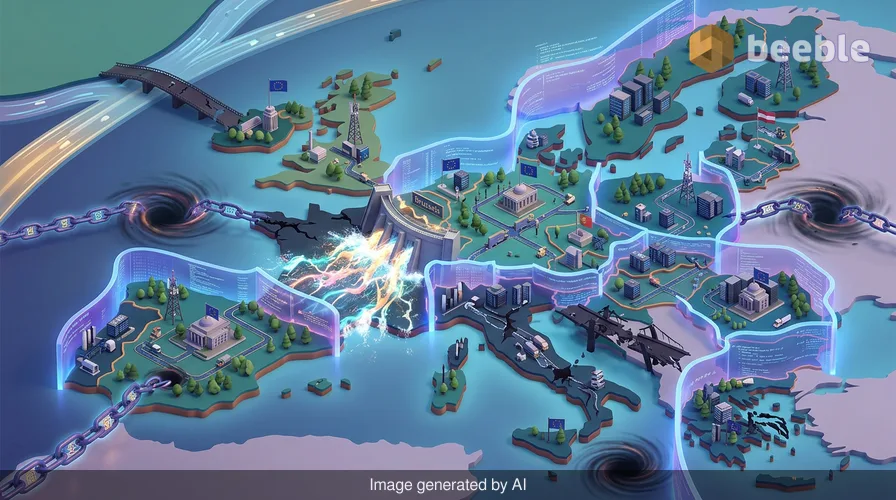
We once envisioned a digital landscape where every voice could resonate across continents, where the barriers of geography would dissolve into a seamless flow of ideas and shared human experience, fostering a global village that felt both intimate and infinite. But this dream of total connectivity is now colliding with the hard reality of systemic friction, unless we acknowledge that a truly open internet requires a level of oversight that algorithmically manages the chaos of misinformation, inevitably leading to a patchwork of regional constraints. This tension is at the core of the European Union's recent efforts to align social media restriction strategies, a move that seeks to prevent a total fragmentation of the European digital space while simultaneously tightening the reins on how platforms operate within their borders.
The Architecture of Digital Fragmentation
Zooming out from the individual user, we see a macro-level shift where the concept of the nation-state is reasserting itself in a domain that was once thought to be beyond its grasp. For years, the internet operated on a logic of liquid modernity, where information flowed freely, bypassing traditional structures of authority and creating new, atomized communities that were untethered from physical location. However, this fluidity has increasingly been seen as a source of vulnerability rather than strength, as governments witness the visceral impact of algorithmically amplified polarization on their social fabric.
Consequently, the European Union has moved to transition from the era of laissez-faire digital growth to one of rigorous, systemic accountability. The Digital Services Act (DSA) was intended to be the definitive framework for this transition, yet individual member states—from France to Ireland—have frequently felt compelled to go further, enacting localized bans on certain apps or stricter age-verification protocols. This creates a paradox: in the pursuit of protecting their citizens, states risk creating a fragmented digital environment where the rights and experiences of a user in Madrid differ fundamentally from those of a user in Berlin.
The Philology of Protection
Linguistically speaking, the discourse surrounding these restrictions is deeply revealing of our shifting cultural priorities. We no longer speak merely of "censorship" or "freedom of speech" in the blunt terms of the twentieth century; instead, we use a more nuanced, clinical vocabulary centered on "harm mitigation," "digital sovereignty," and "informational integrity." This semantic shift reflects a collective habitus that has become accustomed to the idea that our digital environments must be curated and policed to remain habitable.
Behind the scenes of this trend, the language of the law is attempting to keep pace with the ephemeral nature of viral content. Terms like "systemic risk" and "dark patterns" have moved from academic sociology into the drafting rooms of European parliaments. These words are not just legal definitions; they are symbolic markers of a society that has realized its digital communication is a fast-food diet—quick and accessible, but lacking the deep emotional and intellectual nutrition required for a healthy democracy. By standardizing these terms across the bloc, the EU hopes to create a shared discursive framework that makes the restriction of content feel like a collective act of hygiene rather than an arbitrary exercise of power.
The Paradox of the Digital Sovereign
Historically, the European project has been about the removal of borders, the easing of friction, and the creation of a unified market. Paradoxically, the current push for a unified social media strategy involves the creation of new, invisible borders that segment the internet. The goal is to ensure that when a restriction is applied, it is applied with a common logic, preventing the "splinternet" effect where each member state becomes its own isolated information island.
| Regulatory Objective | Current Challenge | Proposed Unified Approach |
|---|---|---|
| Content Moderation | Varied definitions of 'illegal speech' across states | Harmonized standards for rapid removal under the DSA |
| Minor Protection | Fragmented age-verification methods (e.g., France vs. Germany) | A bloc-wide digital ID or standardized third-party verification |
| Algorithmic Transparency | Opaque 'black box' algorithms favoring engagement over truth | Mandatory audits and shared access for European researchers |
| State Sovereignty | Platforms ignoring individual national requests | Collective bargaining power through the European Board for Digital Services |
Through this lens, the alignment strategy is a coping mechanism for the systemic anxiety of an uncertain future. If the EU can speak with one voice, it can force global platforms to respect European values of privacy and dignity. However, this requires a delicate balance; unless the alignment is handled with transparency, it may inadvertently stifle the very discourse it seeks to protect, leaving users in a curated echo chamber where only the most sanctioned ideas are allowed to circulate.
Reclaiming the Public Square
On an individual level, these macro-shifts transform our daily routines in ways we are only beginning to understand. The act of scrolling through a feed is no longer a neutral window into the world, but a highly mediated experience that is increasingly bounded by the geopolitical realities of our location. We are witnessing the end of the digital frontier and the beginning of the digital municipality, where every interaction is governed by a complex web of invisible rules.
Ultimately, the quest for an aligned restriction strategy is a search for an anchor amidst the chaos of the attention economy. It is an admission that the "global village" was perhaps too large and too noisy to be sustainable without a set of shared fences. As we move forward, the challenge for both policymakers and citizens will be to ensure that these fences do not become walls that trap us in a sterilized version of reality.
In everyday terms, we must learn to be more mindful of the architecture that shapes our digital lives. We should question not just what we are seeing, but why we are seeing it and what is being hidden from us in the name of our own safety. Reclaiming a sense of agency in this new, regulated landscape requires us to look beyond the feed, to value the mundane beauty of unmediated human connection, and to recognize that the most important conversations often happen in the spaces where the algorithms cannot reach.
Food for Thought
- How would your daily information consumption change if the digital borders of your country were as tangible as physical borders?
- Can a society truly balance the need for collective safety with the individual's right to encounter challenging or even "harmful" ideas?
- Is the move toward digital sovereignty a necessary evolution of the nation-state, or a retreat from the promise of global human connection?
- In what ways do you subconsciously adapt your digital "habitus" to avoid the friction of moderation or algorithmic shadow-banning?
Sources
- European Commission: The Digital Services Act Package (2024-2026 updates).
- Zygmunt Bauman: Liquid Modernity and its impact on digital social structures.
- Pierre Bourdieu: The concept of 'Habitus' and social fields in the digital age.
- International Association of Privacy Professionals (IAPP): Reports on EU member state alignment and digital fragmentation.
- Sociological studies on the "Attention Economy" and its psychological effects on urban populations.



See you on the other side.
Our end-to-end encrypted email and cloud storage solution provides the most powerful means of secure data exchange, ensuring the safety and privacy of your data.
/ Create a free account
