


The Anthropic Ban: Understanding the DoD’s ‘Supply Chain Risk’ Designation

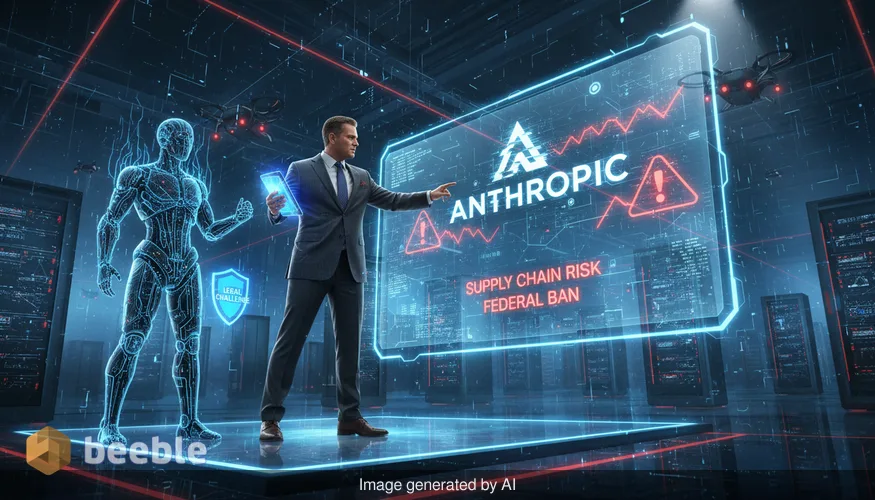
In a whirlwind 120 minutes that has sent shockwaves through Silicon Valley and the Beltway, the federal government’s relationship with the artificial intelligence industry has reached a historic breaking point. Following a midday announcement from President Donald Trump on Truth Social declaring a total ban on Anthropic products within the federal government, Secretary of Defense Pete Hegseth escalated the situation further. By mid-afternoon, the Department of Defense (DoD) officially designated Anthropic as a “supply-chain risk.”
This move marks a radical departure from previous administrative stances on domestic AI firms. While the government has historically reserved such designations for foreign entities—most notably Chinese telecommunications giants—applying this label to a San Francisco-based company backed by billions in American venture capital signals a new era of regulatory volatility. Anthropic has already signaled its intent to fight the designation, setting the stage for a high-stakes legal battle over the future of the American AI landscape.
What Does a ‘Supply Chain Risk’ Designation Actually Mean?
To understand the gravity of Secretary Hegseth’s announcement, one must look past the political rhetoric and into the machinery of federal procurement. When the DoD designates a company as a supply chain risk, it isn't just a suggestion to avoid their software; it is a functional blacklisting.
Under the Federal Acquisition Supply Chain Security Act (FASCSA), such a designation allows the government to issue exclusion or removal orders. This means that not only is the federal government prohibited from purchasing Anthropic’s “Claude” models, but any third-party contractor—from defense giants like Lockheed Martin to small IT consultants—may be forced to purge Anthropic integrations from their systems if they wish to maintain their government contracts.
In practical terms, this creates a “quarantine” effect. If Anthropic is deemed a risk to the integrity of the federal supply chain, any data flowing through their models is viewed as potentially compromised or subject to unauthorized influence.
The Friction Between ‘Constitutional AI’ and National Defense
At the heart of this conflict lies Anthropic’s core identity. Founded by former OpenAI executives, Anthropic has marketed itself as the “safety-first” AI company. Their proprietary training method, known as Constitutional AI, involves giving the model a written set of principles (a “constitution”) to follow when generating responses.
While the tech industry has largely lauded this as a way to prevent AI from becoming harmful or biased, the current administration appears to view these safety guardrails through a different lens. Critics within the administration have characterized these filters as a form of “algorithmic censorship” or “ideological bias” that could interfere with the objective, raw data processing required for military and intelligence applications.
By labeling the company a supply chain risk, the DoD is suggesting that the very safeguards Anthropic uses to ensure “helpfulness, honesty, and harmlessness” could, in a combat or strategic context, constitute a vulnerability or a refusal to follow lawful orders.
The Ripple Effect: AWS, Google, and the Cloud
Anthropic does not exist in a vacuum. The company is deeply integrated into the infrastructure of the world’s largest cloud providers. Amazon (AWS) and Google have both invested billions into Anthropic, hosting Claude on their respective platforms (Bedrock and Vertex AI).
This designation places these cloud titans in an uncomfortable position. If the DoD maintains that Anthropic is a supply chain risk, does that risk extend to the platforms that host them?
| Stakeholder | Potential Impact |
|---|---|
| Federal Agencies | Immediate migration away from Claude-based workflows to alternatives like OpenAI or xAI. |
| Defense Contractors | Mandatory audits of software stacks to identify and remove Anthropic API calls. |
| Cloud Providers | Potential pressure to segregate or restrict Anthropic services within GovCloud environments. |
| Enterprise Users | Increased uncertainty regarding the long-term regulatory stability of the AI market. |
Anthropic’s Legal Counter-Offensive
Anthropic’s response was swift. In a brief statement, the company expressed “disappointment and disagreement,” asserting that their technology is built on American soil, by American citizens, and with a primary focus on national security and reliability.
Legal experts suggest that Anthropic’s challenge will likely focus on the “arbitrary and capricious” standard of the Administrative Procedure Act (APA). To sustain a supply chain risk designation, the DoD must typically provide evidence of a credible threat. Because Anthropic is a domestic company with no known ties to foreign adversaries, the government may be forced to reveal classified justifications for the ban—or risk having the order vacated by a federal judge.
Practical Takeaways for Tech Leaders
For CTOs and IT decision-makers, this escalation is a wake-up call regarding “vendor lock-in” in the age of AI. The sudden transition of a major player from “industry leader” to “supply chain risk” highlights the need for a diversified AI strategy.
- Audit Your AI Stack: Identify where Claude or other Anthropic-based tools are integrated into your internal processes or customer-facing products.
- Develop Model Agnosticism: Use orchestration layers (like LangChain or Haystack) that allow you to swap underlying LLMs with minimal code changes if a regulatory shift occurs.
- Monitor Federal Flow-Downs: If your company does any business with the federal government, review your contracts for “Section 889” or FASCSA clauses that may now apply to Anthropic.
- Stay Informed on the Litigation: The outcome of Anthropic’s court challenge will set the precedent for how much power the executive branch has to pick winners and losers in the domestic AI race.
As the legal battle begins, the tech industry is left to wonder: if a company founded on the principle of safety can be labeled a risk, who is truly safe in the new regulatory climate?



See you on the other side.
Our end-to-end encrypted email and cloud storage solution provides the most powerful means of secure data exchange, ensuring the safety and privacy of your data.
/ Create a free account
