


The Crack in the Glass House: What the Musk-Altman Trial Reveals About AI’s Broken Promises

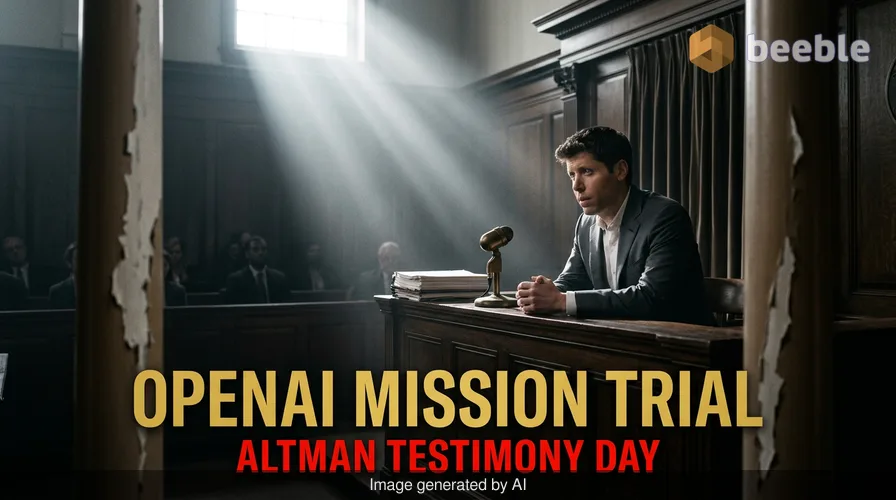
Inside a wood-paneled courtroom in Delaware, a narrative carefully constructed over a decade is beginning to unravel. Long before the public saw the sleek interfaces of modern AI, the foundational pillars of the industry were being hammered into place through private emails, handshake deals, and bold promises of altruism. For years, the internal mechanics of OpenAI remained a closely guarded secret, protected by non-disclosure agreements and the sheer complexity of the technology. But this week, a series of witness testimonies pulled back the heavy velvet curtain, leaving Sam Altman facing his most difficult day in court to date.
The tension in the room was palpable as testimony centered on the transition of OpenAI from a non-profit research lab to a commercial powerhouse. While the world sees OpenAI as a leader in innovation, the legal battle initiated by Elon Musk suggests a more precarious reality. At the heart of the dispute is the allegation that the company abandoned its original mission—to develop artificial intelligence for the benefit of humanity—in favor of a lucrative partnership with traditional tech giants. For those of us who track the intersection of law and technology, the revelations aren't just about a billionaire spat; they represent a systemic shift in how we define corporate transparency in the age of automation.
The Witness Who Shook the Foundation
The most damaging moment of the week didn't come from a dramatic outburst, but from a methodical presentation of historical correspondence. A key witness—a former high-level researcher—testified to the internal atmosphere during the pivot toward a for-profit structure. The testimony suggested that the decision was less about the survival of the mission and more about consolidating control. In a regulatory context, this goes to the heart of fiduciary duty, which is a fancy way of saying the legal obligation to act in the best interest of a specific party—in this case, the public interest defined in OpenAI’s founding charter.
When documents were presented showing that internal warnings about safety and openness were sidelined to meet product launch deadlines, the defense’s argument that OpenAI remains 'mission-driven' began to look increasingly thin. Curiously, the testimony highlighted a recurring theme: the 'open' in OpenAI became a brand name rather than a business practice. To put it another way, the company treated its founding principles like a set of optional guidelines rather than a binding contract. This distinction is critical because it challenges the fundamental trust users place in tech entities that claim to be working for the 'greater good.'
The Labyrinth of Non-Profit Governance
One of the most complex aspects of this trial is the structural gymnastics required to turn a non-profit into a profit-generating machine. During cross-examination, the legal team poked holes in the 'capped profit' model, portraying it as a labyrinth designed to satisfy investors while maintaining the optics of a charity. In practice, this structure created a conflict of interest that the witness testimony suggests was never fully resolved.
We often think of privacy and corporate governance as separate silos, but they are deeply intertwined. When a company’s governance is opaque, its data practices often follow suit. If the leadership is willing to pivot on its core mission, can we trust their commitments to data minimization or privacy-preserving research? The courtroom revelations suggest that when financial pressure mounted, the 'compass' of the original charter was frequently recalibrated. This is a sobering thought for a global population that has integrated these AI tools into the most sensitive corners of their professional and personal lives.
Promissory Estoppel and the Weight of a Handshake
A significant portion of the day’s legal arguments revolved around a concept known as promissory estoppel. Essentially, this is a legal principle that prevents a person from going back on a promise when someone else has relied on that promise to their detriment. Musk’s team argues that his early funding and involvement were predicated on the ironclad promise that the technology would remain open-source and non-commercial.
The witness testimony bolstered this claim by recounting meetings where these promises were allegedly used as leverage to recruit top-tier talent. Many of these engineers joined not for the salary, but for the 'digital witness protection program' that the non-profit status seemed to offer—a safe haven where they could build powerful tech without the intrusive pressure of quarterly earnings. Seeing those same researchers testify that the culture shifted toward a 'product-first' mentality was a powerful moment that resonated with the jury.
Why Transparency is the Only Effective Vaccine
From a tech-legal standpoint, the fallout of this trial will likely be felt far beyond the OpenAI boardroom. We are seeing a move toward more stringent oversight of AI companies, and this trial provides the perfect case study for why self-regulation is often a mirage. If the most prominent AI lab in the world can have its internal goals so radically altered behind closed doors, it suggests that the current regulatory landscape is more of a patchwork quilt than a robust shield.
Ultimately, the 'bad day' Sam Altman experienced in court is a symptom of a broader crisis in the tech industry: the gap between public-facing privacy policies and internal strategic shifts. When we click 'Accept' on a terms of service agreement, we are essentially entering that labyrinth. We expect the company to act as a faithful steward of our data and our future, yet the Delaware proceedings show how easily those interests can be sidelined when billions of dollars are on the line.
Navigating the Future of AI Trust
As the trial continues, the focus will likely shift to the technical definitions of Artificial General Intelligence (AGI). The defense maintains that they haven't achieved AGI yet, which would trigger different contractual obligations. However, the witness testimony this week suggests that the 'goalposts' for what constitutes AGI have been moving in tandem with commercial interests. This nuanced debate is where the trial becomes truly extraterritorial, affecting how governments around the world decide to tax, regulate, and restrict AI development.
For the average user, the takeaway shouldn't be a sense of hopelessness, but rather a call for granular skepticism. The era of blindly trusting a 'visionary' leader is ending. In its place, we must demand statutory transparency—laws that require companies to prove their compliance rather than just promising it in a blog post.
Actionable Steps for the Digital Citizen
While we cannot control the outcome of the Musk-Altman trial, we can control how we interact with the products of these companies. Here is how you can protect your digital footprint while the giants clash:
- Audit Your Data Inputs: Treat any information you feed into a generative AI as if it is being broadcast on a public billboard. Assume that 'private' chats are accessible to the company during legal discovery or internal audits.
- Verify 'Open' Claims: Before adopting a new tool, check if their code is actually open-source or if 'Open' is just part of their branding. Look for libraries on GitHub rather than just marketing slogans.
- Support Interoperability: Favor tools that allow you to export your data easily. This prevents 'vendor lock-in,' where you are forced to stay with a company even if its ethics shift.
- Demand Legislative Action: Support privacy laws that require companies to disclose changes in their corporate structure or mission when those changes impact how user data is handled.
Sources
- Restatement (Second) of Contracts § 90 (Promissory Estoppel principles)
- Delaware General Corporation Law, Section 141 (Fiduciary Duties)
- OpenAI Certificate of Incorporation (2015 and subsequent amendments)
- OECD Principles on Artificial Intelligence (Transparency and Explainability standards)
Disclaimer: This article is for informational and journalistic purposes only and does not constitute formal legal advice. The events described are based on ongoing court proceedings and reports from May 2026.



See you on the other side.
Our end-to-end encrypted email and cloud storage solution provides the most powerful means of secure data exchange, ensuring the safety and privacy of your data.
/ Create a free account
