


The Digital Border: Australia’s Social Media Ban and the High-Stakes Investigation into Big Tech

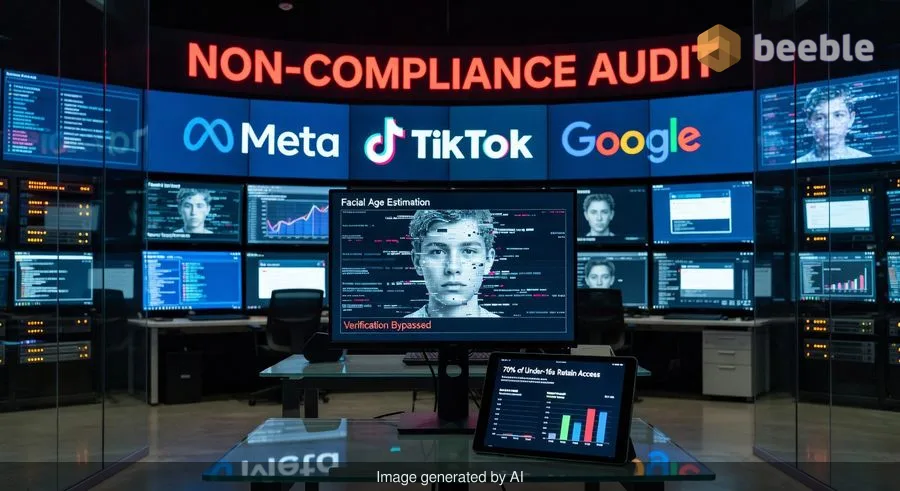
Despite the global consensus that the internet is the new public square, Australia has recently become the first nation to attempt to build a high-tech fence around it. As of March 2026, the Australian government’s landmark legislation banning children under 16 from social media is no longer just a theoretical debate; it is a legal battlefield. The eSafety Commissioner has officially launched a systemic investigation into Meta, TikTok, and Google, alleging that these platforms have failed to implement the 'reasonable steps' required to keep minors off their feeds.
For the average user, this might look like a local regulatory spat in the Southern Hemisphere. However, looking at the big picture, this investigation is a stress test for the global attention economy. It marks a fundamental shift from the era of 'permissionless innovation' to one of 'enforced digital boundaries.' If Australia succeeds in forcing these giants to comply, the digital landscape for families worldwide could change overnight.
Behind the Jargon: What the Investigation Actually Targets
At the heart of the current investigation are the 'Section 155' notices—legal demands for information that compel tech companies to reveal exactly how their algorithms and age-verification systems operate under the hood. The Australian authorities are not just asking if the companies have a ban in place; they are scrutinizing the effectiveness of those measures.
In simple terms, the government is skeptical of the 'honor system.' For years, clicking a box that says 'I am over 13' was the industry standard for age verification. Australia’s new law demands something much more robust. The investigation is focusing on whether Meta (Instagram/Facebook), TikTok, and Google (YouTube) are intentionally leaving backdoors open to maintain their user growth or if the technology to stop a determined 15-year-old simply doesn't exist yet.
The Age Assurance Dilemma: A Digital Swiss Army Knife?
To comply with the ban, tech companies are being pushed to adopt 'age assurance' technologies. This is where the macro-regulatory world meets our micro-personal privacy. There are three primary ways a platform can verify your age, and each comes with a trade-off:
| Method | How it Works | Pros | Cons |
|---|---|---|---|
| Hard ID Upload | Scanning a passport or driver’s license. | Highly accurate. | Significant privacy risks; excludes those without ID. |
| Biometric Estimation | Using AI to analyze facial features via a camera. | Fast and user-friendly. | Concerns over 'biometric surveillance' and data storage. |
| Bank/Credit Data | Verifying age through financial institutions. | Leverages existing trust. | Opaque data sharing between banks and tech firms. |
| Device-Level Signals | Analyzing app usage patterns to guess age. | Non-intrusive. | Can be inaccurate; easily fooled by shared devices. |
Practically speaking, the investigation is trying to determine if these companies are choosing the weakest possible methods to avoid friction. From a consumer standpoint, the fear is that in the quest to protect children, we might end up handing over more sensitive data to companies that have historically struggled to protect it.
The Attention Economy vs. The Law
Why is there so much resistance? To understand the corporate side, we have to look at social media as a tireless intern that never sleeps, constantly sorting through billions of data points to keep us scrolling. For companies like TikTok and Meta, the under-16 demographic is not just a user base; it is the foundational layer of their future market.
Historically, tech giants have relied on early habit formation. By the time a user turns 18, their digital preferences are often set in stone. Australia’s ban disrupts this cyclical growth model. The investigation suggests that the 'glitches' allowing kids to bypass filters might not be accidents, but rather a byproduct of a business model that views friction—even legal friction—as an enemy to be optimized away.
Zooming Out: A Global Precedent
Curiously, the rest of the world is watching Australia with a mix of admiration and anxiety. If the eSafety Commissioner finds that Meta or Google have been negligent, the fines could reach up to AUD 50 million per infraction. This isn't just a slap on the wrist; it’s a tangible threat to the bottom line.
What this means is that Australia is currently the laboratory for the future of the internet. If they can prove that a national ban is enforceable without destroying user privacy, countries in the EU and North America will likely follow suit. Conversely, if the investigation reveals that the ban is being bypassed by millions of kids using VPNs (Virtual Private Networks), it may prove that digital borders are as porous as they were twenty years ago.
What This Means for You
Whether you live in Sydney, London, or New York, the outcome of this investigation will ripple through your digital life. Here is the practical reality of what to expect:
- Increased Friction: Expect more 'checkpoints' when setting up new accounts or accessing certain types of content. The era of the one-click sign-up is fading.
- Privacy Shifts: We may see a move toward 'Zero-Knowledge Proofs,' where a third party verifies your age and tells the social media site 'Yes, they are over 16' without ever sharing your actual identity or birthdate.
- The VPN Arms Race: As bans become more common, more everyday users—including teenagers—will become tech-savvy in ways the law didn't intend, using tools to mask their location and age.
Conclusion: Shifting Our Digital Perspective
Ultimately, the investigation into Meta, TikTok, and Google is about more than just protecting children; it is about who holds the power to define the boundaries of our digital lives. For years, we have lived in a decentralized wild west where the platforms set the rules. Now, the state is attempting to reassert its role as the gatekeeper.
As a reader, it is worth observing your own digital habits. How much of your personal data would you be willing to trade for a more 'curated' or 'safe' internet? As these systemic shifts continue, we should appreciate the invisible industrial mechanics—the servers, the algorithms, and the legal frameworks—that power our daily scrolls. The 'digital playground' is getting a fence, and we are about to find out exactly how strong that fence really is.
Sources:
- Australian Government: Social Media Minimum Age Act 2024 Overview
- Office of the eSafety Commissioner: Formal Investigation Notices (March 2026)
- Meta Global Transparency Report Q4 2025
- International Association of Privacy Professionals (IAPP): Age Assurance Trends



See you on the other side.
Our end-to-end encrypted email and cloud storage solution provides the most powerful means of secure data exchange, ensuring the safety and privacy of your data.
/ Create a free account
