


The Digital Bouncer Will See You Now—and Most Candidates Are Leaving the Queue

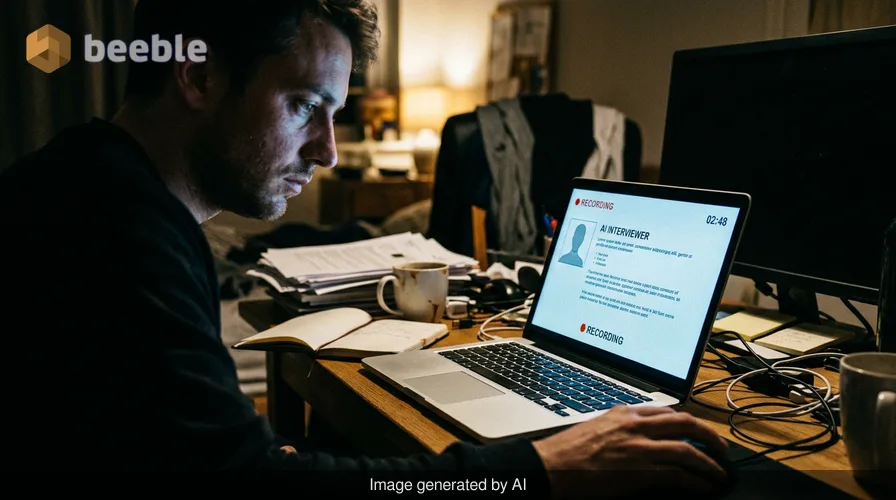
While HR departments pitch AI interviews as a way to democratize the hiring process and remove human bias, the reality for candidates is often a cold, opaque encounter with a rigid algorithm that prioritizes data density over professional nuance. We are told that AI recruitment is the future of efficient, scalable talent acquisition, yet a growing number of professionals are looking at the chatbot on the other side of the screen and deciding that the job isn't worth the interaction.
Recent data from the hiring platform Glasshouse paints a startling picture of this shifting landscape. In Germany, where 57% of workers have already faced an AI-led interview, a massive 42% of those candidates simply withdrew from the process. This isn't just a minor glitch in the system; it’s a systemic rejection of a recruitment style that feels more like an interrogation by a tireless, yet unimaginative, digital bouncer than a professional conversation. To put it another way, the very tools designed to streamline the hiring process are currently acting as a bottleneck, driving away the talent they were meant to find.
Behind the Jargon: How the Digital Sieve Works
When we talk about AI interviews, we aren't usually talking about a HAL 9000-style supercomputer. Practically speaking, these systems are often highly specialized avatars or text-based interfaces. Companies like Google have pioneered tools that conduct initial screenings through video chats or phone calls, where an AI records your responses, transcribes them, and analyzes them for specific markers.
Under the hood, these bots are looking for something very different than a human recruiter would. While a human might pick up on your enthusiasm, your ability to read the room, or a clever bit of industry-specific wit, the AI is looking for data points. It functions as a digital sieve, filtering for keywords, specific structural patterns in your speech, and metrics that match a pre-defined ideal candidate profile. If you don’t hit those linguistic benchmarks, you don’t pass through to the next round, regardless of how robust your resume might be.
This creates a foundational disconnect. Candidates often approach an interview as a social exercise in building rapport, while the AI treats it as a data-entry task. This is likely why so many candidates feel ghosted; when half of those who complete these interviews never hear back, it’s because the algorithm has already moved on to the next set of data without the social obligation to provide closure.
Why Germany is Leading the Great Interview Exit
Curiously, the high withdrawal rate in Germany suggests a broader cultural friction with automated HR. German labor markets have historically valued transparent and highly structured professional relationships. When an AI enters the frame, that transparency often vanishes. Candidates are left wondering what happens to their biometric data, how their tone of voice is being scored, and whether a machine can truly understand the interconnected complexities of their career path.
From a consumer standpoint, the rejection of AI interviews is a form of market feedback. If 42% of your best prospects are walking away because the first step of your process feels like a Turing Test, your recruitment strategy is no longer a tool—it’s a liability. For the average user, this means that even though you might encounter these bots more frequently, you are not alone in your skepticism. The market is currently in a volatile state of adjustment, trying to find the balance between corporate efficiency and human dignity.
Learning to Speak 'Machine'
If you decide to stay in the process, you have to change how you communicate. An AI interviewer cares less about your tone and more about the tangible information you provide. In everyday life, we use facial expressions and vocal inflections to fill in the gaps of what we say. In a bot-led interview, you must assume the listener has zero intuition.
Essentially, you need to be a hyper-clear communicator. This means practicing your answers out loud before the camera even turns on. Because the AI is transcribing your words in real-time to analyze them, mumbling or using vague industry slang can lead to errors in the system's assessment. You aren't just telling a story; you are providing a script for an algorithm to scan. Many career coaches now suggest using online interview simulators. These tools are helpful because they provide instant feedback on your pacing and content, allowing you to see how a machine might interpret your professional history.
The STAR Method: Feeding the Data Monster
To pass the digital sieve, your answers need a rigid structure. The most effective framework remains the STAR method: Situation, Task, Action, and Result. While this is common advice for human interviews, it is foundational for AI-led ones.
Looking at the big picture, the AI is searching for 'impact'—and impact is usually defined by numbers. Even if you aren't in a sales role or a revenue-driving department, you need to quantify your work. Did you influence a group of ten people? Did you reduce the time of a process by 15%? Did you handle fifty customer queries a day?
By using the STAR method, you provide the AI with the logical flow it is programmed to recognize. You describe the situation clearly, explain what you were tasked with, detail the specific actions you took, and—most importantly—deliver a measurable result. Without the result, the AI often views the answer as incomplete. It’s a literal-minded process, so leaving out the conclusion is like giving a calculator half of an equation and expecting an answer.
The Physical Stage: Optimization Beyond the Script
In an AI interview, your environment is part of your resume. While a human recruiter might ignore a slightly messy bookshelf or dim lighting, an AI's facial analysis or video-processing software can be affected by your physical setup.
Practically speaking, you want to ensure your laptop is at eye level and your lighting is front-facing. Shadows on your face can sometimes interfere with how an AI interprets facial movement or engagement levels. Furthermore, audio quality is non-negotiable. If the AI cannot clearly distinguish your words because of background noise or a muffled microphone, your chances of passing the screening drop to nearly zero. This isn't about being high-tech; it's about being legible to the software. Think of it as SEO for your face and voice.
The Bottom Line: Adapting to the Algorithmic Era
Ultimately, the rise of AI in recruitment represents an unprecedented shift in how we value human labor. We are moving toward a world where the first gatekeeper in your career is a line of code. For the average user, the takeaway is clear: the rules of the game have changed, and the old ways of 'winging it' on charm alone are becoming obsolete in the initial stages of the job hunt.
However, it is also important to remember that you have agency. The high withdrawal rates in markets like Germany show that talented individuals still value human connection. If a company’s AI interview feels overly opaque or disrespectful of your time, it may be a red flag about their overarching corporate culture. A company that uses AI as a tireless intern to help humans might be a great place to work; a company that uses AI as a shield to avoid talking to candidates altogether is telling you exactly how they value their employees.
As we move deeper into 2026, the goal for any job seeker should be to master these digital tools without losing their human spark. Use the STAR method, optimize your lighting, and speak with clarity—but always keep your 'So What?' filter on. If the process feels systemic and dehumanizing, don't be afraid to be part of that 42% who decides to look elsewhere. In a world of automated screening, your most resilient asset is still your very human ability to choose where you bring your talents.
Sources
- Glasshouse Recruitment Trends Report 2026.
- Indeed Workplace Trends Analysis.
- Careerminds AI Coaching Framework.
- Federal Employment Agency (Germany) Digital Hiring Statistics.



See you on the other side.
Our end-to-end encrypted email and cloud storage solution provides the most powerful means of secure data exchange, ensuring the safety and privacy of your data.
/ Create a free account
