


The Digital Breadcrumb Trail: Understanding the FBI’s Return to Commercial Data Markets

Is Your Privacy for Sale on the Open Market?
Imagine you are working from a sun-drenched cafe in Lisbon, your laptop connected to a local Wi-Fi network as you manage a remote team across three continents. To you, your smartphone is a lifeline—a tool for navigation, communication, and productivity. To a data broker, however, that same device is a high-frequency beacon broadcasting your every move.
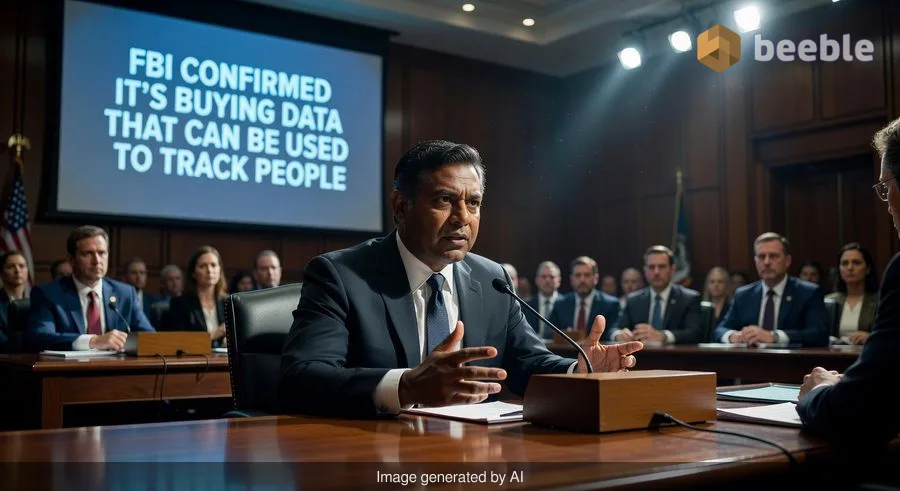
Recent testimony from FBI Director Kash Patel has pulled back the curtain on a precarious reality: the bureau has officially resumed the practice of purchasing commercially available location data. During the Senate Intelligence Committee’s annual Worldwide Threats hearing on March 18, 2026, Patel confirmed that the FBI is once again tapping into the vast reservoirs of information harvested by private companies. This disclosure marks a significant pivot from the stance of his predecessor, Christopher Wray, who informed lawmakers in 2023 that the agency had paused such acquisitions.
The Ecosystem of Invisible Surveillance
To understand how we arrived here, we must view the modern digital landscape as a complex ecosystem. In this environment, data is the nutrient that sustains free apps and services. When you download a weather app or a casual game, you often grant permission for that app to access your location. Consequently, that data doesn't just stay with the developer; it is often bundled and sold to third-party data brokers.
These brokers act as the ultimate aggregators, weaving together intricate profiles of individuals based on their physical movements. Curiously, while the Supreme Court ruled in Carpenter v. United States (2018) that law enforcement generally requires a warrant to seize historical location records from cellular providers, the commercial market offers a convenient workaround. Because users "voluntarily" share this data with apps, the government can simply buy the information on the open market—no warrant required.
A Nuanced Shift in Policy
Director Patel defended the practice by stating that the bureau operates in a manner it believes complies with the Constitution and the Electronic Communications Privacy Act. He described the information as "valuable intelligence" necessary for modern investigations. Nevertheless, the resumption of these purchases has reignited a fierce debate over the Fourth Amendment.
In my years working with tech startups and managing remote teams, I’ve seen how quickly "innovative" data collection can morph into something more invasive. We often talk about data as the building blocks of the digital economy, but we rarely discuss what happens when those blocks are used to build a surveillance tower. The transition from a warrant-based system to a transaction-based one represents a remarkable shift in how the state interacts with its citizens’ private lives.
The Legal and Ethical Tightrope
To put it another way, the government is essentially subscribing to a premium version of your life story. While the FBI argues this is a transformative tool for catching criminals and preventing threats, privacy advocates see it as a bypass of judicial oversight.
- The Carpenter Precedent: The 2018 ruling was supposed to protect the "whole of a person's physical movements."
- The Broker Loophole: By purchasing data from brokers instead of demanding it from Verizon or AT&T, agencies sidestep the specific legal hurdles established by the Supreme Court.
- Legislative Friction: This revelation will likely breathe new life into legislative efforts like the "Fourth Amendment Is Not For Sale Act," which aims to close this exact loophole.
Living the Digital Nomad Life in a Tracked World
For those of us who have embraced the digital nomad lifestyle or the corporate transition to remote work, this news hits close to home. Our careers are journeys that take us through various jurisdictions, and our devices are our constant companions. When I was helping scale a fintech startup, we obsessed over data encryption and user privacy. It is sobering to realize that despite a company's best efforts to secure its own silo, the underlying advertising networks on a device can still leak a user's itinerary to the highest bidder—even if that bidder is the federal government.
As a result of this landscape, the burden of privacy has shifted almost entirely onto the individual. It is an intricate dance of toggling settings, auditing app permissions, and remaining skeptical of "free" services.
Practical Steps: How to Tighten Your Digital Footprint
While you cannot completely opt out of the data ecosystem, you can make your trail much harder to follow. Here is a checklist for the privacy-conscious professional:
- Audit Location Permissions: Go to your smartphone settings and set location access to "Never" or "While Using the App" for everything that doesn't strictly need it.
- Disable Ad Tracking: Use the "Limit Ad Tracking" or "App Tracking Transparency" features on iOS and Android to prevent apps from sharing your unique ID with brokers.
- Use a Privacy-Focused DNS: Services like NextDNS or Cloudflare’s 1.1.1.1 can help block known data-harvesting domains at the network level.
- Regularly Reset Your Advertising ID: This breaks the continuity of the profile data brokers are building about you.
The Path Forward
The confirmation that the FBI is back in the data-buying business serves as a stark reminder that technology moves faster than the law. We are currently living through a period where our digital shadows are being commodified in ways the Founding Fathers could never have imagined.
Sources:
- Senate Intelligence Committee Annual Worldwide Threats Hearing Transcript (March 18, 2026)
- Politico: "FBI Resumes Commercial Data Purchases, Director Patel Confirms"
- Supreme Court of the United States: Carpenter v. United States (2018) Case Summary
- Electronic Communications Privacy Act (ECPA) Guidelines



See you on the other side.
Our end-to-end encrypted email and cloud storage solution provides the most powerful means of secure data exchange, ensuring the safety and privacy of your data.
/ Create a free account
