


The Digital Locksmith Paradox: Why the Safest AI Models are the Ones You Aren't Allowed to Use

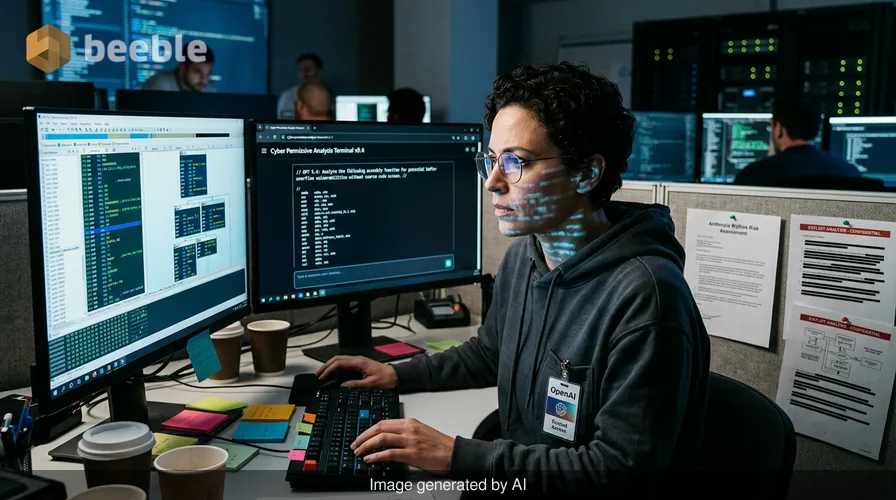
While the tech industry usually marches to the beat of democratization—the idea that every powerful tool should eventually end up in your pocket—the latest moves from OpenAI and Anthropic suggest a sharp pivot. We are entering an era where the most sophisticated software isn't being built for us; it’s being built to protect the systems we use, while being kept strictly behind a velvet rope.
In the last week, the cybersecurity landscape has shifted under our feet. OpenAI has officially pulled the curtain back on GPT 5.4 Cyber, a specialized version of its flagship model designed specifically for defensive digital warfare. This comes just days after Anthropic’s Claude Mythos Preview sent ripples of anxiety through the industry. But there is a catch that feels counterintuitive in a consumer-driven market: you can’t use them. Unless you are a vetted security professional or part of a massive infrastructure provider, these models are effectively off-limits.
The Double-Edged Sword of Digital Intelligence
To understand why these companies are being so secretive, we have to look at what these models can actually do. In simple terms, think of these AI models as digital locksmiths. A locksmith is an essential part of a functioning society; they help you get back into your house when you’re locked out and help you design better, more resilient deadbolts. However, a locksmith who can instantly pick any lock in the world without a key is also the most dangerous person in the neighborhood.
OpenAI’s GPT 5.4 Cyber is designed to be that master locksmith for the good guys. It features a streamlined interface for binary reverse engineering. Under the hood, this means the AI can look at a finished piece of software—the "compiled" code that your computer actually runs—and work backward to figure out how it was built. It’s like tasting a complex sauce and being able to identify every single spice, the exact brand of oil, and the temperature of the stove, all without ever seeing the recipe.
Conversely, Anthropic’s Claude Mythos has demonstrated a terrifying ability to find "zero-day" vulnerabilities. These are flaws in software that even the creators don’t know exist. In recent testing, Mythos found high-severity holes in the Linux kernel—the invisible backbone of the modern world that runs everything from your Android phone to the New York Stock Exchange.
Why the Vetting Process Matters
Looking at the big picture, the decision to limit access to these models isn't just corporate gatekeeping; it’s a response to a systemic risk. If these tools were released to the general public, a script kiddie in a basement could theoretically use them to find and exploit a flaw in a major bank's encryption or a city’s power grid within minutes.
OpenAI is managing this through its Trusted Access for Cyber programme. This isn't just a simple "I am not a robot" checkbox. It involves deep vetting of security vendors and researchers. Practically speaking, this creates a tiered reality of AI. There is the "Consumer AI" we use to write emails and generate art, and then there is "Industrial AI," which is treated more like a controlled substance or a high-grade weapon.
| Feature | GPT 5.4 Cyber (OpenAI) | Claude Mythos Preview (Anthropic) |
|---|---|---|
| Primary Strength | Binary Reverse Engineering & Malware Analysis | Vulnerability Discovery & Exploit Chaining |
| Access Level | Vetted Security Vendors & Researchers | 12 Founding Partners + 40 Infrastructure Orgs |
| Safety Approach | Permissive for defensive queries | Highly restricted "Project Glasswing" |
| Key Achievement | Identifying malware without source code | Found unknown flaws in Linux Kernel |
Behind the Jargon: Binary Reverse Engineering
For the average user, the term "binary reverse engineering" sounds like something out of a sci-fi thriller, but its application is very practical. When a new virus or ransomware hits the web, security teams usually don't have the original code written by the hackers. They only have the "binary"—the garbled mess of ones and zeros that actually does the damage.
Historically, unpicking that mess took weeks of manual labor by highly paid specialists. GPT 5.4 Cyber acts like a tireless intern with a PhD, scanning millions of lines of machine code to find the "kill switch" or the vulnerability the hacker used to get in. What this means is that when the next global cyberattack happens, the time it takes to release a patch could drop from days to hours.
The Market Side: Who Wins the Security Race?
On the market side, this isn't just about safety; it’s about foundational dominance. By restricting Claude Mythos to a small group of partners like Amazon Web Services, Apple, and Google, Anthropic is essentially embedding its intelligence into the very fabric of the internet. If you use an iPhone or store files on Google Drive, you are already being protected by Mythos, even if you never interact with it directly.
Curiously, this creates a volatile dynamic for smaller tech companies. If the "Big Five" have access to the ultimate digital shield and smaller startups do not, the gap between the giants and the disruptors grows even wider. We are seeing a shift where security is no longer just a feature—it’s a scalable commodity that only the wealthiest players can afford to refine.
From a Consumer Standpoint: The Invisible Shield
Essentially, your daily life won't change because of these announcements, and that is exactly the point. You won't see a "GPT 5.4 Cyber" app on your phone. Instead, you will simply notice that your browser updates more frequently or that a major data breach at a retailer you use was "thwarted" before any credit card numbers were stolen.
However, there is a nuance here that we shouldn't ignore. As AI becomes more resilient at finding bugs, the hackers will inevitably use their own, less-restricted AI models to find new ways in. It is a cyclical arms race. The bottom line is that the software you use is becoming more complex, and the only way to keep it secure is to use an even more complex AI to watch over it.
Zooming Out: The Future of Trust
Ultimately, the launch of these models marks the end of the "Wild West" era of AI development. We are moving toward a more transparent, albeit more restricted, ecosystem. The fact that Anthropic’s own engineers warned of "unprecedented cybersecurity risks" suggests that we are reaching the limits of what can be safely released to a general audience.
For the everyday user, this is a reminder that our digital world is held together by a series of interconnected systems that are increasingly too complex for any human to fully understand. We are delegating our safety to algorithms, trusting that the "digital locksmiths" at OpenAI and Anthropic stay on the right side of the door.
As we move forward, observe how often your devices ask for updates over the next few months. Those updates aren't just annoying pop-ups; they are the tangible results of these high-level AI models finding and fixing the cracks in our digital foundation before someone else finds them first. Shift your perspective from seeing AI as a chatbot to seeing it as the invisible infrastructure that keeps the lights on and your data private.
Sources:
- OpenAI Corporate Newsroom: GPT 5.4 Cyber Release Notes
- Anthropic Technical Blog: Project Glasswing and Claude Mythos Safety Briefing
- Cybersecurity & Infrastructure Security Agency (CISA): Report on Large Language Models in Vulnerability Research
- Global Tech Index: Market Impact of AI-Driven Cybersecurity Defensive Tools



See you on the other side.
Our end-to-end encrypted email and cloud storage solution provides the most powerful means of secure data exchange, ensuring the safety and privacy of your data.
/ Create a free account
