


The Digital Mirror: Navigating Ethics in an Age of Algorithmic Influence

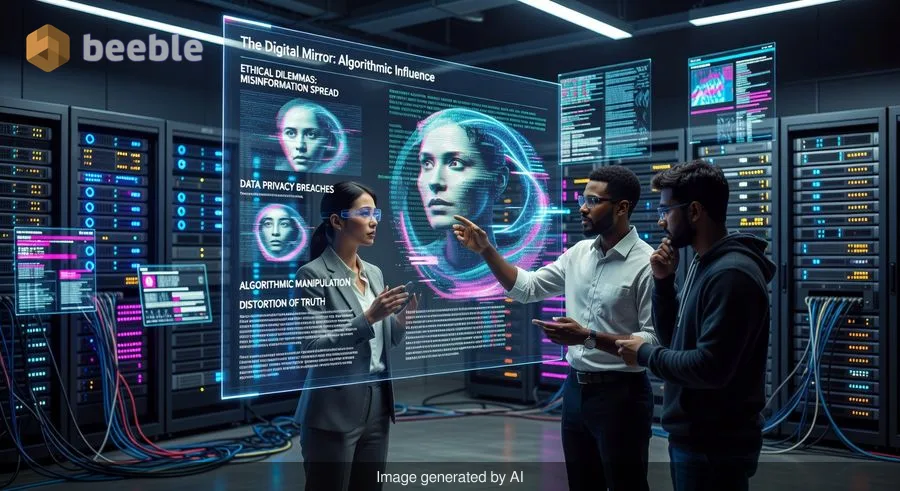
Technology was once viewed as a neutral tool—a hammer that could either build a house or break a window, depending entirely on the hand that held it. However, as we move through 2026, that analogy has become obsolete. Today’s technologies are not passive; they are active participants in our social fabric, embedded with the biases, incentives, and ethical shortcuts of their creators.
Digital ethics is no longer a niche academic pursuit. It is a survival manual for a world where the line between reality and synthesis has blurred. From the subtle nudges of persuasive design to the systemic erosion of privacy, understanding the ethical landscape of our digital interactions is essential for maintaining both individual agency and societal trust.
The Battle for Truth: Misinformation and Synthetic Media
In the current landscape, the greatest threat to public discourse is the industrial-scale production of misinformation. We have moved past the era of simple "fake news" articles into the age of hyper-realistic synthetic media. Generative AI can now produce video and audio that are indistinguishable from reality, leading to what experts call the "Liar’s Dividend." This is a phenomenon where the mere existence of deepfakes allows bad actors to dismiss real evidence as fabricated.
To combat this, the tech industry has begun implementing digital provenance standards. These protocols act like a digital watermark, tracing a piece of media back to its source. However, technology alone cannot solve a problem rooted in human psychology. We are naturally inclined to believe information that confirms our existing biases. Ethical interaction requires a commitment to "lateral reading"—the practice of verifying information by looking at multiple independent sources rather than following a single algorithmic recommendation.
Data Privacy: From Consent to Agency
For years, the digital economy operated on the principle of "notice and consent." We were presented with dense legal documents and clicked "Accept" just to get to the service we needed. In 2026, this model is widely recognized as a failure of ethics. True privacy is not about hiding secrets; it is about maintaining agency over one's digital identity.
The ethical shift currently underway moves toward Privacy-Enhancing Technologies (PETs) and zero-knowledge proofs. These allow users to verify their identity or eligibility for a service without actually handing over their raw data. For example, you can prove you are over 18 without sharing your exact birth date or home address.
As users, the ethical recommendation is to move away from platforms that treat data as a commodity to be harvested and toward those that treat it as a liability to be protected. This involves a "privacy-first" mindset: auditing app permissions regularly and utilizing decentralized identity solutions where available.
The Architecture of Manipulation: Dark Patterns
Every time you find it incredibly easy to sign up for a subscription but nearly impossible to cancel it, you are encountering a "dark pattern." These are user interface designs intentionally crafted to manipulate users into making choices that benefit the company but may not be in the user's best interest.
Manipulation also takes more subtle forms through algorithmic amplification. Platforms are designed to maximize engagement, and because outrage is a powerful driver of attention, algorithms often prioritize inflammatory content over nuanced discussion. This creates a dopamine loop that can lead to digital exhaustion and distorted worldviews.
| Design Philosophy | Goal | Method |
|---|---|---|
| Growth-Centric | Maximize Time on Device | Infinite scrolls, intrusive notifications, and outrage-based feeds. |
| Human-Centric | Empower the User | Tools for time management, clear exit paths, and transparent algorithms. |
| Ethical Design | Foster Well-being | Respecting user intent and providing objective information over engagement. |
The Distortion of Truth and Echo Chambers
Digital platforms have fundamentally changed how we perceive the world by creating "filter bubbles." When an algorithm learns what you like, it stops showing you what you disagree with. Over time, this creates a distorted reality where it seems like everyone agrees with you—and those who don't must be either uninformed or malicious.
This distortion of truth is not just a social annoyance; it is a threat to democracy. When a society cannot agree on a basic set of facts, collective action becomes impossible. Ethical engagement in 2026 requires us to intentionally "burst" our bubbles. This means seeking out high-quality journalism from across the political spectrum and being mindful of how our own online behavior feeds the algorithms that box us in.
Practical Recommendations for Digital Citizenship
Navigating the digital world ethically requires a combination of technical tools and mental frameworks. Here is a checklist for maintaining digital integrity:
- Verify Before Sharing: Use tools like the C2PA "Verify" site to check the provenance of images and videos. If a piece of news triggers a strong emotional response, wait 30 seconds before hitting "share."
- Audit Your Digital Footprint: Use privacy-focused browsers and search engines. Periodically check which third-party apps have access to your primary accounts and revoke those that are no longer necessary.
- Recognize Persuasive Design: Be aware of "infinite scroll" and "auto-play" features. Set manual limits on apps that use these tactics to keep you engaged longer than you intended.
- Support Ethical Platforms: Whenever possible, choose services that use transparent business models (like subscriptions) rather than those that rely on intrusive data tracking and advertising.
- Practice Intellectual Humility: Acknowledge that your feed is a curated slice of reality, not the whole picture. Actively seek out perspectives that challenge your assumptions.
The Path Forward
The future of technology depends on our ability to demand ethical standards from the companies that build our digital world. We are moving toward a "Cognitive Liberty" framework, where the right to self-determination includes the right to be free from algorithmic manipulation. By becoming conscious consumers and vocal advocates for digital ethics, we can ensure that technology serves humanity, rather than the other way around.
Sources:
- [Center for Humane Technology - Ledger of Harms]
- [Electronic Frontier Foundation (EFF) - Privacy & Surveillance]
- [Coalition for Content Provenance and Authenticity (C2PA) Standards]
- [World Economic Forum - Ethics of the Fourth Industrial Revolution]
- [IEEE Global Initiative on Ethics of Autonomous and Intelligent Systems]



See you on the other side.
Our end-to-end encrypted email and cloud storage solution provides the most powerful means of secure data exchange, ensuring the safety and privacy of your data.
/ Create a free account
