


The End of an Era: Why Sony is Retiring the 'PlayStation Network' Brand

A Name That No Longer Fits the Mission
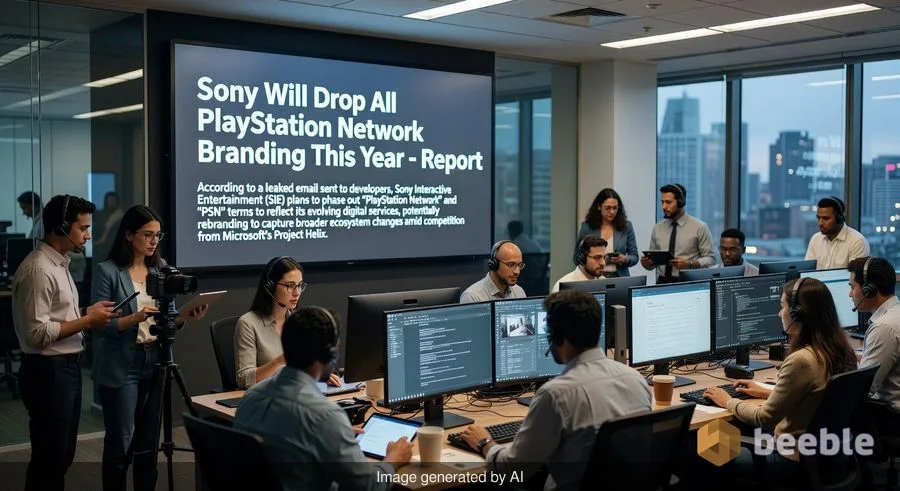
Have you ever looked at a childhood photograph and realized that while the person in the frame is technically you, the identity they represent feels like a lifetime ago? For Sony Interactive Entertainment (SIE), the term "PlayStation Network"—or PSN—has become that outdated photograph. Since its inception in 2006, PSN has been the digital heartbeat of Sony’s gaming ecosystem, surviving the transition from the PlayStation 3 to the powerhouse PlayStation 5. However, a leaked internal email suggests that by September 2026, the PSN moniker will be relegated to the history books.
According to the report, Sony has strategically decided to phase out the branding to better reflect the "breadth of its evolving digital services." This isn't merely a cosmetic facelift; it is a transformative shift in how the company views its place in the global entertainment landscape. As a result, we are witnessing the slow sunset of a brand that defined the console wars of the last two decades.
Beyond the Plastic Box
For years, Sony’s identity was tethered to a physical piece of hardware sitting under your television. But the industry is no longer defined by who sells the most plastic boxes. In contrast to the hardware-centric era of the 2010s, the current market demands a nuanced approach that spans PC, mobile, and cloud infrastructure. Curiously, the leaked email arrives just as Microsoft’s "Project Helix"—a rumored unified platform that erases the boundaries between Xbox and PC—begins to cast a long shadow over the industry.
To put it another way, Sony is realizing that the "PlayStation" name, while iconic, might actually be a limiting factor if it remains strictly associated with a console. By moving away from "PlayStation Network," Sony is likely preparing for a future where its services live on devices that don't carry the PlayStation logo. This is an innovative gamble, but one that feels necessary in a world where the lines between platforms are increasingly blurred.
The Ecosystem as a Living Organism
I remember working at a tech startup during a major corporate transition several years ago. We were moving from a local software model to a global SaaS (Software as a Service) platform. The most difficult part wasn't the code; it was convincing the team that our old name—the one we had built our reputation on—was actually holding us back from reaching a wider audience. We had to view our organization as a living organism that needed to shed its old skin to grow.
Sony is currently in that same precarious position. The digital services they offer now include high-end PC ports, a growing mobile library, and a robust cloud streaming infrastructure. Calling all of this the "PlayStation Network" feels a bit like calling a modern smartphone a "digital pager." It describes where the technology came from, but not what it has become. Consequently, the rebranding is a signal to investors and consumers alike that Sony is ready to compete on every screen, not just the one in your living room.
What Does This Mean for the Players?
Naturally, the first question on every gamer’s mind is: "What happens to my account?" The report is clear that Sony isn't deleting the infrastructure itself. Your digital library, your hard-earned trophies, and your friend lists are not going anywhere. The intricate web of data that makes up your gaming identity will remain intact; it will simply live under a new banner.
While the new name hasn't been officially revealed, industry analysts are speculating on titles like "Sony Horizon" or a simplified "Sony Gaming Services." Whatever the choice, the transition will likely follow a phased rollout.
- Phase 1: Updates to the user interface on PS5 and PC launchers to remove PSN logos.
- Phase 2: Integration of a unified Sony ID that works across mobile, web, and console.
- Phase 3: A full marketing pivot to the new brand identity by the September 2026 deadline.
Navigating the Corporate Transition
Managing a brand transition of this scale is a remarkable feat of logistics. For those of us who have managed remote teams or navigated large-scale digital migrations, we know that the technical side is often easier than the cultural one. Sony has to convince millions of loyal fans that this change isn't a loss of identity, but an expansion of it.
Nevertheless, the timing feels right. With Project Helix looming and the PC gaming market more lucrative than ever, Sony cannot afford to be seen as a "console-only" company. They are building a digital ecosystem designed to survive the next thirty years, not just the next console cycle. Ideas are the building blocks of this new era, and the idea of a locked-down, hardware-specific network is rapidly becoming obsolete.
Moving Forward: Your Next Steps
As we approach the 2026 deadline, there isn't much for the average user to do except wait for the official announcement. However, if you are a developer or a content creator within the Sony ecosystem, now is the time to audit your branding materials.
- Stay Informed: Keep an eye on official SIE developer portals for the new style guides.
- Audit Your Assets: Begin identifying where "PSN" or "PlayStation Network" appears in your marketing copy or in-game menus.
- Prepare for Unified IDs: Ensure your backend systems are ready for a potential shift toward a broader Sony account system that may include non-gaming services.
What do you think Sony’s new digital identity should be? Does the retirement of the PSN brand feel like a loss, or a necessary step toward the future?
Sources:
- Internal SIE Leaked Communication (March 2026)
- Industry Report on Project Helix and Cross-Platform Competition
- Sony Interactive Entertainment Strategic Vision Document 2025-2027



See you on the other side.
Our end-to-end encrypted email and cloud storage solution provides the most powerful means of secure data exchange, ensuring the safety and privacy of your data.
/ Create a free account
