


The end of the invisible wallet and what it means for your financial privacy

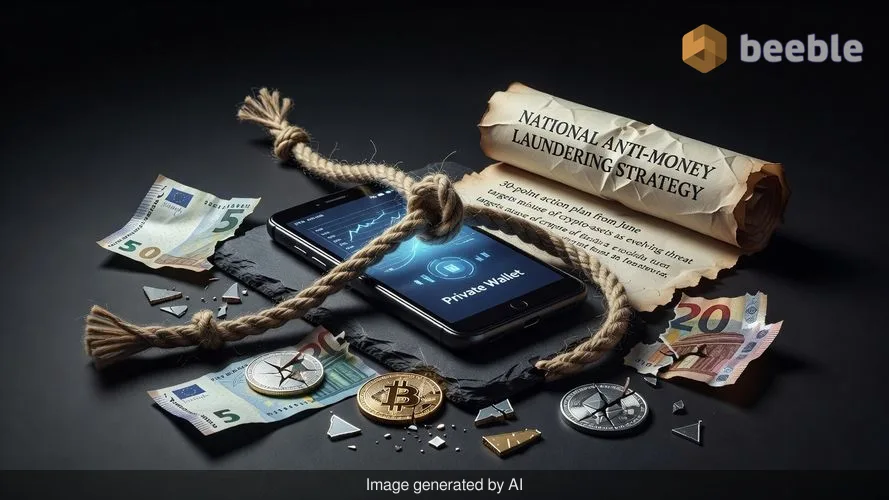
The original promise of cryptocurrency was a borderless, permissionless digital cash that functioned like physical bills in your pocket. You could move value across the globe without asking for a bank's blessing or justifying your purchase to a third-party observer. This vision offered a radical kind of financial freedom where the individual, rather than the institution, held the keys to the vault. This freedom exists only if your digital wallet remains invisible to the state. Ireland's new anti-money laundering strategy requires firms to conduct 'enhanced checks' on transfers to private wallets. The era of the anonymous digital bill is ending.
On a macro level, the strategy published on Thursday represents a fundamental shift in how the Irish state views digital assets. It is the country's first National Anti-Money Laundering Strategy, and it targets the specific areas where crypto has historically avoided the gaze of regulators. The document builds on a 30-point action plan from June that identified the misuse of crypto-assets as an evolving threat. For the average person who buys a small amount of Bitcoin or Ethereum on a regulated exchange, the immediate impact is a layer of friction that was previously absent.
The mechanics of the travel rule and digital envelopes
Blockchain technology is often described as a glass bank vault. Everyone can see the transactions happening inside the vault, but only the owner of the private key can move the money. While the transparency of the ledger is systemic, the identity of the person behind the address has remained opaque. The new Irish strategy removes this opacity by finishing the transposition of the FATF Travel Rule. This rule requires that information about the sender and the receiver must travel with the transaction, much like a digital envelope attached to your money.
Financially speaking, this changes the nature of a self-hosted or 'private' wallet. In the past, moving funds from an exchange like Coinbase or Kraken to your own hardware wallet was a private affair. Now, the service provider has a legal obligation to verify who owns that destination wallet. If you are sending money to a friend, you are no longer just sending code. You are sending a verified identity package. This shift is paradoxical for an asset class built on the idea of decentralization, as it reintroduces the very intermediaries the technology was designed to bypass.
Ireland’s aggressive path toward financial transparency
Ireland is moving faster than many of its European neighbors. While the EU's Markets in Crypto-Assets (MiCA) regulation gave most countries an 18-month window to adjust, Ireland narrowed that window to 12 months. This period closed at the end of December 2025. Consequently, firms operating in Ireland are already under full regulatory authority. The new strategy adds stricter due diligence for firms dealing with overseas crypto companies, particularly those outside the EU.
| Regulation Element | Irish Implementation Date | Purpose |
|---|---|---|
| MiCA Grandfathering Window | December 31, 2025 | Transition period for existing firms |
| TFR (Transfer of Funds) | August 2026 | Enhanced checks on private wallets |
| Gambling Regulatory Standards | Q2 2027 | Due diligence on crypto as source of funds |
| EU AML Regulation | July 2027 | Ban on anonymous accounts and privacy coins |
Through this economic lens, Ireland is positioning itself as a high-compliance jurisdiction. Tánaiste and Minister for Finance Simon Harris stated that criminal organizations exploit new technologies to conceal profits. The strategy runs to 2030 and signals that the state intends to be a hostile environment for illicit financial flows. This structural change affects more than just high-level criminals. It affects the mundane habits of retail investors who now face invasive questions about where their digital wealth originated.
Gambling regulations and the verification of digital wealth
One of the most tangible domestic measures in the government's plan involves the Gambling Regulatory Authority of Ireland. By the second quarter of 2027, the authority must establish an industry standard for accepting crypto as a source of funds. This means if you use your crypto gains to place a bet, the operator will be required to verify that the money is legitimate. This is a profound shift from the 'don't ask, don't tell' environment of early digital finance.
In everyday terms, this mirrors the experience of applying for a mortgage with a deposit made of gifted money. You have to prove the paper trail. For a generation of investors who saw crypto as an escape from the prying eyes of traditional banks, this feels like a systemic intrusion. The government's National Risk Assessment names crypto misuse as a pervasive threat. This assessment drives the push for deeper due diligence, turning what was once a simple peer-to-peer transfer into a formal financial audit.
The shift from code is law to code is compliance
Zooming out to the broader EU landscape, the trend is clear. The Frankfurt-based Anti-Money Laundering Authority (AMLA) will begin policing these rules in July 2027. The bloc's new regulations bar service providers from holding anonymous accounts or using coins designed to hide transaction data. While these rules stop short of banning hardware wallets, they make it increasingly difficult to move money between a private wallet and the regulated financial system.
Practically speaking, we are seeing the creation of a two-tiered system. There is the 'clean' crypto that stays within the regulated exchanges and verified wallets, and there is the 'gray' crypto that remains in the shadows. The price of the latter is often a loss of liquidity. If you cannot move your assets into a bank account or use them to buy a house without a multi-month audit, the utility of those assets diminishes. This is the invisible leak in the bucket of financial privacy—the slow erosion of ease of use in the name of security.
Reclaiming financial mindfulness in a monitored world
At its core, money is a collective belief system. We trust that the digits in our bank app or the coins in our digital wallet have value because everyone else agrees they do. As the state increases its oversight of these digital beliefs, the psychological impact on the individual is profound. The volatility of the market is no longer just about price. It is about the volatility of the rules themselves. One day your wallet is a private tool; the next, it is a regulated financial instrument subject to 'enhanced checks.'
Ultimately, this is not a story about technology. It is a story about the inevitable friction between a decentralized innovation and a centralized society. The Ireland strategy is a symptom of a larger global trend where the 'digital wild west' is being fenced in and surveyed. For the retail investor, the challenge is to move past the hype of anonymity and recognize the reality of transparency. The glass bank vault is now fully lit, and the state has a copy of the key.
As we navigate this new era, it is worth reflecting on our own financial habits. When we choose convenience over privacy, we participate in the construction of this new architecture. The goal is not to avoid the rules, but to understand them. By observing how these macro-level policies change our daily digital interactions, we can reclaim a sense of control. We must ask ourselves if the security provided by these 'enhanced checks' is worth the loss of the invisible wallet. This is the fundamental question of the digital age, and Ireland has just provided its answer.
Sources
- Ireland Department of Finance, National Anti-Money Laundering Strategy 2024-2030.
- EU Transfer of Funds Regulation (TFR) 2023/1113.
- Financial Action Task Force (FATF), Report on Virtual Assets and DeFi July 2026.
- Markets in Crypto-Assets (MiCA) Regulation (EU) 2023/1114.
- HM Treasury, Draft Reforms on Crypto-Asset Change-in-Control 2025.



See you on the other side.
Our end-to-end encrypted email and cloud storage solution provides the most powerful means of secure data exchange, ensuring the safety and privacy of your data.
/ Create a free account
