


The End of the Texting Cold War

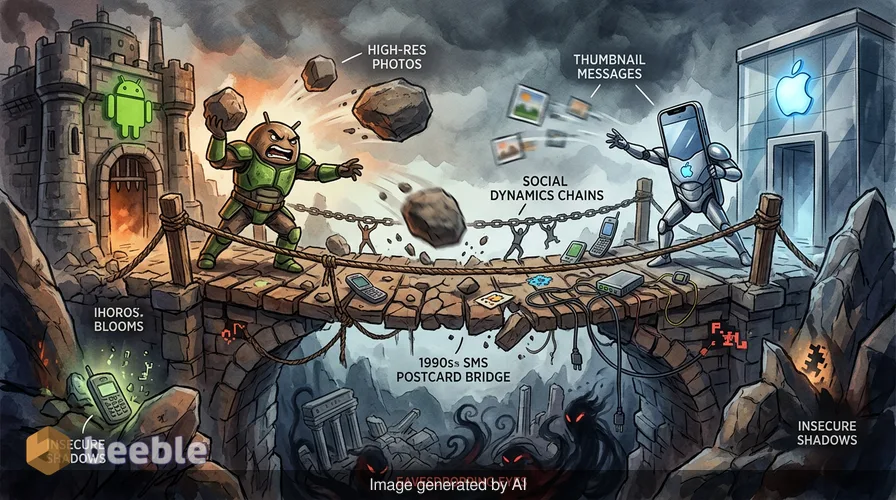
For over a decade, the simple act of sending a text message across the Android-iPhone divide felt like an exercise in digital archeology. While iMessage and Google Messages independently evolved into sophisticated, secure platforms, the bridge between them remained a crumbling, SMS-based relic of the 1990s—a space where high-resolution photos were crushed into blurry thumbnails and private conversations were transmitted with the security of a postcard. This week, as end-to-end encrypted (E2EE) messaging finally begins its beta rollout between these two warring ecosystems, we are witnessing more than just a software update; we are seeing the collapse of a digital border that has dictated social dynamics and privacy standards for a generation.
Historically, the industry-standard texting protocol, SMS, was never designed for the modern internet. It was a secondary signaling channel for cellular networks—a way to send 160-character bursts of text over the same infrastructure that handled voice calls—whereas the modern Rich Communication Services (RCS) is a data-driven powerhouse designed for the age of fiber and 5G. The transition to E2EE RCS marks a profound shift in how we conceive of digital sovereignty; it signals the moment when privacy moved from being a luxury feature of ecosystem loyalty to a baseline expectation of human communication.
The Postcard Era of Mobile Communication
To understand why this shift is so significant, one must first look at the legacy of the technology it replaces. For years, every time an iPhone user sent a message to an Android user, the communication defaulted to SMS or MMS, technologies that are essentially the digital equivalent of a postcard—anyone with the right tools, from a sophisticated hacker to a state surveillance agency, could theoretically intercept and read the content. This technical debt was an open secret in the industry; it was a vulnerability that both Apple and Google allowed to persist because it served the broader goal of ecosystem lock-in.
In practice, this meant that while a blue-bubble conversation was shielded by Apple’s proprietary encryption, a green-bubble interaction was stripped of its armor the moment it left the sender's device. Historically, we accepted this fragmentation as a minor annoyance of the modern world—a slight graininess in a video or the lack of a typing indicator—but through this user lens, we were actually witnessing a massive failure of interoperability. The tech industry spent years commodifying our isolation; it designed software that punished users for having friends outside the 'correct' ecosystem, ensuring that the friction of cross-platform communication acted as a silent salesperson for its own hardware.
The Architecture of Exclusion
Apple’s resistance to RCS was not a technical hurdle but a pragmatic business strategy. For years, the proprietary nature of iMessage served as a powerful moat, particularly in the North American market where the blue bubble became a status symbol among younger demographics. Zooming out to the industry level, this was a classic example of a walled garden: a seamless, intuitive experience within the fence, and a clunky, broken experience for anyone trying to reach in from the outside.
Paradoxically, as Google pushed for RCS adoption to modernize the experience, Apple held its ground—relying on the sheer inertia of its user base to maintain the status quo. The engineering logic was clear: why invest resources into a standard that makes it easier for your users to interact with your competitor’s products? Consequently, the bridge between the two platforms remained unencrypted and fragmented; it stayed a place where group chats would break and security was nonexistent, all because the corporate incentive for friction outweighed the human need for privacy.
The Regulatory Squeeze and the Path to Progress
Ultimately, the change we are seeing today wasn't sparked by a sudden epiphany of altruism from the tech giants—it was a strategic retreat in the face of mounting global pressure. The European Union’s Digital Markets Act (DMA) changed the math for companies like Apple; it categorized messaging services as "gatekeepers," demanding a level of interoperability that had previously been ignored. Technically speaking, Apple’s pivot to RCS in late 2023 was the first domino to fall, but the implementation of end-to-end encryption is the crucial second act that finally closes the security gap.
Behind the screen, this rollout involves more than just a simple toggle. It requires a synchronized dance between the GSMA (the body that governs cellular standards), Google’s Jibe servers, and Apple’s iOS infrastructure. To put it another way, they had to agree on a universal recipe for encryption that didn't compromise the proprietary secrets of either side. The result is the adoption of the RCS Universal Profile 2.7, which integrates the Messaging Layer Security (MLS) protocol—a robust, open-source framework that allows for secure, multi-party communication across different platforms.
Deciphering the Lock Icon
For the average user, this technical complexity will manifest as a tiny, ubiquitous symbol: the lock icon. In everyday terms, this icon is a digital handshake. When you begin a chat with a friend on a different operating system, your devices now exchange cryptographic keys that ensure only you and the recipient can decrypt the contents. Under the hood, this process happens in milliseconds—as transparent as a heartbeat but as vital as a vault door.
| Feature | Legacy SMS/MMS | New E2EE RCS |
|---|---|---|
| Encryption | None (Cleartext) | End-to-End (MLS) |
| Media Quality | Highly Compressed | Full Resolution |
| Group Chats | Often Broken/Unreliable | Feature-Rich & Robust |
| Read Receipts | Not Supported | Native Support |
| Network | Cellular Signaling | Wi-Fi & Mobile Data |
This table illustrates the profound leap from a legacy system to a streamlined, modern standard. The "green bubble stigma" was always about more than just a color; it was about the tangible frustration of using an inferior tool. By bringing E2EE to these cross-platform chats, the industry is finally admitting that security should not be a tribe-dependent privilege.
The Myth of the Perfect Update
However, we must view this rollout through a lens of cautious pragmatism. Software updates are often like home renovations: they are disruptive, occasionally messy, and frequently reveal hidden rot in the original structure. Because this is currently in beta, users may encounter "digital friction"—moments where the encryption fails to hand off properly or where the lock icon mysteriously disappears. This is the reality of managing technical debt on a global scale; it is the friction of forcing two massive, legacy-burdened systems to speak the same language for the first time.
Moreover, the arrival of E2EE RCS does not mean the "blue versus green" war is over. Apple will likely still keep the colors distinct to maintain its brand identity, and certain "blue-only" features will remain gated. But the core pillars of communication—privacy, clarity, and reliability—are finally being democratized. From a developer's standpoint, this is a victory for the concept of open standards over proprietary silos. It proves that even the most entrenched walled gardens must eventually build a bridge if the world demands it.
Reclaiming the Digital Conversation
As this technology rolls out to your device, it offers a rare moment for digital self-reflection. We have spent over a decade trained to expect less from our technology when we reach across the aisle; we have become accustomed to the idea that our privacy is tied to the logo on the back of our phone. The appearance of that small lock icon in a cross-platform chat is a reminder that we can, and should, demand interoperability as a right.
Instead of viewing this as just another minor app update, consider the engineering and political labor required to make it happen. It is a testament to the fact that our digital tools are not static; they are the result of constant negotiation between corporate profit, regulatory oversight, and user advocacy. As we move forward, we should question where else in our digital lives we are accepting "clunky" or "unsecured" interactions simply because the companies involved find it profitable to keep us divided.
Ultimately, the end of the texting cold war allows us to return our focus to what matters: the content of the conversation rather than the pipe it travels through. Whether your bubble is blue or green, the message is now finally, fundamentally, yours.
Sources
- GSMA, "RCS Universal Profile 2.7 Specification and the MLS Integration Guide."
- Apple Newsroom, "Apple to Adopt RCS (Rich Communication Services) Messaging Standard," November 2023.
- Google Developers, "Advancing the RCS Ecosystem with End-to-End Encryption," 2024-2025 Release Notes.
- European Commission, "The Digital Markets Act: Ensuring Fair and Open Digital Markets," 2023 Policy Summary.
- IETF (Internet Engineering Task Force), "RFC 9420: The Messaging Layer Security (MLS) Protocol."



See you on the other side.
Our end-to-end encrypted email and cloud storage solution provides the most powerful means of secure data exchange, ensuring the safety and privacy of your data.
/ Create a free account
