


The €200 Million Reality Check: Why the EU is Tearing Down the Facade of 'Cheap' E-Commerce

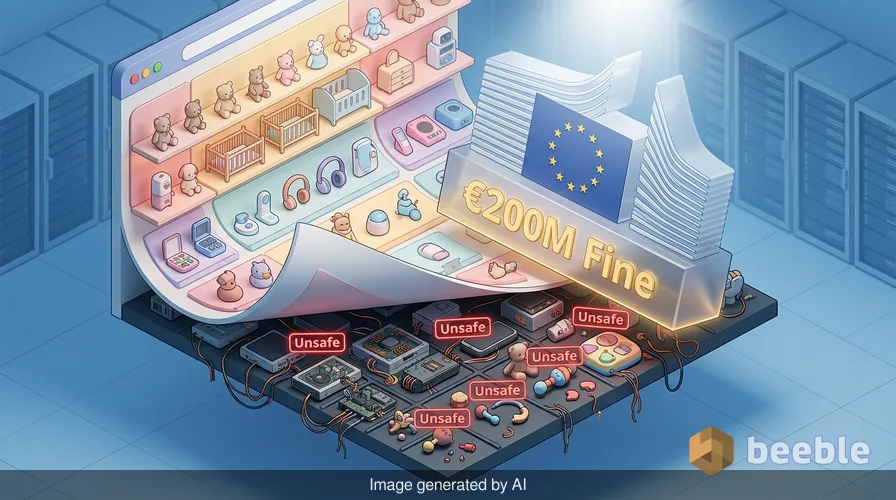
Here is what the algorithms don't want you to see while you are scrolling through endless rows of five-euro gadgets and adorable nursery decor. Behind the glossy interface of Temu, the e-commerce titan that has taken the world by storm, lies a digital ecosystem that regulators now say is systematically failing to protect its users. On Thursday, May 28, 2026, the European Commission pulled back the curtain, slapping Temu with a massive €200 million fine for allowing dangerous baby toys and faulty electronics to flood the European market.
As the Legal Navigator, I often see the law acting as a safety net—a quiet, invisible mesh designed to catch us when products fail. But when a platform becomes as massive as Temu, that net needs to be made of steel, not silk. This fine isn't just a slap on the wrist; it is a seismic shift in how we hold global digital marketplaces accountable for the physical safety of the items that land on our doorsteps.
The Mystery Shoppers Who Found the Smoking Gun
This wasn't a decision based on hearsay or a few angry customer reviews. The European Commission’s investigation, which officially began in late 2024, utilized an independent testing organization to conduct a massive "mystery shopping" exercise. These investigators acted like everyday consumers, purchasing hundreds of items to see what would actually arrive in the mail.
The results were harrowing. A significant percentage of the chargers purchased failed basic electrical safety tests, posing immediate risks of fire or electric shock. Even more concerning was the data regarding baby toys. Investigators found a high proportion of products aimed at infants that featured small, detachable parts—perfectly sized to become suffocation hazards—or contained hazardous chemicals at levels far exceeding legal limits in the European Union.
In the eyes of the law, a marketplace cannot simply claim to be a neutral middleman when the products it facilitates are inherently dangerous. While Temu has built its brand on "shopping like a billionaire," the EU is reminding them that safety is a non-negotiable cost of doing business.
When the Algorithm Becomes an Accomplice
One of the most fascinating aspects of this ruling is the focus on Temu’s platform design. Usually, when we talk about product liability—the legal responsibility a seller has for a defective product—we focus on the item itself. However, under the Digital Services Act (DSA), the Commission is looking at the "recommender algorithms" that decide what you see next.
Investigators noted that Temu’s software didn't just host illegal listings; it amplified them. Through influencer-led promotional programs and sophisticated AI suggestions, the platform acted as a megaphone for unsafe products. By failing to account for how their own technology spread these risks, Temu was found to be negligent. This is a critical distinction: the platform isn't just a digital shelf; it is an active participant in the sales process.
To put it another way, if a physical store manager sees a box of exploding toasters and decides to put them on a high-traffic end-cap display with a "Manager's Special" sign, they are far more liable than if the toasters were hidden in a dusty corner. The EU is essentially saying that Temu’s algorithm is that store manager.
Understanding the DSA: The New Rulebook for Giants
To understand why this fine is so large, we have to look at the Digital Services Act (DSA). In practice, the DSA categorizes platforms based on their size. Because of its massive user base, Temu is designated as a "Very Large Online Platform" (VLOP). This isn't just a fancy title; it brings with it stringent statutory obligations.
| Feature | Standard Platform Rules | VLOP Rules (Temu's Category) |
|---|---|---|
| Risk Assessment | Basic self-reporting | Comprehensive, evidence-based audits |
| Illegal Content | Remove upon notification | Proactive systemic prevention |
| Algorithmic Transparency | Minimal requirements | Must explain and mitigate risks of bias/harm |
| External Audits | Not typically required | Mandatory annual independent audits |
| Fines for Breach | Standardized | Up to 6% of global annual turnover |
Henna Virkkunen, the EU’s executive vice-president for tech sovereignty, was clear: risk assessments are not "box-ticking exercises." They are the backbone of the law. Temu’s failure to provide a nuanced, evidence-based assessment of the risks they pose to consumers made this fine almost inevitable. Essentially, Temu tried to treat a complex legal requirement as a simple formality, and the Commission wasn't having it.
The "Disproportionate" Defense and the Road Ahead
Temu, for its part, is not taking the news quietly. In a statement, the company expressed respect for the DSA’s objectives but called the €200 million fine "disproportionate." In a regulatory context, this usually means the company believes the punishment far outweighs the crime, or that they weren't given enough credit for their existing safety measures.
However, the clock is now ticking. Under Article 75 of the DSA, Temu has until August 28, 2026, to submit a formal action plan. This plan must detail exactly how they will fix their risk-assessment failures. If they fail to comply, they face periodic penalty payments—daily fines that can add up faster than a flash sale on a holiday weekend.
How You Can Protect Yourself Right Now
While the regulators fight it out in Brussels, you are still the one clicking "buy." Until these platforms are fully compliant, the burden of proof regarding safety often falls—unfairly—on the consumer. Here is how you can act as your own first line of defense:
- The "Smell Test" for Toys: If a plastic toy has a strong, pungent chemical odor, it may contain high levels of phthalates or other banned substances. If it feels flimsy or has small parts that pop off with a light tug, it is a hazard.
- Verify Electrical Certifications: Look for the "CE" mark, but be cautious. Some unscrupulous manufacturers use a very similar "China Export" logo. Real CE marks have specific spacing. If a charger is suspiciously light or gets excessively hot during its first use, stop using it immediately.
- Read the One-Star Reviews: Don't just look at the average rating. Filter for the lowest reviews to see if other users are reporting safety issues, melting plastic, or choking hazards.
- Document Everything: If you do receive a product that is clearly dangerous or doesn't meet safety standards, take photos and report it to both the platform and your local consumer protection agency. Your report could be the data point that triggers the next investigation.
The Legal Navigator’s Takeaway
This landmark fine serves as a reminder that the law is not a static document; it is a living shield that must adapt to the speed of the internet. For too long, the digital economy has operated on a "move fast and break things" mentality. But when the things being broken are baby toys and electrical grids, the cost of innovation is simply too high.
Ultimately, this isn't just about Temu. It is a warning to every global platform: the era of the digital Wild West is over. Robust regulation is here to stay, and the price of non-compliance is finally high enough to make even the biggest giants take notice.
What you should do next: If you have recently purchased infant products or electrical chargers from a major discount platform, inspect them today for the hazards mentioned above. If they seem precarious, stop using them. Your family’s safety is worth more than any discount.
Sources:
- Digital Services Act (EU Regulation 2022/2065)
- European Commission Formal Decision on Temu Non-Compliance (May 2026)
- EU Toy Safety Directive (Directive 2009/48/EC)
- General Product Safety Regulation (GPSR)
Disclaimer: This article is for informational and educational purposes only and does not constitute formal legal advice. Laws and regulations regarding consumer safety vary by jurisdiction. Please consult with a qualified attorney or your local consumer protection bureau for specific legal issues or claims.



See you on the other side.
Our end-to-end encrypted email and cloud storage solution provides the most powerful means of secure data exchange, ensuring the safety and privacy of your data.
/ Create a free account
