


The Founding Fathers of AI Are Switching Sides, and Your Digital Future is the Prize

In the mid-1950s, a group known as the 'Traitorous Eight' walked out of Shockley Semiconductor to found Fairchild Semiconductor. That single migration of talent didn’t just create a new company; it effectively birthed Silicon Valley as we know it, setting the stage for every microchip and smartphone in existence today. History has a curious way of repeating itself, though the modern battleground isn't made of silicon wafers, but of neural networks and massive data clusters.
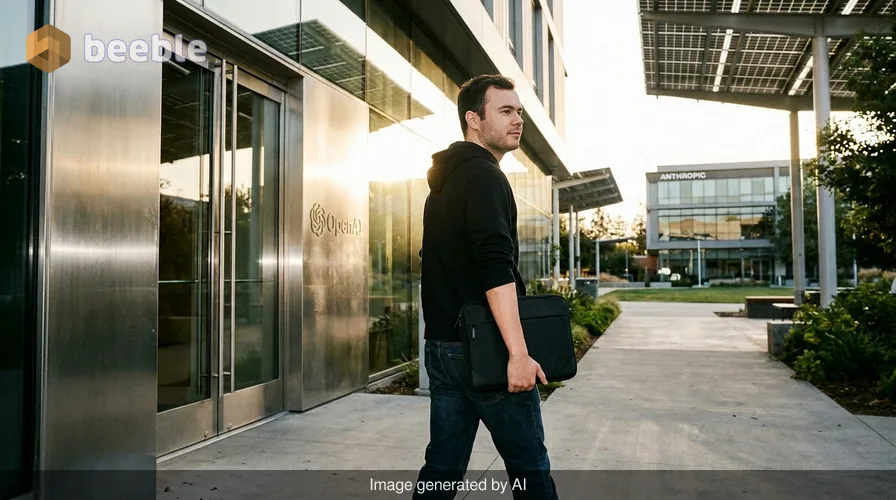
We are currently witnessing a talent migration of similar proportions. Andrej Karpathy, a name synonymous with the early days of OpenAI and the architectural brains behind Tesla’s most ambitious AI projects, has officially joined Anthropic. To the casual observer, this might look like another high-level executive playing musical chairs. However, looking at the big picture, this move marks a systemic shift in the AI arms race, moving away from the era of 'first-to-market' hype and into an era of robust, foundational refinement.
The Architect of Vision Moves to the Pretraining Lab
Karpathy is not your typical tech executive. While many in his position prefer the boardroom, Karpathy has historically remained grounded in the code and the classroom. After helping found OpenAI, he moved to Tesla, where he led the computer vision team. If you’ve ever seen a Tesla navigate a complex intersection or identify a pedestrian in the rain, you’ve seen a tangible result of his work.
After a brief return to OpenAI and a stint launching Eureka Labs—an AI-integrated education startup—Karpathy has now landed at Anthropic’s pretraining team. To put it another way, he is going back to the digital quarry. In the world of Large Language Models (LLMs), pretraining is the most critical and expensive phase. It is the process of feeding a model billions of pages of text, code, and human thought to give it a foundational understanding of the world.
By joining the team led by Nick Joseph, Karpathy is positioning himself at the very start of the pipeline. He isn't just tweaking the chatbot's personality; he is helping build the core cognitive engine that makes Claude—Anthropic’s flagship AI—tick. For the average user, this means the 'brain' of the AI you interact with is about to get a major architectural upgrade from one of the industry's most respected engineers.
Why the Talent Drain at OpenAI Matters
Karpathy’s move doesn't happen in a vacuum. He joins a growing list of 'OpenAI alumni' who have migrated to Anthropic, including co-founder John Schulman. When you consider that other heavyweights like Ilya Sutskever and Mira Murati have also departed the ChatGPT maker to start their own ventures, a pattern emerges.
Historically, when a dominant market leader sees its core technical soul depart, it signals a shift from a research-first culture to a product-first culture. OpenAI has become a commercial juggernaut, focused on scaling and monetization. Conversely, Anthropic has positioned itself as the 'safety-first' alternative, utilizing a method called Constitutional AI to make models that are more predictable and less likely to 'hallucinate' or go off the rails.
For a researcher like Karpathy, the appeal of Anthropic likely lies in this focus on foundational R&D. Practically speaking, this suggests that the next few years of AI development will be less about adding flashy new buttons to an app and more about making the underlying intelligence more resilient and scalable.
Under the Hood: What is Pretraining, Anyway?
To understand why this hire is such a big deal, we have to look under the hood of how these models are built. Think of an AI model like a tireless intern.
- The Pretraining Phase: This is the intern's entire education. They read every book in the library, every line of code on GitHub, and every article on the internet. They learn how language works, how logic flows, and how to predict the next word in a sequence.
- The Fine-Tuning Phase: This is the intern's first week on the job. They are given specific instructions on how to behave, how to be polite, and how to follow company rules.
Karpathy is joining the 'education' phase. If the pretraining is flawed, no amount of fine-tuning can fix it. If the intern learns from bad textbooks, they will always have gaps in their logic. Karpathy’s expertise in deep learning and his ability to streamline complex training runs are intended to make that 'education' more efficient and comprehensive. For the consumer, this translates to an AI that is better at complex reasoning—the kind required for coding, scientific analysis, and nuanced writing—rather than just mimicking human speech patterns.
The Consumer Impact: More Than Just a Better Chatbot
From a consumer standpoint, we often view AI through the narrow lens of a chat box on our screen. But the interconnected nature of modern tech means that Karpathy’s work at Anthropic will likely ripple out into everyday life in more tangible ways.
| Feature | Current State (Pre-2026) | The "Karpathy-Era" Goal |
|---|---|---|
| Reasoning | Often trips up on multi-step logic or 'trick' questions. | Intuitive, systemic thinking that catches its own errors. |
| Reliability | Prone to 'hallucinations' or making up facts confidently. | High-fidelity outputs grounded in robust pretraining data. |
| Integration | Acts as a standalone tool you visit in a browser. | A streamlined assistant that understands context across apps. |
| Education | Provides static explanations or generic summaries. | Dynamic, personalized tutoring (via Eureka Labs influence). |
Looking at the market side, this move bolsters Anthropic’s valuation and its appeal to cloud providers like Amazon and Google. As these giants compete to offer the most sophisticated AI tools to businesses, having a 'dream team' of researchers becomes a massive competitive advantage. Ultimately, this competition is good for the user; it prevents a monopoly on intelligence and forces companies to innovate on privacy and reliability rather than just speed.
The "So What?" Filter
So, why should you care that a scientist changed offices? Because AI is becoming the invisible backbone of modern life. It’s the engine that helps your doctor diagnose illnesses, the tool that helps your bank catch fraud, and increasingly, the interface through which you interact with all your digital devices.
When someone of Karpathy's caliber shifts focus, the entire industry pivots with them. His involvement suggests that the next generation of Claude won't just be 'smarter'—it will be more foundational. It will likely be better at the 'boring' but essential tasks like structured data analysis and long-term memory, which are the keys to making AI truly useful in a professional setting.
Curiously, Karpathy also mentioned his ongoing passion for education and his platform, Eureka Labs. By joining Anthropic while maintaining his educational mission, he is bridging the gap between the high-tower research of AI and the practical democratization of that technology for students and lifelong learners.
Looking Ahead: The Shifting Landscape
As we move deeper into 2026, the 'frontier' of AI is no longer a wild west of experimental demos. It has become a volatile but structured industry where the quality of the 'pretraining' determines who wins the market.
In everyday life, you might not notice a change tomorrow. But in six months, when your AI assistant starts catching subtle errors in your work that it used to miss, or when it explains a complex physics concept to your child with the patience and clarity of a master teacher, you’ll be seeing the fingerprints of this talent shift.
The bottom line is that the 'brain trust' that built the first wave of AI is now splitting up to build the second, more mature wave. Anthropic just secured one of the most important architects of that future.
Instead of just watching the headlines for the next 'GPT-X' release, observe how your digital habits change. Are you starting to trust the AI with more complex tasks? Is the 'tired intern' finally starting to act like a seasoned professional? That transition, more than any corporate press release, is the real metric of success for the engineers like Karpathy who are building the world under the hood.
Sources:
- Anthropic Official Press Release and Personnel Announcements, May 2026.
- Personal communications and social media statements from Andrej Karpathy (X/Twitter).
- Historical data on OpenAI founding members and subsequent departures (2023-2025).
- Market analysis reports on LLM pretraining costs and efficiency, 2025-2026.
- Eureka Labs Mission Statement and Educational Roadmap.



See you on the other side.
Our end-to-end encrypted email and cloud storage solution provides the most powerful means of secure data exchange, ensuring the safety and privacy of your data.
/ Create a free account
