


The Geopolitical Reckoning of Manus: Why Meta’s $2 Billion Gamble Was Always Heading for a Collision

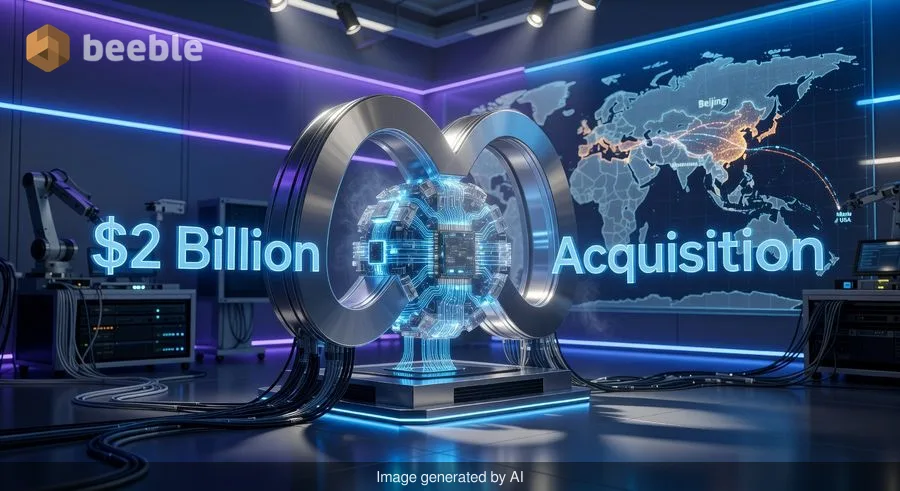
Can a piece of code ever truly be stateless in an era of digital nationalism? This is the question currently echoing through the halls of the Rayburn House Office Building and the boardrooms of Menlo Park. For those who have followed the meteoric, and often precarious, rise of Manus, the current regulatory firestorm isn't just predictable—it was written into the startup’s very DNA.
We are witnessing a paradigm-shifting moment where the borderless aspirations of software meet the hard realities of geography. Manus, the AI agent startup that promised to automate everything from your vacation planning to your stock portfolio, has become the ultimate lightning rod in the technological cold war between Washington and Beijing. To understand why this was inevitable, we have to look past the sleek demo videos and into the intricate machinery of global venture capital and national security.
The Agentic Spark and the Benchmark Bet
When Manus first appeared on the scene last spring, it felt like a disruptive force of nature. While the industry was obsessed with large language models that could talk, Manus built an agent that could actually do. It didn't just tell you how to screen job candidates; it logged into the portals and did it for you. This performant approach to AI—often referred to as the GAIA (General AI Agent) model—was touted as a sophisticated alternative to OpenAI’s Deep Research.
Curiously, the tech world seemed to look past the company’s origins in the heat of the hype cycle. When Benchmark led a $75 million funding round at a $500 million valuation, it was a remarkable signal of confidence. Nevertheless, the political immune system began to react almost immediately. Senator John Cornyn’s public questioning of American investors subsidizing a company with deep ties to a primary adversary wasn't just a tweet; it was a warning shot. In the world of high-stakes tech, ideas are building blocks, but when those blocks are perceived as being owned by a foreign power, the structure becomes inherently volatile.
The Singapore Pivot: A Bridge to Nowhere?
As the heat intensified, Manus attempted a classic maneuver: the geographical pivot. By relocating to Singapore, the company sought to present itself as a neutral entity, a bridge between two worlds. In practice, however, changing a mailing address does little to scrub the provenance of the underlying architecture.
I remember growing up in a small town where the local water and power infrastructure was constantly failing. To us, innovation wasn't about the latest social network; it was about whether the lights stayed on and the water was clean. I carry that perspective with me when I evaluate these transformative technologies. We often treat the cloud as a utility grid—invisible and omnipresent—but every grid has a source. For Manus, the source was a talent pool and a data ecosystem that Washington viewed with deep suspicion. No amount of sleek Singaporean branding could change the fact that the company’s core intellectual property was seen as a strategic asset in a zero-sum game.
Why Meta Paid the $2 Billion Premium
By December 2025, Manus was no longer just a promising demo; it was a robust business pulling in over $100 million in annual recurring revenue. For Mark Zuckerberg, who has spent years trying to pivot Meta from a social media giant into an AI powerhouse, Manus was the missing piece of the puzzle. Meta’s future depends on making AI intuitive and seamless for billions of users.
Under the hood, Manus provided the deterministic execution layer that Meta’s Llama models lacked. If Meta wants your smart glasses to not just recognize a grocery store but also order your milk, it needs agentic capabilities. Consequently, the $2 billion price tag was less about the current revenue and more about securing a scalable future. Zuckerberg wasn't just buying a company; he was buying a head start. Oddly enough, he also bought a massive geopolitical headache that no amount of asynchronous processing can solve.
The Reckoning: Security as an Immune System
Today’s backlash is the natural result of a system trying to protect itself. We are seeing a multifaceted crackdown that involves CFIUS (the Committee on Foreign Investment in the United States) and a host of export control advocates. The core concern is that Manus’s technology, now integrated into the Meta ecosystem, could serve as a black box—a sophisticated tool for data harvesting or economic disruption that remains partially understood by its new owners.
To put it another way, the network is no longer the wild west where anything goes. It is becoming a series of gated communities. For a journalist who prefers eco-tourism and practices regular digital detoxes to stay grounded, the irony is palpable. We build these incredible tools to free us from mundane tasks, yet we end up enslaved to the geopolitical tensions they create. The Manus story is a reminder that in the modern era, software architecture is as much about political blueprints as it is about code.
Practical Takeaways for the AI Industry
As the dust settles on the Meta-Manus deal, there are several lessons for founders and investors navigating this nuanced landscape:
- Provenance Matters: Where your code is born and who trains your models is now as important as what the code actually does.
- The Neutrality Myth: Singapore and Dubai are popular hubs, but they do not provide a total shield from the regulatory reach of the U.S. or China.
- Agentic Risk: Because agents can take actions (moving money, accessing private data), they face a much higher level of scrutiny than passive generative models.
- Due Diligence 2.0: Investors must evaluate geopolitical risk as a core part of their financial modeling, not just a footnote.
Ultimately, the Manus saga tells us that the era of "move fast and break things" has been deprecated. In its place is a more resilient, yet far more restricted, approach to global tech. We must remain hungry for knowledge and ready to learn, but we must also be realistic about the world we are building.
If you are a developer or a tech leader, now is the time to audit your own supply chain. Are you building on bridges that might be burned tomorrow? Start by diversifying your infrastructure and ensuring your compliance teams are as cutting-edge as your engineering teams.
Sources:
- Benchmark Venture Capital Annual Reports
- Meta Platforms Investor Relations (Q4 2025/Q1 2026)
- U.S. Department of Commerce Export Control Guidelines
- Official Manus AI Product Documentation and Technical Blogs
- Public Statements from the Office of Senator John Cornyn



See you on the other side.
Our end-to-end encrypted email and cloud storage solution provides the most powerful means of secure data exchange, ensuring the safety and privacy of your data.
/ Create a free account
