


The Glass Bank Vault: Why Tether’s First Full Audit Matters for Your Digital Wallet

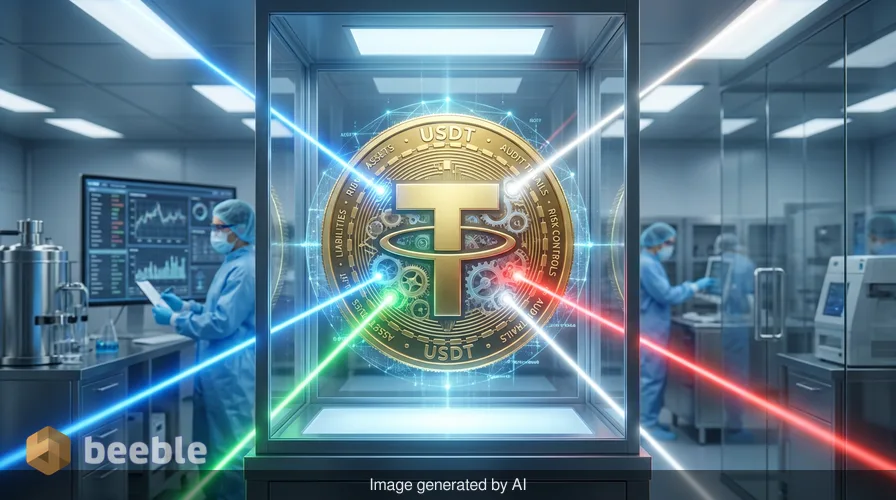
Have you ever handed over your hard-earned cash for a gift card, trusting that the plastic rectangle in your hand is actually worth the fifty dollars printed on it? We do this constantly—at coffee shops, retail stores, and online marketplaces. We rarely stop to ask if the company behind the card actually has the funds to honor it. We simply assume the system works. In the digital age, this collective belief system is the glue holding the financial world together. But what happens when that trust involves not just a fifty-dollar gift card, but a $180 billion cornerstone of the global economy?
For years, Tether (USDT) has been the de facto reserve currency of the crypto world. It is the invisible bridge many of us use to move between the volatile waves of Bitcoin and the stable shores of the US dollar. Yet, for just as long, a cloud of skepticism has hung over its reserves. On March 24, Tether announced a shift that could fundamentally alter this landscape: the engagement of a Big Four accounting firm to conduct its first-ever full independent audit. This isn't just a corporate milestone; it is a systemic pivot toward transparency in a market that has long resembled a digital wild west.
Beyond the Snapshot: Attestation vs. Audit
To understand why this matters, we have to look under the hood of how financial trust is manufactured. Historically, Tether has relied on quarterly attestations. In everyday terms, an attestation is like a selfie of a bank account taken at 11:59 PM on a Tuesday. It shows that the money was there at that specific moment, but it doesn't tell you if it was borrowed five minutes earlier or spent five minutes later. It is a transient glimpse, not a complete history.
A full audit, by contrast, is more like a deep-tissue massage of a company’s financial health. It examines assets, liabilities, internal controls, and risk exposure over a sustained period. It looks for the structural integrity of the vault, not just the pile of gold inside. By committing to this level of scrutiny, Tether is attempting to move from a "trust us" model to a "verify us" model—the same standard used by the massive financial institutions that manage our pensions and savings accounts.
The Weight of $180 Billion
Zooming out, the scale of USDT is difficult to overstate. With a market cap exceeding $180 billion, Tether is no longer just a niche tool for tech enthusiasts; it is a pervasive force in global liquidity. Paradoxically, while crypto was founded on the idea of decentralization—removing the need for middleman banks—the industry has become deeply rooted in a very centralized entity.
If Tether were a traditional US bank, its deposit base would place it among the largest in the country. Consequently, any doubt about its stability isn't just a "crypto problem." It is a systemic risk. We saw this play out in 2021 when US regulators fined Tether for misleading statements regarding its reserves. The memory of that event, combined with the collapse of other stablecoin projects in recent years, has left retail investors feeling a lingering financial anxiety. We want the convenience of digital money, but we are tired of the opaque nature of the engines driving it.
Why Now? The Pressure of the Grown-Ups
Curiously, Tether’s move toward transparency isn't happening in a vacuum. It is a symptomatic response to two major forces: institutional pressure and the looming shadow of global regulation. As traditional hedge funds and corporate treasuries dip their toes into digital assets, they bring with them a mundane but rigid requirement: paperwork. They cannot risk billions on a "maybe."
At its core, this audit is an admission that for crypto to reach its next phase of evolution, it must shed its rebellious image and embrace the boring, rigorous standards of the old world. From a consumer standpoint, this is a net positive. It suggests that the industry is moving away from speculative hype and toward a more resilient, transparent framework.
| Feature | Quarterly Attestation | Full Independent Audit |
|---|---|---|
| Scope | Snapshot of assets at a specific point in time. | Comprehensive review of assets, liabilities, and controls. |
| Depth | Verifies existence of funds on a given date. | Tests internal processes and historical transactions. |
| Standard | Lower threshold; common in early-stage crypto. | The gold standard for global financial institutions. |
| Trust Level | Moderate; leaves room for "window dressing." | High; provides a nuanced view of financial health. |
The Blockchain as a Glass Bank Vault
I often think of the ideal blockchain as a glass bank vault. In this metaphor, everyone can see exactly how much money is inside, but only the owner holds the key to move it. For years, Tether’s vault has been made of frosted glass—we could see shapes and colors, but the details were blurry. A full audit effectively wipes the steam off the windows.
On an individual level, this transparency helps quiet the "FUD" (Fear, Uncertainty, and Doubt) that often drives emotional, and often regrettable, trading decisions. When we know the foundation is solid, we are less likely to panic-sell during a market correction. We can treat our digital assets more like a tool and less like a gamble.
Reframing Our Relationship with Digital Dollars
Ultimately, Tether’s journey toward a full audit reflects a broader shift in how we perceive value. Fiat currency is, at its heart, a collective belief system backed by institutional authority. Stablecoins like USDT are an attempt to port that belief system into a digital, borderless format. But for that belief to hold, it needs more than just a whitepaper; it needs the cold, hard proof of an independent third party.
As we navigate this shifting landscape, it’s worth practicing a bit of financial mindfulness. Instead of blindly trusting the digital interfaces on our phones, we should ask: Where is the transparency? Is this asset a resilient store of value or a speculative bubble? Tether’s move doesn't solve every problem in the crypto markets, but it sets a new benchmark. It reminds us that in the world of money, whether it’s a grocery bill or a billion-dollar reserve, clarity is the only real antidote to volatility.
Sources
- Tether Treasury and Reserve Transparency Reports 2024-2026
- Commodity Futures Trading Commission (CFTC) Historical Enforcement Actions
- Big Four Accounting Standards and Audit Procedures Manuals
- Global Stablecoin Regulatory Frameworks (FSB and MiCA Guidelines)
- Market Capitalization Data from Major Digital Asset Indices



See you on the other side.
Our end-to-end encrypted email and cloud storage solution provides the most powerful means of secure data exchange, ensuring the safety and privacy of your data.
/ Create a free account
