


The Global Tech Giant Behind Your iPhone is Now Building Poland’s First Electric Car

Picture a sleek, mid-sized electric SUV silently navigating the cobblestone streets of Warsaw or the winding highways of the Sudetes. To the average driver, it represents a cleaner commute or a hedge against volatile gas prices. But to understand how that car actually reaches a driveway in 2029, we have to trace the journey backward—from the charging port to the assembly line, and eventually to a massive flow of capital and blueprints moving between Taipei and Warsaw.
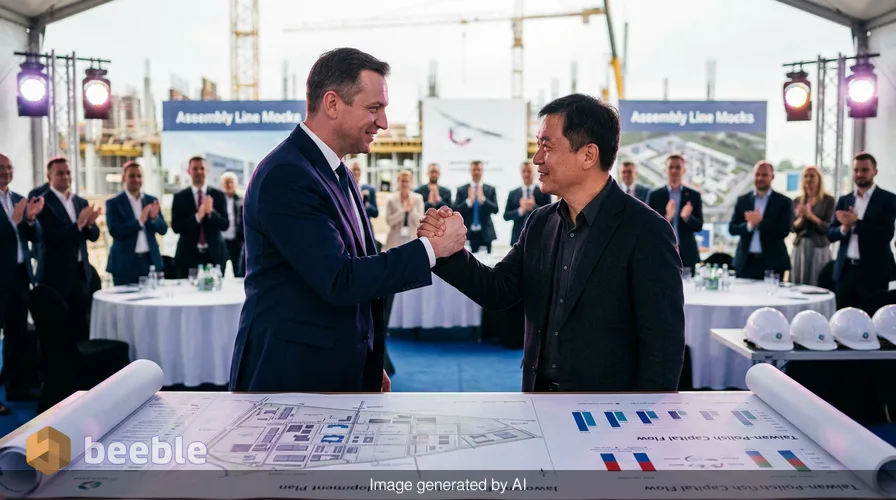
ElectroMobility Poland (EMP), the state-backed venture behind the country’s ambitious automotive dreams, has officially signaled that its long-gestating project is moving out of the purely conceptual phase. By partnering with Taiwan’s Foxconn—the same manufacturing powerhouse that assembles the world’s most iconic smartphones—Poland is attempting to leapfrog decades of traditional combustion-engine history. This isn't just about building a car; it is about building a scalable industrial ecosystem in Jaworzno that could redefine Poland’s role in the global supply chain.
The Industrial Backbone: Why Foxconn Matters
For the uninitiated, Foxconn (formally Hon Hai Technology Group) is the invisible backbone of the modern digital world. They are the masters of "contract manufacturing," a model where they provide the massive scale and technical precision to build products designed by others. By bringing in their EV subsidiary, Foxtron Vehicle Technologies, Foxconn is essentially offering Poland a foundational toolkit for car manufacturing.
Historically, starting a car company required a century of mechanical expertise. Today, an electric vehicle is essentially a massive, high-powered computer on wheels. Foxconn’s entry into the partnership brings what EMP CEO Cyprian Gronkiewicz calls "technological depth." Practically speaking, this means Poland isn't just buying a factory; they are gaining access to a modular platform. Think of it like a high-tech LEGO set for cars: the battery, the motors, and the software interface are already engineered to work together, allowing EMP to focus on design and local market needs without reinventing the wheel.
This partnership is designed to be systemic. The goal is to move beyond simple assembly—where workers merely bolt together parts shipped from overseas—to a model of genuine technology transfer. EMP plans to develop in-house vehicle design capabilities and integrate local Polish suppliers into the mix. This ensures that the economic benefits don't just flow back to Taiwan but take root in the Silesian soil.
Inside the Jaworzno Hub: A Factory of the Future
The planned facility in Jaworzno is not your grandfather’s smoky manufacturing plant. It is being designed as an integrated hub where the physical vehicle and its digital soul are created simultaneously. The site will feature standard automotive staples like body and paint shops, but the real heart of the operation lies in the assembly of batteries and electric drives.
Looking at the big picture, the scale here is significant. EMP expects to start with a production capacity of 100,000 cars per year. While that might sound like a lot, it is just the baseline. The infrastructure is being built to be streamlined for expansion, with a ceiling of 400,000 vehicles annually. To put that in perspective, that would make the Jaworzno plant one of the larger automotive hubs in Central Europe, rivaling established players in the region.
| Feature | Initial Phase (2029) | Full Expansion Goal |
|---|---|---|
| Annual Production | 100,000 vehicles | 380,000 – 400,000 vehicles |
| Core Focus | Local Polish Market | Entire European Union |
| Workforce Focus | Assembly & Body Work | R&D, Software, Data Analytics |
| Supply Chain | International Partners | Localized Battery & Component Ecosystem |
Beyond the hardware, the hub will include a research and development center focused on software and data analytics. In the modern EV market, the software that manages your battery's range or your car’s self-driving features is just as important as the steel used in the frame. By centering distribution for the entire European market in Poland, the project aims to turn the country into a resilient logistics anchor for the EU's green transition.
The "So What?" Filter: Why This Matters to You
You might wonder why a state-backed industrial deal deserves your attention today, especially with the first cars not scheduled to roll off the line until 2029. The answer lies in the shifting reality of the European energy landscape. Recent years have seen unprecedented volatility in fuel costs, exacerbated by the ongoing Iran war, which has acted like a slow leak in the tires of the traditional internal combustion market.
As fuel prices remain stubbornly high, the transition to electric mobility is no longer a luxury choice for the environmentally conscious; it is becoming a practical necessity for the budget-conscious household. For the average user, the entry of a new, locally produced brand usually means more competitive pricing. When cars are built closer to where they are sold, logistics costs drop, and they aren't subject to the same opaque import tariffs that affect vehicles coming from outside the European trade zone.
Furthermore, this project is a massive bet on your local economy. The funding, sourced from the National Recovery Plan and the Reprivatisation Fund, is essentially your tax Euros being put to work to ensure Poland doesn't get left behind as the digital crude oil—data and electricity—replaces traditional petroleum.
Navigating the Road Ahead
Despite the robust optimism from EMP and government officials, a healthy dose of skepticism is useful when dealing with timelines that stretch three years into the future. The automotive world is cyclical and notoriously difficult for newcomers. While Foxconn provides the technical hardware, EMP must still build a brand from scratch—a task that requires more than just good engineering; it requires winning the trust of consumers who have spent decades buying Volkswagens, Toyotas, or Teslas.
From a consumer standpoint, the "wait and see" approach is standard. However, the commitment to building an overarching electric mobility ecosystem—including the battery sector—suggests that this is more than a vanity project. It is a systemic attempt to future-proof the regional economy.
Ultimately, what this means is that by the end of this decade, the "Made in Poland" label might carry a very different weight. It won't just be associated with heavy industry or agricultural exports, but with high-end, software-driven mobility. As the digital and physical worlds continue to merge, the Jaworzno hub represents a tangible effort to ensure that the next generation of transportation is built, designed, and distributed from within the heart of Europe.
For now, keep an eye on the development of the Jaworzno site. The success of this venture will be measured not just in cars sold, but in how effectively Poland can translate Foxconn’s industrial scale into a user-friendly, homegrown champion that survives the volatile shifts of the 2030s market.
Sources:
- ElectroMobility Poland Strategic Partnership Announcement (May 2026)
- Foxconn (Hon Hai Technology Group) Investor Relations - EV Division Update
- European Automobile Manufacturers' Association (ACEA) Q1 2026 Market Report
- Polish Ministry of State Assets - Industrial Development Division Press Release



See you on the other side.
Our end-to-end encrypted email and cloud storage solution provides the most powerful means of secure data exchange, ensuring the safety and privacy of your data.
/ Create a free account
