


The Great Digital Border: Why Online Age Checks Are Leading Us Toward a VPN Crackdown

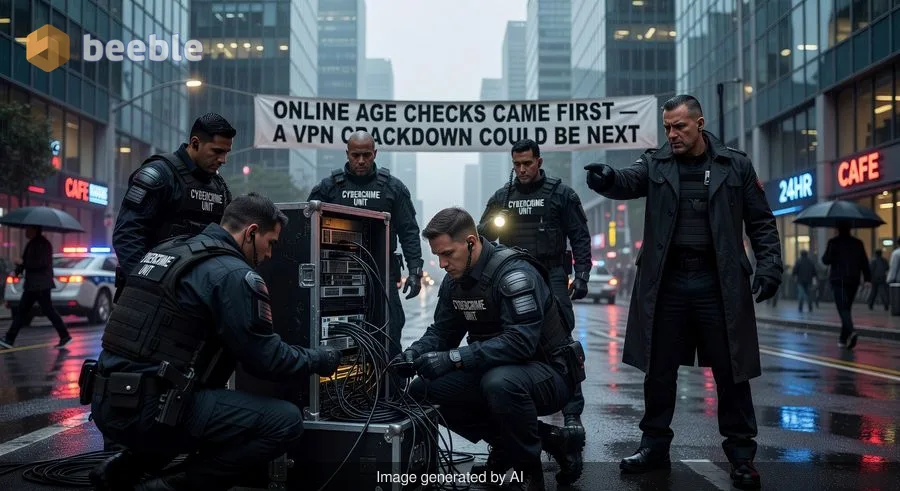
The End of the Digital Wild West?
Have you ever wondered if the internet’s borderless nature is finally reaching its expiration date? For decades, the web has functioned as a sprawling, interconnected ecosystem where geography felt like an afterthought. However, a seismic shift is underway. What began as a series of localized efforts to protect minors from adult content has evolved into a high-stakes standoff between legislative intent and the tools we use to maintain our privacy. As age verification laws move from experimental proposals to enforceable mandates, the humble Virtual Private Network (VPN) has found itself squarely in the crosshairs of global regulators.
From Corporate Tunnels to Privacy Shields
To understand why we are approaching a precarious tipping point, we must look back at the innovative roots of the VPN. In the 1990s, VPNs weren't the consumer-facing privacy shields they are today. Instead, they were the building blocks of secure corporate communication. I remember my early days working in tech startups where setting up a VPN was a rite of passage for any remote employee. It was a mundane, utilitarian tool designed to let a developer in a coffee shop access a server in a basement three states away without exposing sensitive data to the open web.
Companies like Microsoft and Cisco pioneered these encrypted “tunnels,” and later, the launch of OpenVPN in 2001 provided an open-source alternative that democratized the technology. Over time, the use case shifted. As internet service providers began tracking browsing history and streaming services started locking content behind regional walls, the VPN became a staple of the digital nomad lifestyle and a fundamental tool for anyone concerned with data sovereignty.
The Friction of Age Verification
Fast forward to 2026, and the legislative landscape looks remarkably different. From the United Kingdom’s Online Safety Act to a patchwork of state-level laws in the U.S., the mandate is clear: platforms must verify the age of their users. While the goal—protecting children—is universally supported, the implementation is an intricate puzzle. Most age-gating methods require users to upload government IDs or undergo biometric face scans, creating a massive privacy friction point.
Consequently, many users have turned to their trusted VPNs to bypass these digital checkpoints. By masking their IP address and appearing to browse from a jurisdiction without strict age-verification requirements, users can maintain their anonymity. To lawmakers, however, this isn't just a privacy choice; it is a loophole that renders their hard-won regulations toothless.
Why a VPN Crackdown is the Next Logical Step
If a law requires a door to be locked, but everyone has a skeleton key, the authorities will eventually come for the key. We are seeing the first signs of this shift. Regulators are no longer satisfied with simply policing content providers; they are beginning to eye the infrastructure that facilitates evasion.
To put it another way, if the internet is a living organism, VPNs have become the antibodies that resist regulatory control. A crackdown could take several forms, each more nuanced than the last:
- App Store Pressure: Governments may pressure Apple and Google to remove VPN apps that do not implement their own age-verification or geo-filtering protocols.
- Liability Shifts: New legislation could hold VPN providers legally responsible if they knowingly allow users to bypass local safety laws.
- Technical Throttling: ISPs could be mandated to identify and throttle encrypted traffic that matches known VPN signatures, a tactic already used by some authoritarian regimes.
The Privacy Paradox: A Personal Reflection
Managing remote teams over the last decade has taught me that security is rarely a zero-sum game. When I worked with a team across three continents, our VPN wasn't a tool for mischief; it was our lifeline. It protected our intellectual property from prying eyes and secured our transitions to remote work during the pandemic.
Curiously, the very technology that protects a journalist in a war zone or a corporate accountant in a home office is the same technology that allows a teenager to bypass a safety filter. This is the privacy paradox. By targeting VPNs to enforce age checks, we risk dismantling the essential security infrastructure that keeps the modern digital economy functioning. It is a transformative moment where the desire for safety threatens to collide with the necessity of encryption.
Navigating the Shifting Landscape
As we move further into 2026, the relationship between privacy tools and the law will remain in flux. For the average user, the "set it and forget it" era of VPN usage may be coming to an end. Here is what you should consider as these regulations evolve:
- Audit Your Provider: Ensure your VPN provider has a clear, audited no-logs policy. If a crackdown occurs, providers with data to hand over will be the first targets.
- Diversify Your Tools: Don't rely solely on a single VPN protocol. Familiarize yourself with WireGuard and obfuscated servers, which are harder for ISPs to detect and block.
- Stay Informed on Local Laws: Digital borders are becoming more rigid. Understand the specific regulations in your region, as the legal definition of "evasion" is currently being rewritten in real-time.
The Path Forward
Nevertheless, the solution to protecting minors shouldn't be the degradation of privacy for everyone. The journey toward a safer internet is a marathon, not a sprint, and it requires more sophisticated building blocks than simple bans or blocks. We need innovative technologies that can verify attributes—like being over 18—without requiring the disclosure of a full identity or the elimination of encryption tools.
Sources:
- Electronic Frontier Foundation (EFF) reports on Age Verification and Privacy.
- OpenVPN Historical Archives and Documentation.
- UK Ofcom guidance on the Online Safety Act 2023/2025.
- Center for Democracy and Technology (CDT) analysis on VPN regulation.



See you on the other side.
Our end-to-end encrypted email and cloud storage solution provides the most powerful means of secure data exchange, ensuring the safety and privacy of your data.
/ Create a free account
