


The Hidden AI Shield Protecting Your Power Grid and Water Supply

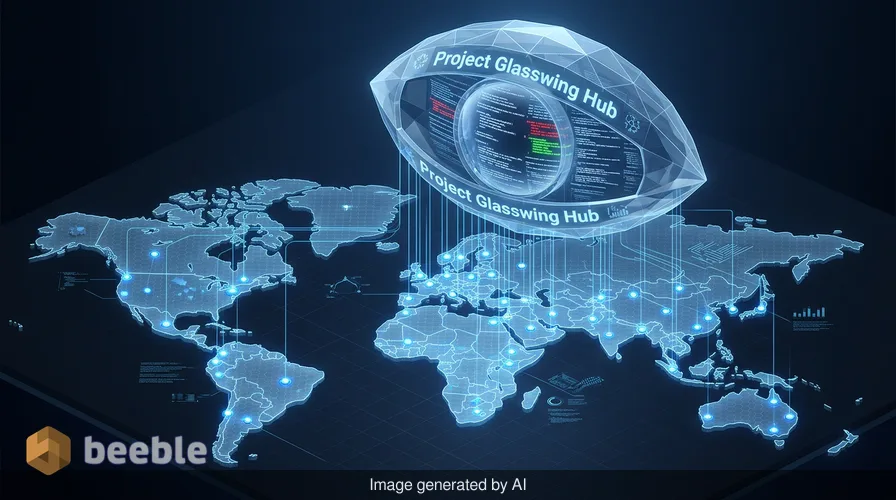
Most news about artificial intelligence focuses on things you can see on your screen. You hear about chatbots that write poetry or apps that generate video from a single prompt. These tools are essentially the digital equivalent of a shiny new coat of paint on a house. The real story is what is happening in the basement. Anthropic is now moving its most powerful AI, Claude Mythos, into the structural foundations of our global society. This initiative, called Project Glasswing, targets the critical software that keeps our water running, our lights on, and our hospitals functional.
While public discourse often fixates on AI safety in terms of existential risk or creative copyright, the industry is quietly pivoting to a more immediate, physical reality. Anthropic is betting its trillion-dollar valuation on the idea that AI’s primary value is fixing the broken code that runs the world. The company recently expanded Project Glasswing to approximately 150 new organizations across more than 15 countries. This is no longer a small pilot program. It is a massive effort to use AI as a tireless intern to scan millions of lines of code for flaws that human engineers might never find.
The invisible backbone of modern life
To understand why this expansion matters, we must look at the software that manages heavy industry. For the average user, software is something that lives in an app store. However, heavy industry is the invisible backbone of modern life. Power plants, water filtration systems, and communication networks run on specialized, often decades-old codebases. If a hacker finds a way into this software, the results are catastrophic. Anthropic estimates that a major attack on the codebases of its new partners could affect more than 100 million people.
The expansion focuses on sectors that were previously underrepresented in Anthropic’s tests. These include healthcare providers, hardware manufacturers, and communication giants. The list of partners now includes NATO and ENISA, the European Union agency for cybersecurity. By giving these organizations access to Claude Mythos, Anthropic is trying to patch the holes in the digital hull before the ship hits an iceberg. This isn't just about preventing identity theft or credit card fraud. It is about ensuring that when you turn on the faucet, clean water comes out.
How Claude Mythos finds the invisible cracks
In the world of cybersecurity, the most dangerous threat is the zero-day vulnerability. This is a flaw in software that the developers do not know about yet. Hackers love these because there is no existing defense for them. Finding one zero-day vulnerability used to take a team of specialized human researchers months of manual labor. Claude Mythos changes the math of this process.
Anthropic claims this model is its most powerful tool yet. In early tests, it identified thousands of vulnerabilities over just a few weeks. Think of it like a master locksmith who can look at every lock in a city and instantly see which ones are easy to pick. Practically speaking, Claude Mythos scans the source code of a company like Samsung or SK Hynix. It looks for logic errors, memory leaks, or poorly written commands that a malicious actor could exploit. Once found, the companies can fix the code before the public even knows a risk existed.
| Partner Organization | Sector | Impact Area |
|---|---|---|
| Okta | Identity Management | Secure logins for millions of corporate users |
| Samsung | Hardware/Electronics | Security for consumer chips and devices |
| SK Hynix | Semiconductor | Resilience of the global memory chip supply chain |
| NATO | Defense | Security of military communications and logistics |
| ENISA | Public Policy | Cybersecurity standards across the European Union |
| SK Telecom | Communications | Reliability of mobile and fiber networks |
The trillion dollar stakes of a digital arms race
On the market side, this move is inseparable from Anthropic’s financial ambitions. The company recently filed confidentially for an initial public offering (IPO) after a $65 billion funding round. This round pushed its valuation to nearly $1 trillion, a staggering number for a firm that was a startup just a few years ago. This valuation is not based on how many people use a chatbot to do their homework. It is based on the belief that Anthropic will provide the foundational security layer for the entire internet.
Looking at the big picture, Anthropic is in a race with OpenAI. Shortly after Anthropic released Mythos, OpenAI launched GPT-5.5-Cyber. Both companies are trying to prove that their AI is not just a toy but a systemic necessity. If Anthropic can convince the U.S. government, the EU, and major industrial players like SK Hynix that its AI is the best at finding vulnerabilities, it secures its place as a utility rather than a luxury. This transition from a creative tool to a security utility is what justifies a trillion-dollar price tag.
What this means for your daily life
For the average person, the success of Project Glasswing is something you will likely never notice—and that is the point. You do not notice when the power grid does not fail. You do not notice when your health records are not leaked to the dark web. However, there are tangible benefits to this AI-driven security model that will eventually reach your wallet and your privacy.
First, there is the issue of supply chain resilience. When a company like SK Hynix or Samsung uses AI to secure its hardware code, it reduces the risk of factory shutdowns caused by cyberattacks. These shutdowns are a major cause of price spikes in electronics. By using AI to harden their systems, these companies can maintain a more stable supply of chips, which ultimately keeps the price of your next smartphone or laptop from jumping unexpectedly.
Second, the involvement of Okta is significant for personal digital security. Okta provides the login systems for thousands of companies. If Okta has a vulnerability, hackers can gain access to the accounts of millions of employees across different industries. By using Claude Mythos to scan Okta’s codebase, Anthropic is adding a layer of protection to the way you log in to work or use online services. Essentially, the AI is working in the background to make sure your password and identity stay yours.
A global shield with local impacts
The list of countries involved in the expansion is a roadmap of global tech alliances. Partners in Australia, Canada, France, Germany, India, and Japan are now part of this digital shield. This geographical spread is necessary because software is decentralized and interconnected. A vulnerability in a Dutch water management system or a Swedish telecom provider could have ripple effects that reach the United States.
Anthropic is transparent about the fact that this is a race. The company expects other AI firms to develop similar capabilities soon. This is why it is rushing to establish Project Glasswing as the industry standard. By moving first into critical infrastructure, Anthropic is trying to build a moat around its business. This moat is built not with marketing, but with the practical, robust defense of the systems we depend on every day.
Looking under the hood of the AI hype
It is easy to get lost in the jargon of zero-day exploits and codebases, but the bottom line is quite simple. We have built a world that runs on code that humans are no longer capable of fully policing. The complexity of modern software has outpaced our ability to find our own mistakes. AI is the only tool we have that can match that complexity.
From a consumer standpoint, we are entering an era where AI is the primary gatekeeper of our safety. This shift is volatile because it places an immense amount of power in the hands of a few companies like Anthropic and OpenAI. While Claude Mythos acts as a tireless intern finding bugs, it also represents a single point of failure. If the AI itself is compromised or if it misses a critical flaw, the damage could be widespread. This is likely why Anthropic is working so closely with government agencies like NATO and the U.S. government to establish rigorous safeguards.
Ultimately, the expansion of Project Glasswing suggests that the era of AI as a novelty is over. We are now seeing the integration of these models into the very fabric of national security and industrial stability. This is a transition from AI being something you talk to, to AI being something that protects you without you ever knowing it is there. As you go about your day, using your phone, drinking tap water, or driving through a city with synchronized traffic lights, remember that a trillion-dollar AI might be the only reason those systems are still working.
Sources: Anthropic official blog, Financial Times reporting, TechCrunch industry analysis.



See you on the other side.
Our end-to-end encrypted email and cloud storage solution provides the most powerful means of secure data exchange, ensuring the safety and privacy of your data.
/ Create a free account
