


The hidden cost of the AI revolution is hitting your local computer repair shop

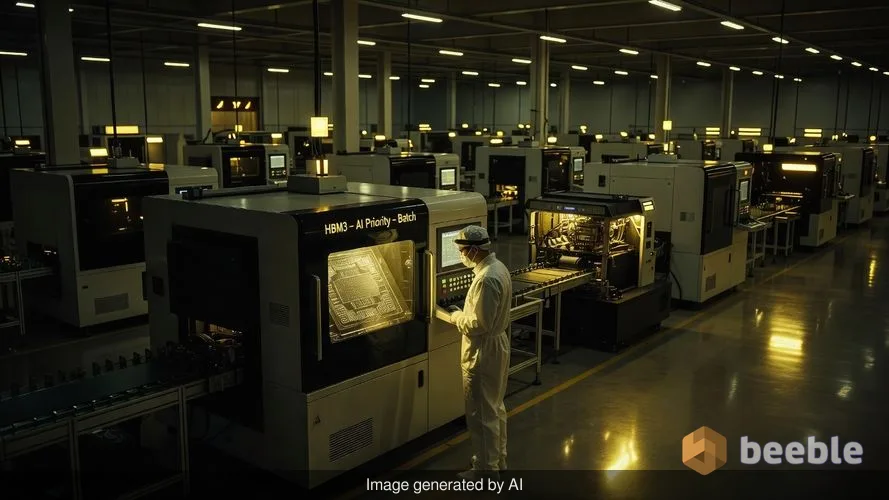
A standard 16-gigabyte stick of memory starts its life as a thin slice of silicon in a high-tech factory in Hwaseong or Boise. Under normal circumstances, these components are the commodity backbone of the digital world, produced in massive quantities to keep the price of a basic laptop under five hundred dollars. Today, that same piece of hardware travels a different path. Instead of ending up in a student's computer, the raw materials and factory time are diverted to build advanced high-bandwidth memory for the massive server farms that train artificial intelligence. This shift in the supply chain is the primary driver of a phenomenon now known as RAMaggedon.
For the average user, the consequences are immediate and expensive. The memory chips that allow a phone to switch between apps or a laptop to run a web browser are suddenly scarce. This is not a temporary glitch in shipping or a brief labor dispute. It is a fundamental reallocation of digital crude oil toward the most profitable sector of the tech industry. As silicon manufacturers prioritize the needs of artificial intelligence, the everyday consumer faces a market where prices for basic upgrades have quadrupled in less than a year.
The silent pivot inside the silicon wafer
To understand why a new car or a mid-range smartphone is getting more expensive, one must look at how factories allocate their limited space. Memory manufacturers like Samsung Electronics, SK hynix, and Micron have finite production capacity. In the past, they split this capacity between standard memory for PCs and mobile memory for phones. The rise of generative AI changed this calculation. Training a large language model requires a specific type of component called high-bandwidth memory, or HBM. These chips are far more complex to build than standard parts because they involve stacking layers of silicon on top of each other.
Practically speaking, producing one HBM chip takes significantly more factory resources than producing a standard stick of RAM. When a company like Samsung decides to increase HBM production to meet the demands of AI giants, they must take those resources away from the production lines that make memory for consumer goods. The chief financial officer of Samsung recently indicated that this shortage of digital storage chips will likely deepen throughout 2027 and remain tight through 2028. This long-term forecast suggests that the era of cheap, plentiful computer memory is over for the foreseeable future.
Why your local computer shop has empty shelves
The impact of this industrial shift is visible in retail hubs like Hong Kong's Wan Chai Computer Centre. In these compact stalls, the price of a 16-gigabyte memory module moved from roughly 40 euros to nearly 175 euros in less than twelve months. For a professional builder or a hobbyist, this price hike represents a significant psychological barrier. Ken Tam, a manager at Videocom Computer, noted that his business volume dropped by half since prices began their steep ascent in late 2025.
When basic components become luxury items, consumer behavior changes. Many users now choose to lower their standards by purchasing less capable memory chips or delaying their purchases entirely. Looking at the big picture, this creates a secondary problem for the tech industry. If consumers stop buying new computers because the parts are too expensive, the entire ecosystem of software and peripherals slows down. The cycle of regular upgrades that has driven the tech market for decades is currently under threat from the very technology intended to be its next big growth driver.
The math behind the fivefold price hike
Data from market research firm TrendForce shows that memory prices for PCs and smartphones are now five to six times higher than they were a year ago. This volatility is a direct result of how tightly the memory market is controlled. Three companies manage the vast majority of global production. When all three pivot toward the high-margin AI sector at the same time, the supply of standard parts evaporates. The result is a classic supply-and-demand squeeze where the consumer is the last priority.
| Component Type | 2024 Average Price (Est.) | 2026 Current Price (Est.) | Primary Market Driver |
|---|---|---|---|
| 16GB DDR5 RAM | €40 | €175 | AI Server Demand |
| 8GB Mobile DRAM | €15 | €65 | Component Diversion |
| 512GB SSD Storage | €55 | €140 | NAND Supply Crunch |
These price increases are not limited to high-end gaming rigs. Because modern cars rely on dozens of microchips for navigation, safety, and entertainment systems, the automotive industry is the next logical victim. Carmakers have already begun to signal that rising costs for in-vehicle computer systems will lead to higher sticker prices for new vehicles. In this context, the AI boom acts as a slow leak in the tire of the global economy, gradually increasing costs across multiple unrelated sectors.
Chinas attempt to fill the memory gap
While the established giants focus on the AI gold rush, a new player is attempting to capture the abandoned consumer market. ChangXin Memory Technologies, or CXMT, recently became mainland China's most valuable company upon its market debut in Shanghai. As a relative newcomer, CXMT lacks the specialized technology to compete with Samsung or Micron in the high-bandwidth memory space. However, this technical lag is currently a strategic advantage.
Because CXMT is a follower in leading-edge technologies, its factories are primarily geared toward conventional RAM and DRAM. In a market where the top three players have moved on to more expensive AI chips, CXMT has a late-mover advantage. They can provide the basic components that the rest of the world still needs for laptops and home appliances. This dynamic is a rare example of a technological trailing edge becoming a financial lifeline for a company and its customers. Behind the jargon, this means the next budget laptop you buy is more likely to contain Chinese-made memory chips than components from the traditional market leaders.
From smartphones to sedans: the spreading shortage
The reach of RAMaggedon extends beyond the desktop. Graphic designers and creative professionals who rely on custom-built machines are finding that graphics cards and motherboards have reached unsustainable price levels. In Tokyo’s Akihabara district, some builders have stopped pre-assembling machines altogether. Instead, they require clients to source their own parts to avoid the financial risk of holding expensive inventory. This friction in the market is pushing consumers toward cheaper laptops with shorter lifespans.
Ultimately, this shift has an environmental cost. A well-built desktop computer can last a decade with simple memory and storage upgrades. When a memory upgrade costs as much as a new budget laptop, users are more likely to discard their old machines and buy a cheap, disposable replacement. This fuels a cycle of consumption that is at odds with global sustainability goals. The speculative bubble of AI is not just changing how we interact with software; it is physically changing the hardware we use and how long we keep it.
How to navigate the memory market today
From a consumer standpoint, the current market requires a shift in strategy. The most practical path forward is to focus on maintenance rather than replacement. Upgrading the memory in an older laptop, even at today's inflated prices, is often more cost-effective than buying a new machine with mediocre specifications. As the investment banker Henry Wong discovered in Hong Kong, a simple memory boost can make an aging device run smoothly enough to cancel the need for a new purchase.
For those who must buy new hardware, the bottom line is to look for value in segments that the AI boom has not yet touched. Products using slightly older memory standards or those coming from secondary manufacturers like CXMT offer a way to bypass the steepest price hikes. As the industry moves toward the predicted crunch of 2027, the best move for the everyday user is to treat their current hardware as a long-term asset. The digital crude oil that powers our devices is being diverted to feed the AI intern, and until new factories come online, the most affordable piece of tech is the one you already own.
Sources: Samsung Electronics Q2 2026 Earnings Report, TrendForce Memory Market Analysis August 2026, Omdia Semi-conductor Supply Chain Report, AFP Industry Feed.



See you on the other side.
Our end-to-end encrypted email and cloud storage solution provides the most powerful means of secure data exchange, ensuring the safety and privacy of your data.
/ Create a free account
