


The High Court ruling against Telegram changes the rules for every app on your phone

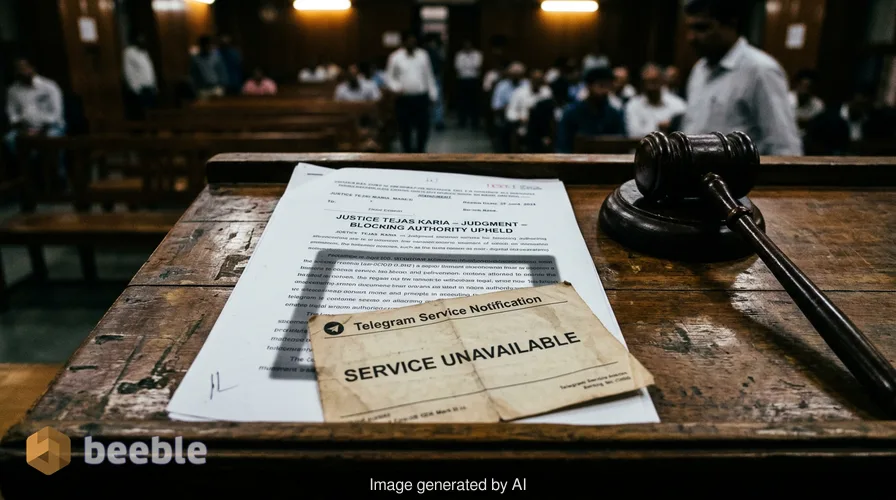
Have you ever wondered why your favorite messaging app suddenly stops working, even when your internet connection is fine? For 150 million people in India, that question became a reality this past week. The Delhi High Court recently upheld a government order that cut off access to Telegram across the country. The move was a response to allegations that a key medical school entrance exam paper was leaked and shared through the platform. While the ban was temporary, the legal precedent it creates is a permanent shift in how the state manages the digital tools we use every day.
Telegram lost its bid to overturn this temporary block on Friday. Justice Tejas Karia ruled that the government has the legal authority to issue directions for blocking public access to the app. The court viewed the government's actions as a reasonable way to preserve the integrity of a national exam. This decision arrived after a tense period where the results of the country's medical school entrance exams were scrapped due to leak allegations. For the average user, this is a clear signal that the apps on our phones are subject to the same oversight as physical infrastructure.
A week without Telegram in the world's largest market
From June 16 to June 22, Telegram went dark for users in India. This was not a minor glitch or a server error. It was a coordinated effort by Indian telecom companies, Google, and Apple to remove the app from stores and block its traffic. Looking at the big picture, India is the largest market for Telegram. Losing access for a week disrupted more than just casual chats. It affected businesses that use the app for customer support, students who use it for study groups, and news outlets that rely on its channel feature to reach their audience.
In everyday life, we often treat apps like Telegram as permanent fixtures of our digital environment. We assume they are always there, like the air we breathe or the water in our taps. This ban proves that the digital landscape is more volatile than it looks. Within hours of the government's order, a tool used by millions was effectively erased from the national internet. This speed shows how interconnected the government and the gatekeepers of our devices—like Apple and Google—really are.
Why the government focused on one specific app
The Indian government did not block every messaging app. It specifically targeted Telegram. The reason lies in the way the app is built. Telegram has a flexible structure that allows for massive public channels and high levels of anonymity. For the government, these are not just features. They are a persistent enforcement challenge. Telegram is like a digital wild west where the rules of the local town do not always apply. Unlike other apps, Telegram allows users to hide their phone numbers and interact based on usernames alone. This makes it difficult for authorities to track down individuals who might be sharing illegal content.
Furthermore, the government pointed out that Telegram makes it easy to recreate blocked channels. If the police take down one group sharing leaked papers, a new one can pop up in seconds under a slightly different name. Telegram founder Pavel Durov criticized the ban, stating that it punishes innocent users while the problem simply moves elsewhere. Practically speaking, the government argued that the app's architecture made a total block the only effective solution. This highlights a fundamental tension between user privacy and state security.
The legal machinery behind the digital blackout
Under the hood, the legal battle was about who gets to decide what is dangerous for the public. Telegram argued that it was already proactive in removing content. The company told the court it had taken down more than 900 links related to the exam leaks. It accused the government of ignoring these efforts. However, the court was not convinced. The ruling states that the government is empowered to issue these directions to protect the public interest. This power is not new, but its application in this case is significant.
Last year, the government actually reduced the number of officials who could order content takedowns. This followed a high-profile legal battle with Elon Musk's X, formerly known as Twitter. Despite that change, this Telegram ruling shows that the government still has a robust set of tools to exercise control. For the average user, the legal jargon boils down to one fact: the state can override the terms of service of any tech giant if it feels the national interest is at stake. The court's decision provides a legal seal of approval for this kind of intervention.
What this means for your daily digital habits
From a consumer standpoint, this case is a wake-up call about the fragility of digital platforms. If you rely on a single app for your business or personal communication, you are at the mercy of both the platform's policies and the government's regulations. In simple terms, it is a bad idea to keep all your digital eggs in one basket. When an app is blocked, your data, your contacts, and your history on that platform become inaccessible instantly. This is a tangible risk for anyone living in a region where tech regulation is tightening.
What this means for you is a shift toward digital diversification. Users are beginning to see the value in having backup communication channels. Whether it is using decentralized apps or simply maintaining a presence on multiple platforms, the goal is resilience. The Telegram ban was temporary, but it set a concerning precedent for digital rights groups like the Internet Freedom Foundation. They believe this move could lead to more frequent blocks whenever the government sees fit. If an exam leak is enough to shut down an app with 150 million users, the threshold for future blocks might be lower than we think.
Balancing exam security with the open internet
Ultimately, the core of this issue is a conflict between two valid concerns. On one hand, the government must protect the integrity of exams that determine the careers of millions of students. A leaked paper is a systemic failure that hurts the most hardworking candidates. On the other hand, the internet is a foundational part of modern life. Blocking a major communication platform is a heavy-handed response that affects people who have nothing to do with the exam leaks. It is like closing every road in a city because one person is driving a stolen car.
Telegram's refusal to proactively monitor all its accounts is what led to this confrontation. The company prides itself on being a neutral platform that resists government pressure. However, in the world's most populous nation, that neutrality is seen as a liability by the state. The bottom line is that no tech company is too big to be ignored by national laws. As governments around the world get more sophisticated in their tech analysis, we will likely see more cases where the technical features of an app—like anonymity or large group sizes—are treated as legal liabilities.
Observing the new digital reality
Looking at the big picture, the era of the "unregulated app" is ending. Whether it is AI, crypto, or messaging, the trend is toward more transparency and more government oversight. For the average user, the takeaway is clear. You should observe your digital habits and recognize which platforms you are most dependent on. The convenience of an app like Telegram comes with the trade-off of potential instability if it clashes with local laws. This case is not just about a medical exam leak. It is about how much control we are willing to let the government have over the digital tools that sit in our pockets.
As you navigate your digital life, pay attention to the privacy features of the apps you download. Features that offer you anonymity also make the app a target for regulators. The high-profile court tussle between Telegram and the Indian government is a preview of the future. It is a future where the code inside an app must answer to the laws of the land. Instead of viewing these events as distant news, see them as a reason to be more intentional about where you store your information and how you communicate in a shifting digital world.
Sources: Delhi High Court Verdict, Reuters Media Reports, Internet Freedom Foundation Statements, Telegram Official Press Releases.



See you on the other side.
Our end-to-end encrypted email and cloud storage solution provides the most powerful means of secure data exchange, ensuring the safety and privacy of your data.
/ Create a free account
