


The Human Passport for Bots: How World ID’s Agent Kit Aims to Tame the AI Wild West

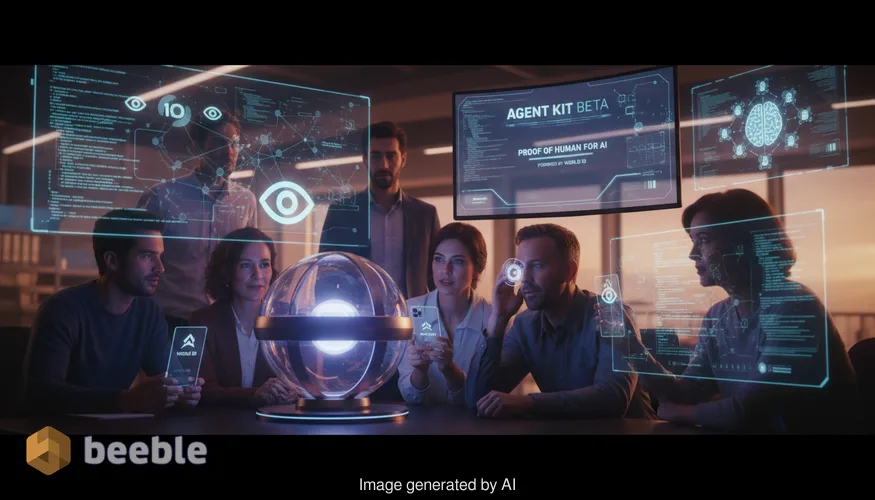
Have you ever felt like you’re shouting into a digital void, only to realize the void is actually a million automated scripts shouting back? As we move deeper into 2026, the internet is no longer just a place where humans talk to humans. It has become a sprawling ecosystem of autonomous agents—software entities that book our flights, manage our calendars, and, increasingly, overwhelm our digital infrastructure.
Over the last few months, tools like OpenClaw have demonstrated the remarkable power of the 'agentic web.' A single tech-savvy user can now deploy a virtual cadre of automated agents to perform complex tasks in parallel. While this is an innovative leap for individual productivity, it has created a precarious situation for service providers. To a web server, a thousand requests from a single person’s AI army look indistinguishable from a DDOS-level Sybil attack. Consequently, the digital world is facing a crisis of trust: how do we allow helpful AI agents to operate without letting them break the internet?
From Crypto Curiosity to Identity Infrastructure
If the name 'World' sounds familiar, you likely remember it as Worldcoin, the ambitious project co-founded by Sam Altman that made headlines in 2023. Back then, the pitch was a bit of a head-scratcher: let a chrome-plated 'Orb' scan your iris in exchange for cryptocurrency. It felt like a plot point from a cyberpunk novel. However, the organization has undergone a nuanced transformation.
World has pivoted away from being just another crypto token toward becoming a foundational layer for digital identity. The company now claims nearly 18 million unique humans have verified their personhood via those physical orbs. To put it another way, World ID has become a cryptographically secure, unique online identity token stored on your phone—a 'proof of human' in an age of deepfakes. Curiously, the very technology that critics once feared as a privacy nightmare is now being positioned as the only way to save our social platforms from being overrun by bot-driven noise.
The Sybil Problem and the Agent Kit Solution
In the early days of my career working in tech startups, we fought 'dumb' bots with simple CAPTCHAs. You’d click on some traffic lights, and the system knew you weren't a script. But today’s AI agents can solve those puzzles faster than we can. When an agentic tool like OpenClaw sends out thousands of requests, it’s not just 'spam'; it’s a coordinated effort that can drain resources and skew data.
This is where World’s new Agent Kit enters the fray. Launched recently in beta, Agent Kit is designed to act as a bridge between a verified human and their AI representatives. Instead of an agent appearing as an anonymous, potentially malicious bot, it carries a 'verified' badge backed by the user’s World ID. This allows a website to say, 'I will allow these 500 requests because I know they belong to one verified human, not 500 fake accounts.'
How the Ecosystem Functions
Think of the Agent Kit as a digital power of attorney. When you authorize an AI agent, you aren't giving it your identity; you are giving it a verifiable credential that says, 'This bot is working for a real person.'
- Verification: The agent requests a signature from your World ID app.
- Authorization: You grant the agent permission to perform specific tasks.
- Trust: The service provider (a travel site, a social network, or a marketplace) checks the credential against the World ID protocol.
As a result, the service provider can set intricate rate limits. They might allow a 'Verified Human Agent' to perform more actions than an anonymous one, while still blocking a botnet that has no human backing. It treats the internet as a living organism where every cell needs to be identified to keep the body healthy.
The Privacy Tightrope
Nevertheless, the idea of linking our physical biology—our irises—to our digital actions remains a point of contention. World advocates argue that the system is zero-knowledge; the website doesn't know who you are, only that you are a unique human. In contrast, privacy advocates worry about the long-term implications of centralized identity hardware.
Managing remote teams in this environment has taught me that trust is the most expensive currency we have. If we can’t trust that the 'person' we are interacting with is real, the value of our digital interactions plummets. World ID is betting that we will trade a bit of biometric data for a 'clean' internet where our AI agents can actually get work done without being blocked by every firewall they encounter.
Practical Takeaways for Developers and Users
If you are a developer or a power user looking to integrate with this new identity layer, here is what you need to know:
- Beta Access: Agent Kit is currently in beta. Developers can integrate the SDK to start accepting 'Verified Human' tokens from AI agents.
- Rate Limiting: If you run a service, consider implementing tiered access. Anonymous bots get the strictest limits, while World ID-verified agents get a higher 'trust score.'
- User Control: For users, the World app remains the hub. You can see which agents have been granted 'humanity' and revoke that access at any time.
- Hardware Dependency: Remember that this still requires a physical visit to an Orb for the initial verification. It’s a bottleneck, but one that World is aggressively trying to solve with more locations.
The Journey Ahead
We are at a crossroads where ideas are the building blocks of a new digital reality. The rise of AI agents is inevitable, but their impact on our digital social fabric depends on how we manage their 'personhood.' World ID’s Agent Kit is a bold attempt to ensure that even in a world of a billion bots, the human remains at the center of the wheel.
Whether this becomes the global standard or remains a niche solution depends on public trust and developer adoption. But one thing is clear: the era of the anonymous, unverified bot is reaching its expiration date.
Sources:
- World (formerly Worldcoin) Official Documentation and Whitepaper.
- World ID 2.0 and 3.0 Protocol Specifications.
- OpenClaw Project Repository and Agentic Framework Analysis.
- TechCrunch and Wired coverage of World’s rebranding and Agent Kit launch.



See you on the other side.
Our end-to-end encrypted email and cloud storage solution provides the most powerful means of secure data exchange, ensuring the safety and privacy of your data.
/ Create a free account
