


The illusion of the open app ecosystem

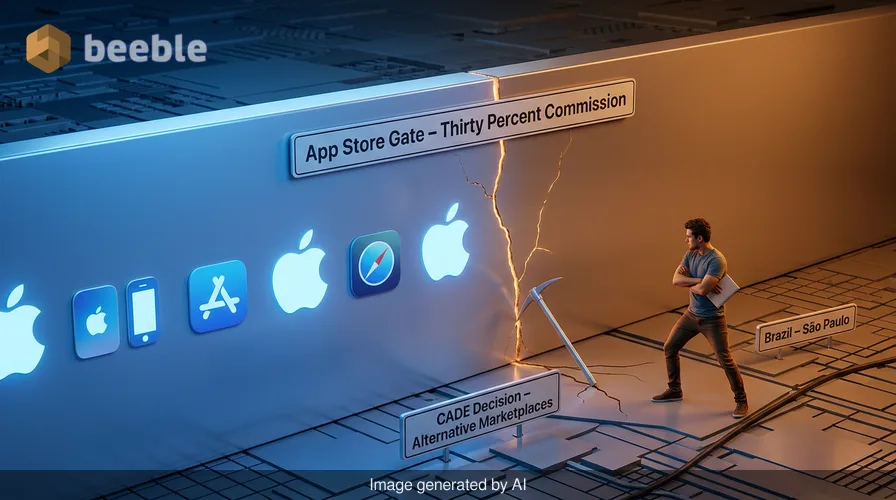
The iPhone experience is a masterpiece of vertical integration where hardware and software exist in a state of perfect, unbothered harmony. Every swipe is fluid. Every app is vetted. Every transaction is a one-tap miracle of convenience that feels almost like a natural law of the digital universe. This seamless world is the result of a meticulously guarded gate where Apple is the sole arbiter of what enters and what stays out. This ecosystem is a paradise of reliability for the user unless that user wants to use a service the gatekeeper forbids. It is a streamlined path for the developer unless that developer refuses to pay a thirty percent commission. It is a unified global platform unless you happen to live in Brazil.
Luiza is a software developer in São Paulo who spent the last three years building a specialized app for local agricultural logistics. For Luiza, the App Store was a wall. She needed to process complex, high-value payments for equipment rentals, but the standard commission made her business model impossible. Her users are farmers who are comfortable with digital tools but wary of high costs. In the old iOS world, Luiza had two choices: she could pay the commission and go broke, or she could try to explain to her users why they had to open a mobile browser, log in to a separate portal, and manually enter credit card details. This digital friction is where many small businesses die.
On Thursday, that wall began to crumble. Apple announced that it is allowing developers in Brazil to distribute iOS apps through alternative marketplaces and process payments outside its proprietary system. This change is the direct result of a deal with the Brazilian antitrust watchdog CADE. The agreement settles a dispute that began in 2022 when regulators started to look at the power dynamics of the mobile economy. For users like the farmers in Luiza's network, the digital experience is about to become more complex. For developers, the code is finally catching up to the local economic reality.
The end of the monolith in South America
Historically, the iOS experience was identical whether you were in London, Tokyo, or Rio de Janeiro. This consistency was a primary selling point for the platform. A developer wrote code once and deployed it to the world. Paradoxically, this global uniformity became a liability as different governments began to view the App Store as a monopoly. Brazil is the latest territory to force a regional fork in how the operating system behaves. The deal with CADE is not a suggestion. It is a fundamental reconfiguration of the software architecture for an entire nation.
Under the hood, this change is delivered through iOS 26.5. This version of the software contains specific logic that detects the user's region and enables features that were previously hardcoded as inactive. When an iPhone is in Brazil, the operating system permits the installation of alternative marketplaces. These are separate apps that function as stores themselves. They have their own curation rules. They have their own business models. They are the first true competitors to the App Store on Brazilian soil.
This shift is a departure from the one-size-fits-all approach that defined the first two decades of the smartphone era. The operating system is no longer a static piece of software. It is a dynamic environment that reshapes its own permissions based on geopolitical boundaries. This regional fragmentation is a headache for engineers who now have to maintain different versions of their apps for different markets. It is the cost of doing business in a world that is tired of centralized digital power.
Security as a secondary wall
Apple is a company that prioritizes safety, or at least the perception of it. In the announcement, the company warned that alternative app marketplaces and payment systems increase risks such as malware, fraud, and privacy threats. To counter this, Apple is introducing app notarization for Brazil. This is a technical process where Apple's automated systems scan the code of an app even if that app is not being distributed through the official App Store.
Technically speaking, notarization is a compromise. It is a way for Apple to maintain a level of oversight without controlling the storefront itself. The process checks for known malicious code and ensures the app does not violate core system integrity. However, it does not check for business logic or content quality in the same way the App Store review process does. A third-party marketplace is free to host apps that Apple might find objectionable, provided they are not technically harmful.
Behind the screen, this creates a new layer of verification. When a user in Brazil tries to install an app from an alternative source, the operating system triggers a series of authorization requirements. These are digital warnings that explain the risks of the software. These safeguards are intended to protect younger users and prevent scams. They are also a form of friction. By highlighting the potential dangers, Apple encourages users to stay within the familiar boundaries of its own store. The wall is lower, but it is still there.
The friction of the external checkout
One of the most significant changes is the ability for developers to direct users to external websites for payments. For years, the blue "Buy" button in an app was the only way to spend money on digital goods. This button was connected to Apple's billing system, which took a percentage of every sale. Now, a developer in Brazil can include a link that takes the user to a web browser to complete the transaction.
In everyday terms, this is like a restaurant waiter telling you that you can pay the bill at the table for a premium price or walk to the back office to pay a lower one. Most users value their time. The process of leaving an app, entering a credit card on a website, and then returning to the app is a clunky experience. It is a series of extra steps that many people will not take. This is why the commission exists. It is a fee for the removal of friction.
Through this user lens, the choice is between convenience and cost. A developer who offers an external payment option might offer a lower price to incentivize the user. This creates a more transparent market where the cost of the platform is visible to the consumer. For the first time, Brazilian users will see the price difference between the integrated experience and the open one. This transparency is a threat to the proprietary model that has dominated the industry since 2008.
A fragmented operating system
Zooming out to the industry level, the Brazil deal is part of a larger pattern of disintegration. The European Union paved the way with the Digital Markets Act. Now, Brazil has followed. The result is a fragmented iOS. There is the EU version of the iPhone, the Brazil version, and the version for the rest of the world. Software updates are no longer universal events that bring the same features to everyone. They are now regional compliance patches.
This fragmentation has a deep impact on the programming world. Developers have to account for these variations in their codebases. They have to use conditional statements to check the user's location before showing a payment button or a link to a marketplace. This adds complexity. It increases the chance of bugs. It is a form of technical debt that is imposed by regulation rather than poor engineering choices. The city infrastructure of the operating system is being rewritten to include different types of pipes and wiring for different neighborhoods.
Curiously, this does not necessarily lead to a better user experience in the short term. A user who travels between Brazil and the United States might find their apps behaving differently. A feature that works in São Paulo might disappear in Miami. This is the reality of the post-monolith web. The seamless integration that Apple spent decades building is being traded for a more open, but more chaotic, ecosystem.
Reclaiming the digital tools
Ultimately, the changes in Brazil are about who owns the digital space. For a long time, the answer was the manufacturer of the device. The device was a black box that the user merely rented. By allowing alternative stores and payments, the Brazilian regulator is asserting that the device belongs to the user and the software ecosystem belongs to the market.
This is a shift in perspective for the ordinary person. It is an invitation to observe our own digital habits. We often choose convenience because we have never been offered an alternative. When the friction of a third-party payment system appears, it is a reminder of the invisible work that goes into making technology feel simple. This complexity is not a bug. It is the natural state of an open market.
As iOS 26.5 rolls out across Brazil, the farmers in Luiza's network will have a choice. They can stay in the garden or they can step outside. The garden is safe and beautiful, but the outside world is where the local economy lives. We are entering an era where the software on our phones is no longer a global standard. It is a reflection of local laws and local needs. We are regaining control over our digital tools, but we are also responsible for navigating the messiness that comes with that freedom.
Sources:
- Apple Developer Support documentation on regional distribution in Brazil.
- CADE (Conselho Administrativo de Defesa Econômica) official settlement report, December 2025.
- iOS 26.5 Release Notes regarding app notarization and external payment APIs.
- Brazilian Federal Law on competition and digital markets.
- Reports on the 2022 antitrust dispute between Apple and Brazilian regulators.



See you on the other side.
Our end-to-end encrypted email and cloud storage solution provides the most powerful means of secure data exchange, ensuring the safety and privacy of your data.
/ Create a free account
