


The Impeccable Assignment and the Silent Student: Why AI is Ending the Era of Written Homework

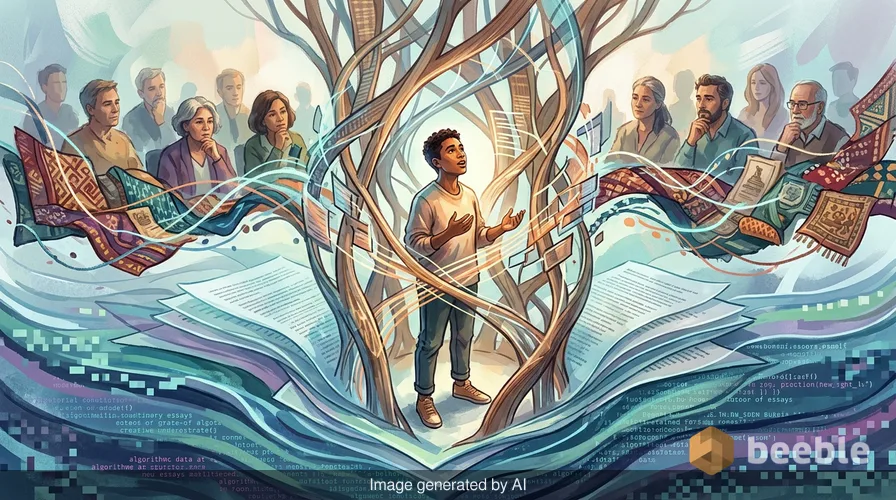
A single cursor blinks on a polished white screen, rhythmic and patient, mirroring the heartbeat of a student named Leo who sits in a quiet corner of the campus library. For hours, Leo has not typed a single sentence of his own. Instead, he has been orchestrating a symphony of prompts, fine-tuning the parameters of a large language model to produce a three-thousand-word treatise on the socio-economic impacts of the Industrial Revolution. The result is a document of terrifying beauty: the syntax is fluid, the vocabulary is sophisticated, and the citations are meticulously formatted. It is, by all traditional metrics of the twentieth-century classroom, an 'A' grade. Yet, when Leo eventually sits across from his professor for a spontaneous follow-up discussion, a profound silence fills the room. He can describe the prompt he used, but he cannot explain the nuance of the argument the machine constructed.
This scene is no longer a localized anomaly; by mid-2026, it has become the defining friction point of global education. We are witnessing the final tremors of a seismic shift where the written assignment—once the gold standard of intellectual rigor—is being rendered obsolete by the pervasive presence of generative artificial intelligence. The very habitus of the student is being rewritten, shifting from the role of a creator to that of a curator, a change that is forcing universities from Almería to Tokyo to dismantle and rebuild their entire systems of assessment.
The Death of the Proxy Metric
Historically, the essay functioned as a proxy for thought. We assumed that if a student could produce a coherent, well-argued paper, it was evidence of a structured mind and a deep engagement with the material. This was our educational anchor, keeping the ship of academia steady amidst the shifting winds of cultural change. However, as AI tools have become a mundane part of the daily routine, that anchor has been severed. When a machine can simulate the output of a high-level intellect in a matter of seconds, the output itself loses its value as a metric of learning.
Zooming out to a macro level, we see a systemic breakdown of the traditional academic contract. In the past, the effort required to write was a barrier to entry that ensured a certain level of cognitive labor. Today, that labor has been outsourced to a digital fast-food diet of information—quick, accessible, and satisfying in the short term, but lacking the deep emotional and intellectual nutrition that comes from the struggle of synthesis. Paradoxically, the more 'perfect' student work becomes, the less we know about what is actually happening inside the student’s mind.
The Renaissance of the Spoken Word
In response to this digital transparency, or perhaps its lack thereof, institutions are retreating to a much older form of validation: the oral examination. For decades, the viva voce was a relic of elite doctoral defenses or niche European traditions. Now, it is making a visceral comeback across all levels of higher education. Teachers are realizing that while an AI can write a paper, it cannot yet successfully perform the 'self' in a live, high-pressure dialogue where critical thinking must happen in real-time.
Curiously, this shift is forcing a return to a more embodied form of knowledge. Students are being asked to defend their ideas, to justify their sources, and to navigate the messy, non-linear landscape of human conversation. In these settings, the 'hall of mirrors' that is an AI-generated text is shattered by the simple question: 'Why do you believe this?' It is a move away from the atomized experience of writing in a dorm room toward a collective, social validation of truth. It is no longer enough to be right; one must be present.
The Almería Precedent and the Ethics of the Prompt
The tension reached a boiling point recently at the University of Almería. On May 21, 2026, a conference of university ombudsmen highlighted a 'flood of enquiries' regarding AI-related academic conflicts. This isn't just about simple cheating; it is a complex web of data protection, algorithmic bias, and the transparency of the learning process itself. As Vice-Rector Maribel Ramírez pointed out, we are facing challenges that cannot be ignored because they touch upon the very core of our social structure.
Behind the scenes of this trend lies a deeper sociological anxiety. If we can no longer trust the written word as a signifier of human competence, what happens to our professional hierarchies? The ombudsman’s role has shifted from mediating grades to navigating the ontological crisis of 'who wrote this?' This reflects a broader societal shift toward liquid modernity, where the boundaries between human agency and machine intervention are becoming increasingly opaque. We are no longer just assessing students; we are attempting to define what it means to be an 'author' in the twenty-first century.
Language as an Archaeological Site
Linguistically speaking, the use of AI is changing the way we perceive the evolution of language. Every new prompt and generated response acts like a layer in an archaeological site, burying the personal voice under a sediment of statistically probable sentences. When students rely on these tools, they often adopt a clinical, flattened discourse that mirrors the training data of the models. This ephemeral style of communication lacks the 'fingerprints' of individual experience—the slight grammatical eccentricities or the unique metaphors that signal a human life behind the words.
Through this lens, the return to in-person testing is an attempt to reclaim the 'human' in humanities. It is a recognition that learning is not just the accumulation of facts, but the development of a voice. The struggle to find the right word, the hesitation before a complex idea, and the visceral spark of a new insight are all essential parts of the educational habitus that AI threatens to bypass in the name of efficiency.
The Paradox of Personalization
Paradoxically, while AI poses a threat to traditional assessment, it also offers a path toward a more nuanced and personalized form of teaching. Many educators are now using AI to draft lesson plans or to provide instant feedback on early drafts, allowing them more time for the one-on-one interactions that truly matter. This is the great irony of the current moment: technology is making our digital interactions more superficial, but in doing so, it is making our face-to-face interactions more valuable.
On an individual level, the student of 2026 must learn a new kind of literacy. They must understand the logic of the machine without losing the logic of the self. They are navigating a world where the 'patchwork quilt' of cultural memory is being re-stitched by algorithms, and their task is to find the thread that belongs specifically to them.
Food for Thought: Reclaiming the Human Narrative
As we navigate this structural shift in how we understand learning, we must move beyond the moral panic of 'cheating' and ask deeper questions about the purpose of education in an automated age.
- The Weight of Presence: In a world of digital shadows, how much value do we place on being physically and intellectually 'present' in our communities?
- The Authorial Voice: If you removed the tools you use every day, what would remain of your unique way of seeing the world?
- The Value of the Struggle: Are we sacrificing the cognitive benefits of 'the hard way' for the convenience of the 'AI way'?
- Redefining Merit: How do we reward the ability to think critically when the 'correct' answer is always a click away?
Ultimately, the transformation of student assessment is a symptomatic reflection of a broader cultural shift. We are moving away from a society that values the finished product—the essay, the report, the code—and toward one that must once again value the process of human becoming. By embracing oral exams and real-time problem solving, we aren't just preventing cheating; we are reviving the ancient, essential art of human discourse. We are reminding ourselves that while a machine can simulate a thought, it cannot live the truth of it.
Sources:
- Research on the prevalence of AI in higher education (2025-2026 period).
- Proceedings from the University of Almería Conference on AI and Academic Integrity (May 2026).
- Sociological studies on 'Liquid Modernity' and its application to digital labor.
- Reports from university ombudsman offices regarding academic disputes and AI policy.
- Linguistic analysis of generative AI output vs. human-authored academic discourse.



See you on the other side.
Our end-to-end encrypted email and cloud storage solution provides the most powerful means of secure data exchange, ensuring the safety and privacy of your data.
/ Create a free account
