


The Intelligence Layer: How Nvidia’s AI-RAN Alliance is Architecting the 6G Era

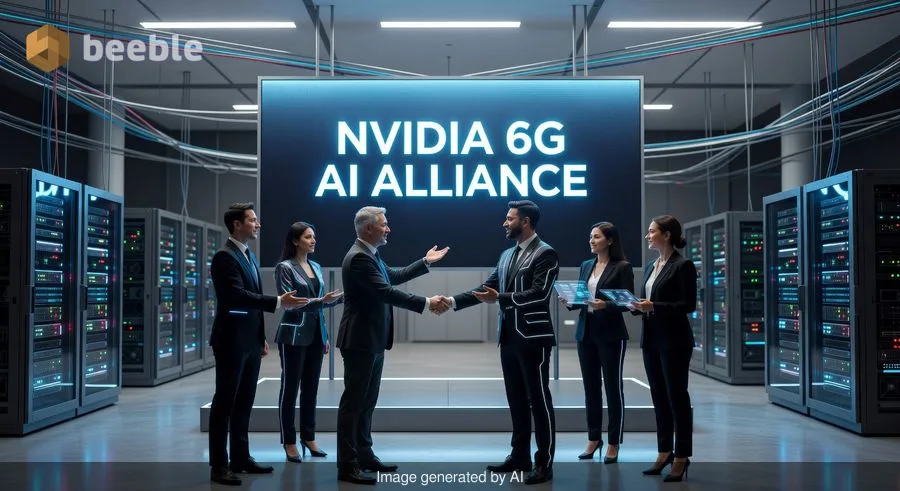
As we cross into 2026, the global conversation around telecommunications has shifted from the incremental improvements of 5G to the foundational transformation of 6G. While previous generations of mobile networks were defined by their hardware—faster antennas and broader spectrum—the next decade of connectivity is being written in code. At the heart of this shift is Nvidia and its AI-RAN Alliance, a powerful coalition designed to ensure that artificial intelligence is not just an add-on to 6G, but its very nervous system.
For decades, the Radio Access Network (RAN) has functioned as the "last mile" of wireless communication, the bridge between your device and the core network. Traditionally, this was a rigid environment of proprietary hardware. Nvidia’s entry into this space, alongside giants like SoftBank, Ericsson, and Nokia, signals the end of that era. By merging AI with wireless infrastructure, the alliance aims to turn every cell tower into a high-performance computer.
The Birth of the AI-RAN Alliance
Launched to bridge the gap between silicon and signals, the AI-RAN Alliance represents a strategic pivot for the telecom industry. The founding members—including AWS, Arm, Microsoft, and T-Mobile—recognized a looming bottleneck: 5G networks, while fast, lack the inherent flexibility to handle the explosive growth of generative AI and autonomous systems.
Nvidia’s role is pivotal. By leveraging its expertise in GPU acceleration, the company is pushing a "software-defined" approach to networking. This means that instead of relying on fixed-function chips that do one thing forever, 6G base stations will use programmable processors that can be updated as AI models evolve. It is a move that transforms the telecom operator from a simple utility provider into a cloud-computing powerhouse.
Why 6G Needs an AI Brain
To understand why AI is essential for 6G, consider the complexity of the modern radio environment. In a crowded city, signals bounce off glass buildings, interference from thousands of devices creates noise, and demand for data fluctuates wildly from minute to minute.
In a traditional network, these variables are managed by static algorithms. In an AI-RAN environment, the network learns. Using a concept known as "AI for RAN," machine learning models can predict traffic patterns and adjust beamforming—the process of directing a wireless signal toward a specific user—in real-time. This reduces latency to near-zero levels, which is a prerequisite for the next generation of augmented reality (AR) and remote robotic surgery.
The Nvidia Aerial Platform: A Blueprint for 6G
Nvidia isn't just providing the vision; it’s providing the toolkit. The Nvidia Aerial platform is a software-defined framework that allows developers to run high-performance, AI-integrated wireless networks on commercial-off-the-shelf servers.
"The future of telecommunications is not in building bigger pipes, but in building smarter ones. By integrating AI into the fabric of the network, we are enabling applications that were previously thought to be science fiction."
This platform allows for "Cloud RAN," where the heavy lifting of signal processing is moved to the cloud. By doing so, operators can significantly reduce the physical footprint of their hardware at the tower site, leading to lower maintenance costs and faster deployment of new features.
Efficiency and the Sustainability Factor
One of the most significant, yet often overlooked, benefits of the AI-RAN Alliance’s work is energy efficiency. Telecommunications networks are notorious power consumers. In a standard 5G setup, many components stay powered on even when traffic is low.
AI changes this dynamic through "intelligent sleep modes." By analyzing historical data and real-time demand, an AI-driven 6G network can power down specific radio frequency (RF) chains when they aren't needed and wake them up milliseconds before a user requests data. This granular control is expected to reduce the carbon footprint of mobile networks by up to 30%, a critical goal as global data consumption continues to skyrocket.
Comparison: 5G vs. AI-Enhanced 6G
| Feature | 5G (Standard) | 6G (AI-RAN Integrated) |
|---|---|---|
| Primary Driver | Throughput & Capacity | Intelligence & Autonomy |
| Latency | 1-10 Milliseconds | Sub-millisecond |
| Network Management | Manual/Rule-based | Fully Autonomous/Self-healing |
| Hardware | Proprietary/Fixed-function | Software-defined/Accelerated |
| Key Use Case | Mobile Video/IoT | Digital Twins/Holographic Comm |
Practical Takeaways for the Tech Industry
As 6G standards continue to be finalized toward 2030, the influence of the AI-RAN Alliance offers several clear indicators for businesses and developers:
- Invest in Edge Computing: The network is becoming the computer. Applications that process data at the edge will see the most significant performance gains.
- Prepare for Convergence: The line between a "telecom engineer" and a "data scientist" is blurring. Companies should focus on cross-disciplinary training.
- Monitor Spectrum Changes: 6G will likely utilize sub-terahertz frequencies. While these offer massive bandwidth, they require the precise, AI-driven beamforming that Nvidia is currently developing.
- Watch for New Revenue Models: Operators will soon be able to lease out their AI-RAN infrastructure as "AI-as-a-Service," creating new markets for localized processing.
The Road to 2030
While we are still several years away from the first commercial 6G handsets, the work being done by Nvidia and its partners in 2026 is setting the stage. By ensuring that 6G is built on a foundation of artificial intelligence, the alliance is making sure the networks of tomorrow can handle the data-heavy, low-latency demands of an increasingly automated world. The goal is no longer just to connect people, but to provide a ubiquitous, intelligent environment where the network itself is as smart as the devices it serves.
Sources:
- Nvidia Official
- AI-RAN Alliance Official Site
- Ericsson Research on 6G
- Nokia Bell Labs 6G Vision



See you on the other side.
Our end-to-end encrypted email and cloud storage solution provides the most powerful means of secure data exchange, ensuring the safety and privacy of your data.
/ Create a free account
