


The Invisible Digital Net: How London is Redefining the Presumption of Innocence

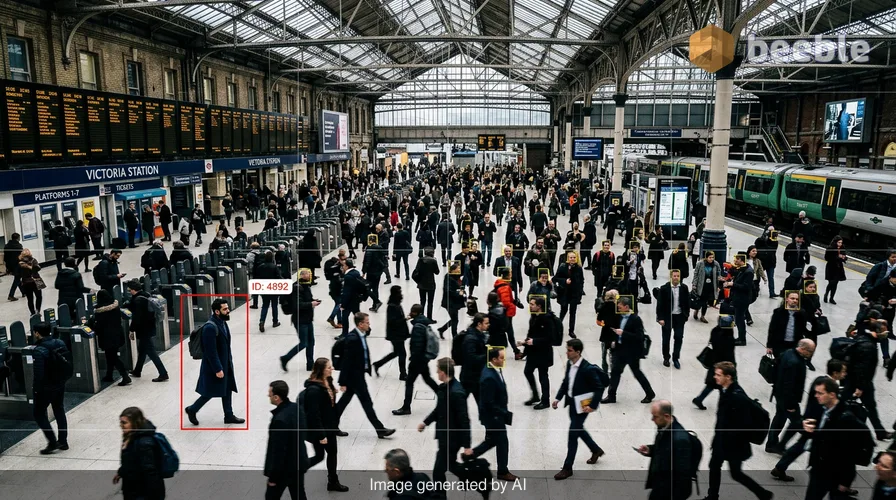
In the physical world, we notice when someone follows us for more than a block. We feel the prickle on the back of our necks if a stranger stares too long. Yet, on a bustling Monday morning in Victoria, central London, thousands of people walked through a sophisticated digital net without breaking their stride. They were tourists clutching maps, office workers chasing caffeine, and shoppers eyeing window displays. To the human eye, they were just a crowd. To the Metropolitan Police’s live facial recognition (LFR) cameras, they were a stream of biometric templates being compared against a list of the city's most wanted in real-time.
This is the new frontier of urban policing. By May 2026, what was once a controversial pilot program has matured into a standard operational tool. The technology, which the Met hails as groundbreaking, represents a fundamental shift in the relationship between the state and the citizen. It asks a difficult question: How much of our anonymity are we willing to trade for the promise of a safer street?
A Monday Morning in Victoria
The operation at Victoria Station was a study in modern efficiency. A police van parked discreetly, a few signs placed on the pavement, and a set of cameras perched on tripods. For most passers-by, the setup was barely more intrusive than a film crew. But inside the control van, the atmosphere was clinical. The system was busy converting every face that passed into a mathematical map—a biometric template—and checking it against a watchlist of approximately 17,000 individuals.
Within an hour, the first alert pinged. An officer stepped out, approached a man, and after a brief conversation, let him go. The system had worked, but the match was for a court-imposed restriction, not an arrest warrant. Thirty minutes later, the system flagged another individual: a man in a grey hoodie and blue trainers. This time, the interaction was different. As the man realized he had been identified, his expression shifted from mundane boredom to visible shock. Within minutes, he was in handcuffs, destined for custody on an outstanding warrant.
From a compliance standpoint, these arrests are the metric of success. Since the start of 2024, the Met has used this technology to apprehend over 2,500 people, many of whom were wanted for serious violent and sexual offenses. For the police, LFR is not just a tool; it is a force multiplier that finds the needle in the haystack before the needle even knows it is being watched.
From Flesh and Bone to Biometric Templates
To understand the legal friction here, we must first demystify the tech. LFR does not "record" you in the traditional sense of a home movie. Instead, it treats your face like a unique digital signature. When you walk past the camera, the software measures the distance between your eyes, the shape of your jawline, and the curve of your nose. It creates a digital string of numbers.
This process involves what privacy lawyers call the processing of special category data. Under current frameworks, this is the most sensitive type of personal information. The Met’s Director of LFR, Lindsey Chiswick, describes the process as a fleeting engagement. Once the system determines you are not on the watchlist, the template is destroyed. To put it another way, the system forgets you as quickly as it met you.
However, the legal justification for this relies on a concept known as Legitimate Interest. This is a legal rule that allows an organization to process data if they have a very good reason that outweighs the individual's right to privacy. In this context, the "good reason" is the prevention and detection of crime. Critics argue that this creates a de facto police lineup for everyone in the street, regardless of whether they are suspected of a crime.
The High Court’s Seal of Approval
The expansion of LFR was not a foregone conclusion. It followed years of intense legal scrutiny. Just last month, a significant High Court challenge brought by civil liberties groups failed to halt the technology's use. The judge ruled that the Met’s use of LFR was lawful, provided it remained proportionate and targeted.
In a regulatory context, proportionality is the scale used to weigh the benefit of an action against its cost to our rights. The court found that because the watchlist is specific—mostly comprising people wanted for serious crimes or those who pose a risk to the public—the brief scanning of the general public is a justifiable trade-off. Notwithstanding this ruling, the government is currently drafting a new legal framework to provide more granular rules on where and when these cameras can be deployed.
As a journalist who meticulously tracks these developments, I’ve noticed that while the courts are satisfied with the current safeguards, the lack of a specific, standalone statute for facial recognition leaves a patchwork quilt of regulations that can feel opaque to the average person.
The Protest Paradox: Liberty vs. Identification
The tension reached a boiling point recently when LFR was deployed at an anti-immigration protest in central London. It was the first time the technology had been used in such a high-stakes political environment. Civil liberties groups like Big Brother Watch were quick to point out the chilling effect this could have on free speech. If people believe that attending a protest means being added to a permanent digital record, they may simply choose to stay home.
Privacy is a fundamental human right, and the concern here is that LFR turns London into a space where anonymity is no longer the default. When the police use biometric identity checks as a prerequisite for entering a public square, the "presumption of innocence"—the bedrock of British law which assumes you have done nothing wrong until proven otherwise—starts to feel precarious.
In contrast, the police maintain that the technology was only used at approach points, not on the march route itself, and was based on specific intelligence regarding threats to public safety. They view it not as a tool for political surveillance, but as a modern-day perimeter fence designed to keep known violent offenders away from peaceful demonstrators.
Why Eighty Percent of Londoners Aren't Flinching
Curiously, despite the outcry from activists, the broader public appears largely unbothered. Met surveys suggest an 80% approval rating for LFR. For many Londoners, the sight of a CCTV camera is as common as a red bus. They have grown up in one of the most surveilled cities on Earth, and for them, the trade-off is simple: if LFR can take a convicted paedophile off the street before he can harm a child—as happened recently in a high-profile case cited by the Met—then the "fleeting engagement" of their own data is a price they are willing to pay.
Ultimately, the success of LFR hinges on trust. Lindsey Chiswick points to a near-perfect accuracy record over the last year, with only 10 false alerts out of 3 million scans and zero wrongful arrests. These statistics are designed to provide a robust defense against claims of systemic bias or technical failure. But for skeptics, the issue isn't whether the technology works; it's whether we should be using it at all.
Navigating the New Normal: Your Privacy Toolkit
As London’s invisible net grows wider, the responsibility falls on the citizen to remain informed and proactive. You are not a passive subject in this digital experiment; you have actionable rights under the law.
If you find yourself in an area where LFR is being deployed, here is how you can manage your digital footprint:
- Look for the Signs: By law, the police must display clear signage in areas where LFR is active. If you see the blue and white signs, you are entering a zone of biometric processing.
- Know Your Right to Object: While you cannot physically stop the camera from scanning you if you enter the zone, you can ask officers on the scene for information about the "Data Controller" and how to submit an objection later.
- Submit a Subject Access Request (SAR): If you believe your data was processed, you have the right to ask the Met Police what data they hold on you and how it was used. This is your digital paper trail.
- Follow the Watchlist Criteria: The Met is required to publish the criteria for their watchlists. Check their official website to understand who they are looking for and why.
- Stay Informed on the DPDI: Keep an eye on the progress of the Data Protection and Digital Information Bill. This legislation will dictate the future of your privacy rights in the UK for the next decade.
Compliance is a compass that keeps the state within its bounds. As we move deeper into 2026, the challenge will be ensuring that this compass remains calibrated toward liberty, even as the lure of total security grows stronger.
Sources:
- Bridges v South Wales Police [2020] EWCA Civ 1058 (Foundational case on LFR legality).
- UK Data Protection Act 2018 (incorporating GDPR principles).
- Metropolitan Police Service: Live Facial Recognition Standard Operating Procedures (2024-2026).
- Big Brother Watch v Commissioner of Police of the Metropolis [2026] (High Court Ruling).
- European Convention on Human Rights, Article 8 (Right to Privacy).
Disclaimer: This article is provided for informational and journalistic purposes only. It does not constitute formal legal advice. If you have specific concerns regarding your privacy rights or a legal dispute, please consult with a qualified legal professional.



See you on the other side.
Our end-to-end encrypted email and cloud storage solution provides the most powerful means of secure data exchange, ensuring the safety and privacy of your data.
/ Create a free account
