


The Invisible Hand in Your Chatbot and the Quiet Death of the Checkout Page

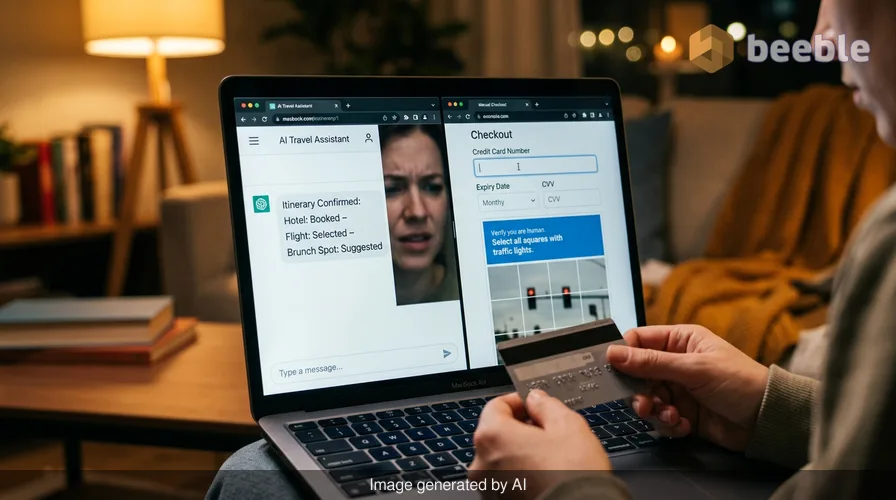
Have you ever sat through a twenty-minute conversation with a chatbot to plan a perfect weekend getaway, only to realize you still had to open six browser tabs to actually pay for it? The AI found the hotel. It picked the flight. It even suggested a brunch spot. Then it stopped. It reached the digital edge of its world. You had to copy the dates. You had to paste the credit card numbers. You had to solve a CAPTCHA. This friction is the last mile of the internet. It is the moment where the automation of our thoughts hits the manual labor of our wallets. For years, we have treated artificial intelligence as a research assistant. We ask it to find facts or draft emails. We do not ask it to go to the store for us because it has no hands and no money. This gap creates a strange financial paradox. We are more connected to information than ever, but our money remains trapped in isolated, manual silos.
Breaking the glass wall between thinking and spending
MoonPay PayBox is a piece of software that attempts to bridge this gap. It is a digital vault that lives inside Claude and ChatGPT. It gives these AI models a way to interact with the financial world directly. When you talk to a chatbot equipped with this tool, you are no longer just having a conversation. You are instructing an agent. The vault stores both crypto wallets and traditional payment cards. It acts as a secure intermediary between the user and the merchant.
In everyday terms, this means the AI can finish the job it starts. If you ask the chatbot to book a flight, it does more than show you a link. It prepares the transaction. It checks the price. It handles the data transfer. You do not leave the chat window to find your wallet. You stay in the conversation. This shift moves us away from the era of clicking buttons and toward an era of stating intentions.
A hundred million dollars for a digital safe
This capability rests on a major technological investment. In April, MoonPay purchased Sodot, an Israeli firm specializing in key management, for approximately $100 million. This acquisition was the foundation for the security model used in PayBox. Sodot provides the infrastructure for Multi-Party Computation, or MPC. This technique is the primary defense against digital theft in this new system.
To understand MPC, imagine a physical bank vault key that is cut into three separate pieces. One piece stays with you. One piece stays with the service provider. One piece stays in a hardware-isolated zone. No single piece can open the vault. This is a profound shift in how we think about digital ownership. Traditionally, if you gave an AI your password, the AI had full control. If the AI was hacked, your money was gone. MPC prevents this. The AI never sees your full key. It never has the power to sign a transaction alone. This structure creates a glass bank vault where the user can see everything happening but maintains the only way to finalize a move.
The invisible rails of agentic commerce
Zooming out, this is not just a MoonPay project. It is part of a broader systemic shift toward agentic commerce. This term describes a world where software programs complete economic tasks autonomously. For this to work, the financial industry had to build new rails. PayBox uses the x402 protocol. This is an open payment standard originally developed by Coinbase. It is now part of the Linux Foundation and has support from Visa, Mastercard, and Stripe.
This protocol allows a chatbot to speak the same language as a merchant's checkout system. On a macro level, we are watching the construction of a financial layer for the machine economy. When the internet was first built, it was designed for humans to look at pages. It was not designed for software to buy things from other software. This new infrastructure fixes that original design flaw. It treats the AI agent as a legitimate economic actor. Consequently, the distinction between a "user" and a "program" begins to blur in the eyes of the global banking system.
The passkey is your new signature
If the AI is doing the legwork, the user is still the one who gives the final command. PayBox uses passkeys for this purpose. A passkey is a cryptographic credential stored on your phone. It replaces the traditional password with biometrics like Face ID or a fingerprint. When the AI has a transaction ready, it sends a request to your device. You glance at your phone or touch the sensor. The transaction is approved.
This mechanism addresses a deep-seated behavioral anxiety about automation. Humans generally distrust systems that can spend their money without a physical check. We have a mundane habit of checking the receipt before we swipe. The passkey preserves this habit in a digital format. It acts as a leash. You allow the agent to run, but you remain the only one who can pull the trigger on a payment. This keeps the user in the loop while removing the tedious data entry of the traditional checkout process.
Why the chain matters to your coffee bill
At launch, PayBox supports Solana and several Ethereum-compatible networks, including Base and Polygon. These are decentralized networks that offer high speed and low fees. For the average person, the specific blockchain matters less than the cost of the transaction. If it costs five dollars in fees to buy a three-dollar coffee through an AI agent, the technology is useless for daily life.
Through this economic lens, the choice of these specific chains is a move toward efficiency. These networks allow for micro-transactions. They make it possible for an AI to handle small, repetitive tasks like paying for a single API call or a digital subscription. This is a symptomatic change in our relationship with money. We are moving from large, infrequent bank transfers to a high volume of tiny, automated payments. The blockchain provides the transparency and the speed needed to settle these transactions in real time.
The convergence of crypto and traditional cards
PayBox does not force users to choose between crypto and fiat currency. It integrates both. Card payments route through the Visa agentic commerce protocol. This is a nuanced piece of engineering. When the AI pays for a flight using your saved credit card, it never sees your sixteen-digit card number. It uses a digital token that is only valid for that specific purchase.
This reduces the risk of data leaks. Historically, every time you gave a merchant your card number, you were trusting them to keep it safe. In this new model, the merchant receives a one-time authorization. This is a tangible improvement in consumer privacy. It suggests a future where our actual financial credentials are never exposed to the public internet. They stay locked in the MPC vault, while the AI agents move temporary tokens to complete our errands.
Reclaiming control in an automated economy
As we move toward a world populated by billions of AI agents, the nature of our financial habits will change. We will likely spend less time looking at checkout screens and more time managing the permissions we give to our software. This requires a new kind of financial mindfulness. It is easy to lose track of spending when it happens inside a conversation. The convenience of an AI paying for your lunch or your gas bill can lead to a sense of detachment from the value of money.
Ultimately, tools like PayBox are about shifting the burden of labor. They take the administrative work of being a consumer—the searching, the typing, the verifying—and hand it to a machine. But the responsibility for the outcome remains with the human. We must ask ourselves if we are prepared to oversee a digital workforce that has access to our bank accounts. The technology is resilient and the cryptography is sound, but the wisdom of the spending still belongs to the person holding the phone. Observing how we use these agents today will dictate the rules of the automated economy tomorrow.
Sources
MoonPay Corporate Launch Announcement, July 2026.
Visa Agentic Commerce Protocol Documentation.
Linux Foundation x402 Protocol Whitepaper.
Sodot Key Management Technical Specifications.
Coinbase AI Agent Development Report.



See you on the other side.
Our end-to-end encrypted email and cloud storage solution provides the most powerful means of secure data exchange, ensuring the safety and privacy of your data.
/ Create a free account
