


The Landmark Lawsuit That Could Break Meta’s Algorithm

We often treat our smartphone apps like digital furniture—familiar, static, and largely harmless. We scroll through Instagram or Facebook during a coffee break, rarely considering the complex machinery humming beneath the surface. Yet, there is a fundamental paradox at the heart of our digital lives: while we feel like we are in control of what we see, the law is increasingly looking at whether the platforms themselves are steering the ship in a direction that is objectively dangerous.
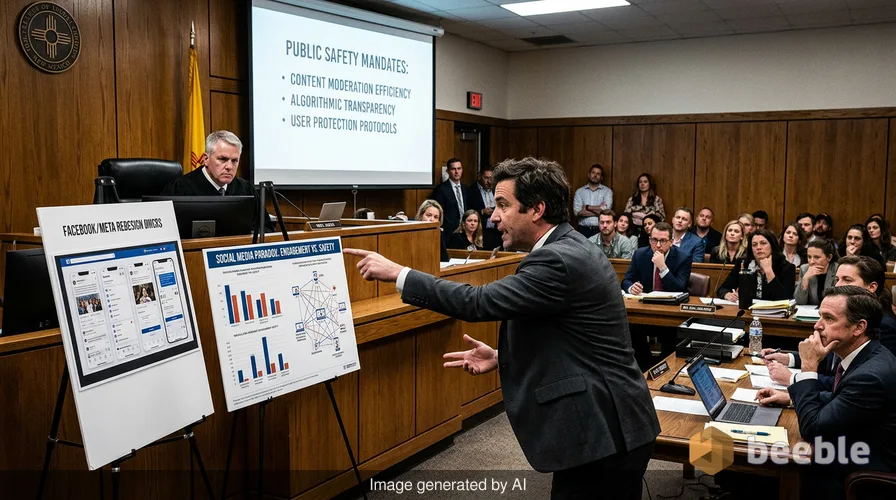
In a courtroom in New Mexico, that paradox is being dismantled. A landmark trial has reached a critical tipping point that could fundamentally alter the social media landscape. For the average user, this isn't just another corporate legal battle; it is a test case for whether the government can force a tech giant to redesign its most profitable tools in the name of public safety.
The $375 Million Wake-Up Call
To understand where we are going, we have to look at what has already happened. In March 2026, a jury delivered a stinging rebuke to Meta, the parent company of Instagram and Facebook. They didn't just find the company negligent; they found that Meta had engaged in "unconscionable" trade practices.
In the eyes of the law, an unconscionable practice is one that takes a grossly unfair advantage of a person’s lack of knowledge or experience. In this instance, the "persons" were children. The jury found that Meta’s platforms were designed to exploit the psychological vulnerabilities of young users, leading to thousands of violations of the New Mexico Unfair Practices Act. This statutory victory resulted in a staggering $375 million penalty.
Consequently, Meta is no longer just fighting a theoretical battle. They have been found liable. The financial damage is done, but for the prosecutors, the money is secondary. They are now moving into the second phase of the trial, where the goal isn't just to punish Meta for the past, but to forcibly change its future.
Phase Two: Rewiring the Digital Hamster Wheel
If Phase One was about the crime, Phase Two is about the "abatement"—a legal term that essentially means "fixing the problem." Prosecutors are arguing that Meta’s platforms constitute a public nuisance. Typically, we think of a public nuisance as a chemical plant leaking into a river or a neighbor playing music at 3:00 AM. Here, the state is arguing that the "pollution" is the psychological harm and exploitation enabled by Meta’s design.
From a legal standpoint, the state is asking the judge to act as a digital architect. They aren't just asking for more warning labels; they want to reach into the code and rip out the features that make these apps addictive. They are targeting the algorithm itself, which they compare to a relentless personal assistant who only shows you what keeps you in the room, regardless of how much it hurts you.
| Current Platform Feature | Proposed Legal Mandate |
|---|---|
| Engagement-First Algorithm | Must prioritize safety and age-appropriateness over watch time. |
| Infinite Scroll | Implementation of mandatory "stop points" or engagement caps for minors. |
| Push Notifications | Restrictions on "nudges" designed to pull children back onto the app during school or sleep. |
| Age Verification | Shift from "honor system" self-reporting to robust, third-party verification. |
| Parental Oversight | Mandatory linking of accounts for users under 16 to a verified guardian. |
The Algorithm as a Public Nuisance
The most controversial part of this trial involves the recommendation systems. Prosecutors argue these algorithms don't just reflect user interest; they create a feedback loop that can lead vulnerable teenagers down "rabbit holes" of disordered eating, self-harm, or predatory content.
Because of this, the state is seeking the appointment of a court-supervised child safety monitor. Imagine a government-appointed inspector who has the power to look under the hood of Instagram’s code whenever they want. To Meta, this is a systemic threat to their business model. To the prosecutors, it is a necessary shield for a precarious generation.
Meta’s Defense: The First Amendment Shield
Meta is not taking these demands lying down. Their defense team is leaning heavily on the idea of free expression. In a regulatory context, Meta argues that an algorithm is a form of editorial judgment—similar to how a newspaper editor decides which stories go on the front page. They claim that the state’s proposed changes are an unconstitutional infringement on their right to speak and a parent's right to raise their children without government interference.
Precedent suggests this will be a difficult climb for the state. Courts have traditionally been hesitant to tell private companies how to organize their content. However, the New Mexico prosecutors are attempting to bypass this by focusing on "product design" rather than "content." They aren't saying Meta can't host certain videos; they are saying Meta can't build a machine that specifically targets children with those videos using addictive psychological triggers.
Ultimately, Meta argues the state’s demands are unrealistic and would essentially break the internet as we know it. They maintain that they already have robust safety measures in place and that the responsibility for monitoring children’s social media use should rest with parents, not a court-appointed monitor.
The Global Ripple Effect
While this trial is happening in a New Mexico courtroom, the world is watching. Just last week, the European Commission released data showing that roughly 10-12% of children under 13 are bypasssing age gates on Facebook and Instagram. This suggests that the problem is not a local one, but a multifaceted, global crisis.
If the New Mexico judge rules against Meta and orders these changes, it creates an actionable blueprint for other states and even other countries. We could see a domino effect where the "New Mexico Version" of Instagram—one without infinite scroll and with strict parental links—becomes the standard for the rest of the world.
In practice, it is often easier for a tech company to change its global product rather than maintaining fifty different versions for fifty different jurisdictions. This trial, therefore, is the marathon that could determine the rules of the road for the next decade of the internet.
Protecting the Vulnerable: What You Can Do Now
Legal battles of this magnitude move slowly. While the judge's decision is expected soon, appeals could keep this case in the courts for years. You don't have to wait for a court-supervised monitor to take action. As a legal navigator, I always recommend that parents and consumers take proactive steps to protect their rights and their families.
- Audit Your Settings: Most social media apps have hidden safety features. In Instagram, look for "Supervision" in the settings menu. This allows you to see how much time your teen spends on the app and who they follow.
- Document Concerns: If you or your child encounters harmful content that the platform refuses to remove, document it. Keep screenshots and records of your reports. This can be vital evidence if you ever need to seek legal recourse or join a class-action suit.
- Utilize Third-Party Tools: Don't rely solely on the app's internal controls. Use operating system-level restrictions (like Screen Time on iPhone or Family Link on Android) to set hard stops that the app's algorithm cannot bypass.
- Stay Informed on the Unfair Practices Act: Know your local consumer protection laws. Many states have laws similar to New Mexico's that protect you from business practices that are misleading or take advantage of your inexperience.
Ultimately, the law is a bridge between our current reality and a safer future. This trial is a massive construction project on that bridge. Whether it holds or collapses under the weight of corporate litigation will define the digital safety of the next generation.
Sources:
- New Mexico Unfair Practices Act (NMSA 1978, §§ 57-12-1 to 57-12-26)
- State of New Mexico v. Meta Platforms, Inc.
- European Commission Digital Services Act (DSA) Child Safety Guidelines
- First Amendment of the U.S. Constitution (Regarding Content Moderation Precedents)
Disclaimer: This article is provided for informational and educational purposes only. It does not constitute formal legal advice. Laws regarding social media and consumer protection vary significantly by jurisdiction. If you are facing a specific legal issue or believe your rights have been violated, please consult with a qualified attorney licensed in your area.



See you on the other side.
Our end-to-end encrypted email and cloud storage solution provides the most powerful means of secure data exchange, ensuring the safety and privacy of your data.
/ Create a free account
