


The Legacy Giant’s Quiet Leap into a Digital Future

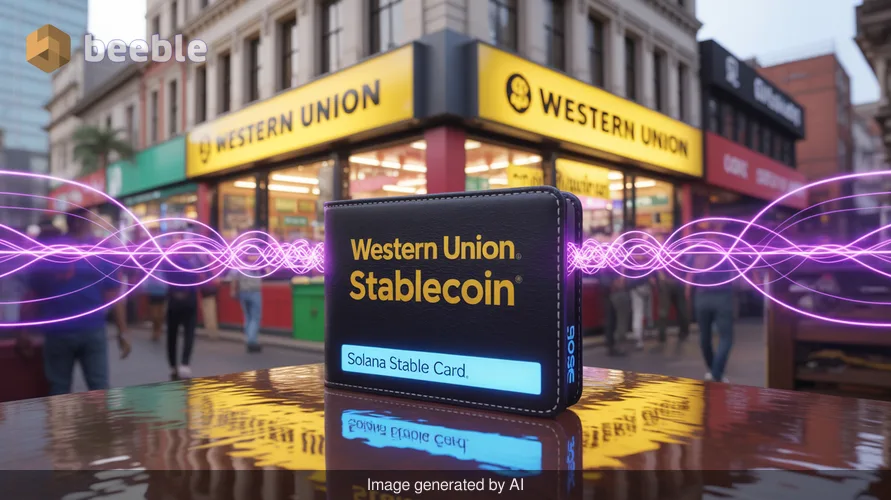
For decades, the yellow-and-black Western Union sign has been a ubiquitous fixture of our global landscape—a silent witness to the tides of migration and the deeply rooted human desire to support those we love across borders. You might have seen it in a corner bodega in Queens, a bustling market in Nairobi, or a sterile shopping center in London. For many, this sign represented the only bridge back home. It was a tangible lifeline, albeit an expensive and often fragmented one. Historically, sending money across the world meant navigating a maze of physical agents, high fees, and settlement times that felt like an eternity in our instant-gratification age.
Today, that legacy is undergoing a profound transformation. Western Union’s announcement to launch a Solana-based stablecoin and an integrated ‘Stable Card’ marks a systemic shift in how we perceive and move value. This isn’t just another corporate experiment with a trendy technology; it is the moment a 170-year-old financial titan acknowledges that the traditional plumbing of global money movement is no longer fit for purpose.
The Friction of the Old World
To understand the magnitude of this shift, we must first look at the mundane reality of traditional remittances. For a retail worker sending $200 back to their parents in the Philippines, the process was often a series of compromises. In the old model, money didn't just 'fly' across the ocean; it hopped through a chain of correspondent banks, each taking a small slice of the pie while the clock ticked. This was the 'invisible leak' in the wallet of the global workforce.
In the 20th century, Western Union built its empire on trust and physical presence—thousands of agents acting as human nodes in a global network. Paradoxically, the very thing that made them successful—this massive physical infrastructure—became their greatest liability in the digital age. While we could send an email in seconds, sending value still felt like mailing a physical letter. The costs were not just financial; they were human. They represented the extra hours worked to cover a 7% fee or the anxiety of waiting three days to confirm that rent money had arrived safely on the other side of the planet.
Solana: The Glass Bank Vault of Speed
By choosing the Solana blockchain, Western Union is essentially swapping out its aging iron pipes for fiber optics. If we think of a blockchain as a glass bank vault—where the movement of funds is transparent and verifiable by anyone, yet secured by cryptographic keys—Solana is the version of that vault that processes transactions at the speed of a thought.
On a macro level, the choice of Solana is telling. While Bitcoin is often viewed as 'digital gold'—a resilient but slow store of value—and Ethereum serves as a complex foundation for decentralized applications, Solana has positioned itself as the high-speed rail of the crypto world. It is designed for high throughput and remarkably low fees. For a company like Western Union, which processes millions of small-value transactions daily, the math of the traditional banking system simply couldn't compete with the fractions of a cent offered by a decentralized network.
Financially speaking, this move represents a de facto admission that the future of money is on-chain. By issuing its own stablecoin, Western Union is creating a digital dollar that can move instantly, 24/7, without waiting for the traditional banking system to 'wake up' on Monday morning.
The Stable Card: Bridging the Digital Divide
Perhaps the most practical element of this rollout is the ‘Stable Card.’ For the average consumer, the word 'blockchain' often triggers a sense of speculative dread or technical exhaustion. Most people don't want to manage private keys or worry about 'gas fees' when they are trying to buy groceries or pay for a car repair. They want the convenience of a swipe and the certainty of a balance.
Through this economic lens, the Stable Card acts as a translator. It allows a mother in Mexico to receive a stablecoin transfer from her son in California and immediately spend those funds at any merchant that accepts major debit cards. There is no need to visit a physical agent to 'cash out' and no need to understand the nuances of decentralized finance. Behind the scenes of this trend, the complexity is abstracted away. The user sees a balance in dollars; the merchant receives payment in their local currency; the blockchain handles the settlement in the background.
Trust as a Behavioral Commodity
From a consumer standpoint, the most fascinating aspect of this development is the psychological weight of the Western Union brand. In the 'digital wild west' of cryptocurrency, trust is often the scarcest resource. We have seen countless 'decentralized' projects collapse due to poor management or opaque structures, leading to a pervasive sense of financial anxiety among retail investors.
Western Union brings something to the table that a startup cannot easily replicate: a century and a half of regulatory compliance and brand recognition. Curiously, many people who would never dream of using a crypto exchange might feel perfectly comfortable using a Western Union 'Stable App.' This is the power of institutional authority. It bridges the gap between the radical promise of decentralization and the comfortable safety of a known entity.
On an individual level, this transition helps mitigate the 'FOMO and FUD' cycle that plagues the crypto market. Because a stablecoin is pegged to the US Dollar, it removes the volatile swings that make holding assets like Bitcoin so stressful for everyday people. It turns crypto from a speculative gamble into a boring, reliable tool for utility. And in the world of personal finance, 'boring' is often a sign of progress.
Macro Implications for Global Economies
Zooming out, the implications for global liquidity are significant. Remittances are not just small family transfers; they are the lifeblood of many emerging economies, sometimes accounting for more than 20% of a nation’s GDP. When you reduce the cost of these transfers from 6% to 1%, you are effectively injecting billions of dollars of purchasing power directly into the pockets of the people who need it most.
This is a tangible example of how blockchain can address structural inequalities. Historically, the poorest people paid the highest fees to move their money. The 'Stable Card' and the Solana-based stablecoin represent a dismantling of this regressive tax on the global poor. Consequently, we may see a shift in how central banks in developing nations view digital assets—not as a threat to their sovereignty, but as a necessary upgrade to their infrastructure.
A New Era of Financial Mindfulness
As we look toward the launch next month, it is worth reflecting on our own relationship with the digital tools in our pockets. We are living through a period where the boundaries between 'traditional' and 'digital' finance are evaporating. Essentially, the money in your bank account is already just a digital entry on a ledger; the only difference is who controls that ledger and how fast it updates.
Ultimately, Western Union’s move should prompt us to question our own financial biases. Do we trust a system because it is old, or because it is efficient? Are we holding onto cash out of habit, or out of a genuine need for privacy? As these tools become more pervasive, our role as consumers is to remain market-observant—recognizing that every swipe of a card is a vote for a specific type of economic future.
In everyday terms, this isn't about the 'end of fiat' or the 'triumph of crypto.' It is about the evolution of a tool. Just as the telegram gave way to the telephone, the physical remittance is giving way to the instant digital settlement. As you see those yellow-and-black signs in the coming months, remember that they are no longer just markers of a physical location, but gateways to a resilient, interconnected, and increasingly transparent global network.
Key Takeaways for the Conscious Consumer
- The Utility Shift: Focus on how technology reduces your transaction costs rather than searching for the next speculative 'moonshot.'
- Brand vs. Tech: Recognize that legacy brands are often the safest entry points for complex new technologies like blockchain.
- The Speed of Trust: In a digital economy, the speed at which you can access and spend your money is a direct component of your financial freedom.
- Question the Fee: Always look at the 'invisible leaks' in your transfers; if a 170-year-old company can lower costs using blockchain, your other financial providers should be able to as well.
Sources:
- World Bank: Migration and Development Brief (Remittance Data)
- Solana Foundation: Network Performance and Transaction Cost Reports
- Western Union: Q1 2026 Strategic Roadmap and Partnership Announcements
- International Monetary Fund (IMF): Digital Money and the Future of Cross-Border Payments
- Decrypt Media: Western Union Solana Integration Analysis



See you on the other side.
Our end-to-end encrypted email and cloud storage solution provides the most powerful means of secure data exchange, ensuring the safety and privacy of your data.
/ Create a free account
