


The LinkedIn Layoffs Are a Cold Reminder That Growing Profits No Longer Guarantee Job Security

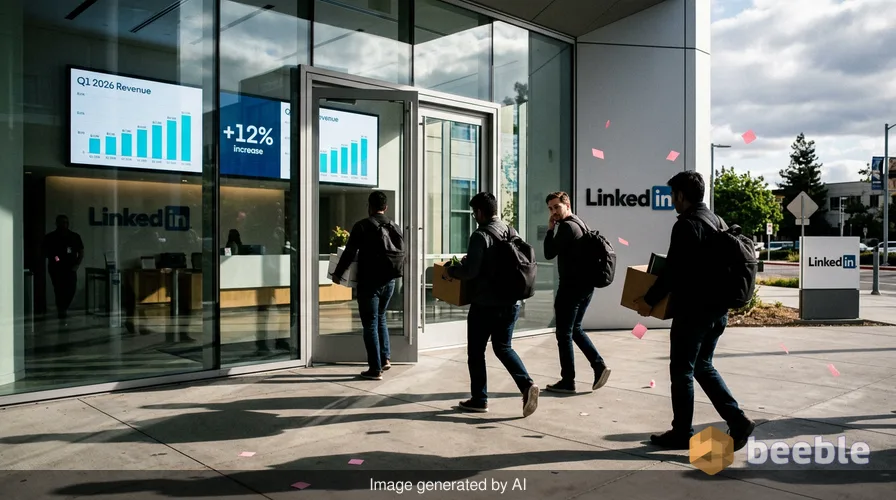
History in the technology sector often feels like a series of mirrors. If we look back to the early 2000s, the industry underwent a painful transition from the 'growth at any cost' mindset to a period of radical fiscal discipline. More recently, during the post-pandemic correction of 2023, we saw nearly every major player—from Meta to Google—slash their headcounts to appease a nervous market. Today, on May 13, 2026, we are witnessing a recurring chapter in this story as LinkedIn, the platform synonymous with professional advancement, announces it is letting go of roughly five percent of its global workforce.
Looking at the big picture, these layoffs are not the result of a failing company. In fact, quite the opposite is true. LinkedIn’s parent company, Microsoft, recently reported that the professional network’s revenue rose by a robust 12 percent in the first quarter of this year. In a traditional industrial economy, such growth would typically signal expansion and hiring sprees. However, in the modern tech ecosystem, the rules of the game have fundamentally shifted. Success is no longer measured purely by how much money is coming in, but by how lean the machine can run while collecting it.
The Anatomy of the Five Percent
To understand the scale of this move, we have to look under the hood of LinkedIn’s massive operations. With over 17,500 full-time employees, a five percent cut translates to approximately 875 people losing their roles. According to a memo from CEO Daniel Shapero, these cuts aren't isolated to a single struggling department. Instead, they are systemic, hitting the Global Business Organization, marketing, engineering, and product teams.
Curiously, the reorganization even involves closing physical locations, such as the office in Graz, Austria. This suggests that the company is looking to eliminate redundant layers that accumulated during the high-growth years of the early 2020s. Essentially, the company is moving from a sprawling, decentralized structure to a more streamlined model. This is the corporate equivalent of an athlete cutting weight to move faster; the goal isn't just to be smaller, but to be more efficient with every ounce of effort.
Historically, tech companies have used layoffs as a tool to signal to Wall Street that they are disciplined. By reducing vendor spend, scaling back marketing campaigns, and offloading underutilized office space, LinkedIn is telling investors that it is focused on 'high-impact' priorities. In the context of the stock market as a global mood ring, this move is designed to soothe any anxieties about rising operating costs, even when revenue is climbing.
Behind the Jargon: The ROI Filter
In his memo to the staff, Shapero focused heavily on 'Return on Investment' (ROI) and 'agile teams.' For the average user, these terms can feel like opaque corporate speak designed to mask the human cost of a reorganization. To put it another way, LinkedIn is applying a 'So What?' filter to every project on its books. If a specific marketing campaign or a niche engineering project doesn’t directly contribute to the bottom line or the core mission of the platform, it is being scrapped.
Practically speaking, this means the 'experimental' phase of the 2020s is over. We are entering an era of foundational focus. LinkedIn wants to focus its capital on infrastructure—the digital crude oil that keeps the platform running. While the company has been careful not to explicitly blame artificial intelligence for these cuts, it is impossible to ignore the role of automation. When a company speaks about shifting investments toward 'infrastructure' to deliver a 'step change in impact,' they are often talking about replacing manual processes with scalable, decentralized AI systems.
The Microsoft Connection and the Voluntary Exit
It is also essential to view this through the lens of LinkedIn’s parent company, Microsoft. This announcement follows closely on the heels of Microsoft’s own internal restructuring, where it offered voluntary buyouts to roughly seven percent of its staff. There is an interconnected logic here. Microsoft is currently the titan of the AI revolution, and it is pouring billions into data centers and hardware.
For a subsidiary like LinkedIn to remain a resilient part of the Microsoft portfolio, it must match the parent company's lean, high-output philosophy. Zooming out, we see a broader trend across the entire tech landscape: the era of the 'perks-heavy' tech giant is being replaced by a more pragmatic, utility-focused model. The professional social network is no longer just a place to post resumes; it is becoming a critical piece of the global digital infrastructure, and infrastructure must be reliable, transparent, and, above all, profitable.
What This Means for the Everyday User
From a consumer standpoint, you might wonder how 875 fewer people at LinkedIn headquarters affects your Tuesday afternoon scrolling. The impact is often subtle but tangible. When engineering and product teams are 'streamlined,' it usually leads to a narrower focus on core features. You might see fewer experimental updates and more 'user-friendly' refinements to the tools that generate revenue, such as LinkedIn Premium and the platform's advertising suite.
Conversely, the focus on ROI might lead to a more aggressive push for paid services. As the company seeks to 'operate more profitably,' the pressure to convert free users into paying subscribers often increases. This is a cyclical reality of the platform economy. When the easy money of the low-interest-rate era vanished, companies had to find more intuitive ways to squeeze value from their existing user base.
The Changing World of Work
Shapero’s memo noted that 'economic opportunity is one of the societal issues of our time.' There is a certain irony in using that phrase while simultaneously reducing the workforce, but it highlights a volatile truth about the current labor market. Even the platforms we use to find work are navigating the same disruptive forces as the rest of us. The professional world's digital switchboard is being rewired, and the technicians are occasionally the ones being disconnected.
For the everyday professional, this is a signal to remain agile. If a company growing at 12 percent year-over-year can justify a five percent reduction in staff, it suggests that 'stability' is an outdated concept in the tech-adjacent economy. The new standard is 'adaptability.' As LinkedIn shifts its investment toward infrastructure and AI, the skills it values in its remaining employees will likely shift as well, favoring those who can manage the very automation that is replacing traditional roles.
Practical Foresight
Ultimately, the LinkedIn layoffs serve as a foundational lesson in modern corporate mechanics. High revenue does not mean a safe harbor. As you navigate your own career, it is worth observing your digital habits and the platforms you rely on. Notice which features stay and which ones disappear over the next six months. This will give you a transparent look at what LinkedIn—and by extension, the broader tech industry—deems truly valuable in 2026.
Rather than viewing this as a sign of industry collapse, see it as a shift in the digital climate. The 'tireless intern' that is AI is beginning to take over the routine maintenance of our digital lives, allowing corporations to shed the weight of human-led marketing and middle management. Your best move is to pay attention to where the investment is moving—not just where the cuts are happening—and ensure your own professional toolkit is aligned with that future infrastructure.
Sources
- Microsoft Investor Relations: Q1 2026 Earnings Report
- Internal Memo: CEO Daniel Shapero to LinkedIn Staff (May 2026)
- Reuters: Tech Industry Labor Analysis and Workforce Reductions
- Business Insider: LinkedIn Corporate Reorganization and Office Closures



See you on the other side.
Our end-to-end encrypted email and cloud storage solution provides the most powerful means of secure data exchange, ensuring the safety and privacy of your data.
/ Create a free account
