


The Massive Samsung Strike That Could Make Your Next Phone a Lot More Expensive

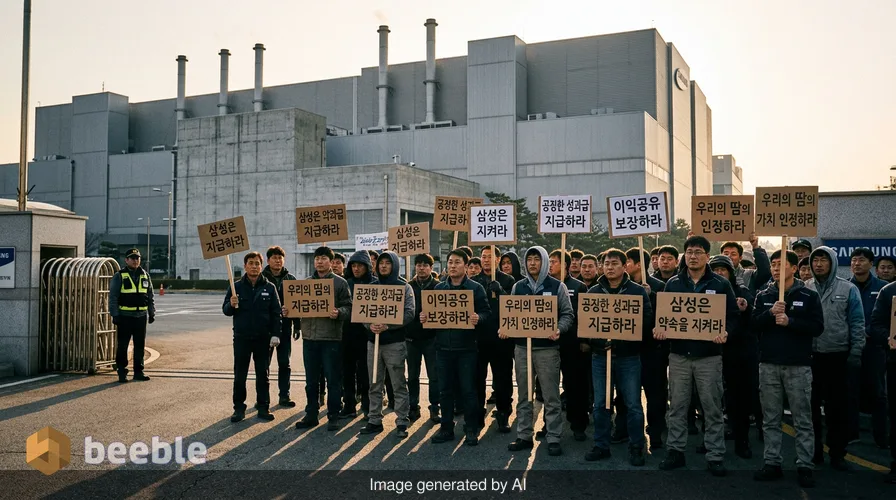
JPMorgan estimates that a sustained shutdown of Samsung’s chip production could wipe out as much as 31 trillion won ($20.79 billion) in operating profit. While that number sounds like a high-stakes calculation for Wall Street analysts, the real-world impact is far more systemic. If you are currently reading this on a smartphone, laptop, or tablet, you are likely holding a piece of Samsung technology in your hand. The company is the undisputed heavyweight champion of memory chips, and a looming 18-day strike scheduled to begin on May 21 is threatening to put a wrench in the global machine that builds our digital lives.
At the heart of this conflict is a classic human dilemma fueled by a high-tech gold rush. As artificial intelligence (AI) transforms from a Silicon Valley buzzword into a global industrial engine, the rewards are not being shared equally within the walls of the world’s largest semiconductor company. What began as a disagreement over bonus checks has spiraled into a labor movement that could disrupt everything from the production of Tesla’s self-driving computers to the availability of the next Nvidia-powered AI server.
The Digital Crude Oil and the One-Stop Shop
To understand why this strike is such a disruptive event, we have to look under the hood of how modern electronics are made. We often think of "chips" as a single category, but the industry treats microchips as the digital crude oil of our era—it is the raw resource that powers every modern economy. However, not all oil is refined the same way. Samsung operates what it calls a "one-stop shop," a business model that is increasingly rare in the tech world.
Unlike its competitors—such as TSMC, which only manufactures chips for others, or Micron, which focuses almost entirely on memory—Samsung tries to do it all. They design the chips, they manufacture the memory that stores data, and they run the foundries that build the logic processors (the "brains") for companies like Nvidia and Tesla. Looking at the big picture, this strategy was designed to make Samsung resilient. If one part of the market dipped, the other would carry the weight.
But the AI boom has flipped this strategy on its head. The demand for High Bandwidth Memory (HBM)—the ultra-fast storage required for AI to function—has skyrocketed. This has made Samsung’s memory division incredibly profitable. Conversely, the foundry side—the part of the business that builds custom chips for external clients—has struggled with losses and technical hurdles. This inequality has created a volatile internal environment where two people working in the same building, wearing the same blue vest, are looking at vastly different futures.
The Great Bonus Divide: 607% vs. 50%
Behind the jargon of "wage negotiations" and "operating profit margins" lies a simple, tangible number that has infuriated the workforce. In March, Samsung proposed a bonus structure that would see its memory chip workers receive payouts of up to 607% of their annual salary. For a seasoned engineer, that is a life-changing amount of money, intended to match the aggressive pay scales of Samsung’s chief rival, SK Hynix.
However, for the 23,000 workers in the logic chip and foundry divisions, the offer was significantly leaner: between 50% and 100%. The company’s logic is cold and mathematical. The memory division is printing money, while the foundry division is currently a multi-billion dollar hole in the pocket. Samsung’s negotiators have been blunt, with transcripts revealing that executives reminded workers that without the memory division's profits, the foundry business might have folded entirely.
For the average user, this might seem like a corporate squabble over extra zeros, but it highlights a fundamental shift in how tech talent is valued. The union argues that the foundry workers are the ones building the future—the chips for Tesla’s AI and Nvidia’s next-gen processors. If these workers feel like second-class citizens, they won’t just strike; they will leave. In fact, many already are. Engineers have described a "brain drain" where talent is fleeing to competitors like SK Hynix or Micron, lured by more transparent and robust compensation packages.
Why Your Wallet Should Care About a Strike in Korea
What this means is that we are looking at a potential bottleneck in the global supply chain. In everyday life, we tend to notice tech shortages only when the price of a graphics card doubles or when a new smartphone is backordered for three months. A strike of this magnitude could trigger exactly those scenarios.
| Business Unit | Primary Product | Major Customers | Proposed Bonus |
|---|---|---|---|
| Memory Division | DRAM, NAND, HBM | Apple, Dell, HP | Up to 607% |
| Foundry/Logic | Custom AI processors | Nvidia, Tesla, Qualcomm | 50% to 100% |
| System LSI | Image sensors, Modems | Samsung Mobile, Car makers | 50% to 100% |
If 45,000 workers walk off the job, the production of memory chips—foundational components in everything from laptops to high-end refrigerators—slows down. When supply drops while demand for AI remains unprecedented, prices go up. This isn't just a Samsung problem; it’s an interconnected global issue. If Samsung cannot deliver the memory chips that go inside an Nvidia AI server, Nvidia cannot ship that server to a company like Google or Microsoft. This ripple effect can eventually slow down the pace of software updates, increase the cost of cloud storage, and make your next device purchase more painful for your budget.
The Strained Pride of the "Samsung Man"
Historically, working for Samsung was the pinnacle of a career in South Korea. It carried a level of prestige and job security that was almost foundational to the country’s middle class. But that culture of loyalty is shifting. The younger generation of engineers is less interested in the "Samsung Man" identity and more interested in the market value of their skills.
One chip researcher with three decades of experience noted that he no longer feels pride in the company. When long-term employees who have survived decades of industry cycles start applying for jobs at competitors like Micron, it suggests a systemic issue that a one-time bonus check might not fix. The union is no longer just asking for more money; they are asking for a fundamental change in how profits are shared, demanding 15% of the annual operating profit be put into a transparent pool for everyone.
Samsung’s leadership is in a corner. If they give in to the union, they set a precedent that could weaken their bargaining power in the future and potentially drain the cash they need to invest in new factories. If they refuse, they risk a total production halt and a complete loss of trust from global partners who rely on them to be a resilient link in the chain.
Practical Foresight: Navigating the Uncertainty
Looking ahead, the outcome of the May 21 strike will be a barometer for the entire tech industry. Practically speaking, we are entering a period where the "labor" part of "technology" is finally demanding its share of the AI hype. For you as a consumer, there are two ways to view this developing story.
First, if you have been planning a major tech purchase—a high-end gaming PC, a new flagship phone, or a powerful laptop—you might want to pull the trigger sooner rather than later. If the strike lasts the full 18 days, the inventory currently sitting in warehouses will begin to dwindle, and the "supply and demand" seesaw will tilt toward higher prices by late summer.
Second, we should shift our perspective on the devices we use. We often view AI as a tireless intern that exists only in the cloud, but this conflict reminds us that AI is actually a physical product built by thousands of people in cleanrooms. Ultimately, the stability of our digital world depends on whether the people building the hardware feel they are being treated fairly. As the AI boom continues, the real bottleneck might not be the physics of the chips themselves, but the human beings who make them. It is time to appreciate the invisible industrial mechanics that make our modern lives possible, even as those mechanics show signs of significant strain.
Sources:
- Reuters: Internal Samsung wage negotiation transcripts and worker interviews.
- JPMorgan Market Analysis: Impact reports on Samsung Electronics operating profit (2026).
- Samsung Electronics: Official corporate statements on Logic and Memory division investments.
- Yonsei University: Corporate governance analysis by Professor Namuh Rhee.
- American Chamber of Commerce in Korea: Reports on labor uncertainty and global manufacturing reputation.



See you on the other side.
Our end-to-end encrypted email and cloud storage solution provides the most powerful means of secure data exchange, ensuring the safety and privacy of your data.
/ Create a free account
