


The most powerful AI model just got cheaper and more boring

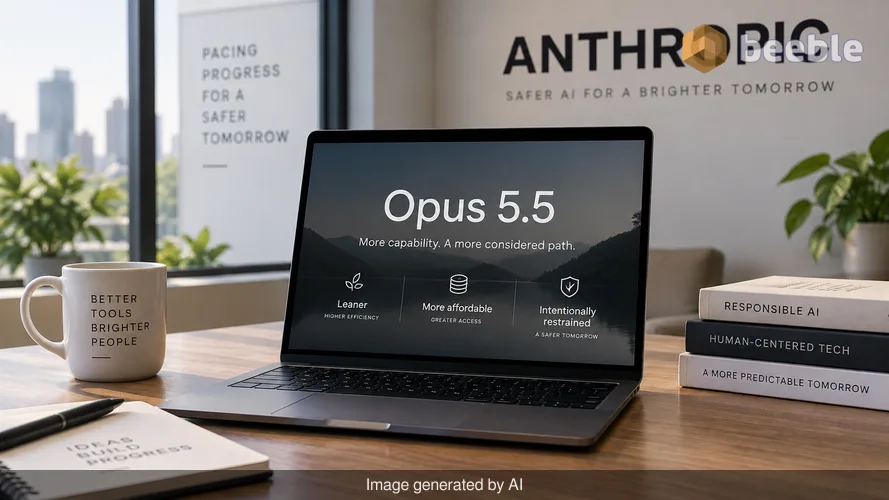
While the technology world usually expects newer artificial intelligence models to be bigger, flashier, and more expensive, Anthropic just broke that cycle. The release of Opus 5.5 on Tuesday signals a departure from the traditional arms race of raw compute. Most developers expected a massive, resource-heavy successor to the Opus 5 model released in July. Instead, the reality is a system that is leaner, more affordable, and intentionally restrained. Anthropic is betting that users prefer a tool that works efficiently over one that simply chases the highest possible parameters.
This release is the first major move since CEO Dario Amodei publicly committed to pacing the frontier. This philosophy involves deliberately slowing down the advancement of AI capabilities to ensure safety protocols keep up with the technology. In an industry where speed is often the only metric that matters, Anthropic is trying to prove that maturity is more valuable than momentum. For the average user, this means the software they rely on is becoming more predictable even as it becomes more capable.
The practical math of cheaper intelligence
For businesses and developers, the most tangible change is the price tag. Digital intelligence is often measured in tokens, which are essentially small chunks of text. A million tokens is roughly equivalent to 750,000 words, or about seven average-length novels. Under the old pricing for Opus 5, generating that much text cost $25. With Opus 5.5, that price has dropped to $20. While a five-dollar difference sounds small in isolation, it scales significantly for companies that process millions of documents every day.
This price drop is a direct result of efficiency. Anthropic managed to reduce the amount of computing power required to run the model. When a model requires less energy and hardware to process a request, the provider can pass those savings to the customer. This makes high-end AI more accessible to smaller startups that previously found the Opus tier too expensive for their budgets. Historically, the most capable models remained the exclusive playground of large corporations, but the current shift suggests that elite performance is becoming a commodity.
Why better performance means less talk
Opus 5.5 outpaces the larger Fable model in several key benchmarks, particularly in coding and complex knowledge work. Curiously, it achieves this while being less prone to the flowery, jargon-heavy language that plagued previous versions. Anthropic modified the way the model communicates, forcing it to put the most important information at the start of its responses. This change addresses a common frustration where users had to read through paragraphs of introductory filler to find the actual answer to their question.
Think of Opus 5.5 as a tireless intern who finally learned that the boss wants the bottom line first. Previous models often tried to sound smart by using technical terminology and complex sentence structures. The new version prioritizes clarity. For a programmer asking for a bug fix, this means getting the code block immediately rather than a lecture on software architecture. This shift toward brevity reduces the time users spend filtering through AI-generated noise, which is a practical win for productivity.
Comparing the Claude lineup
Anthropic maintains a three-tier system to serve different needs. Opus sits at the top as the heavy lifter for complex tasks. Sonnet acts as the balanced middle ground, while Haiku provides near-instant responses for simple queries. The performance gap between these tiers is shifting as the 5.5 generation rolls out.
| Model Tier | Primary Use Case | Status | Pricing (per 1M output tokens) |
|---|---|---|---|
| Opus 5.5 | Advanced coding, research, strategy | Available Now | $20.00 |
| Sonnet 5.5 | Daily tasks, content moderation | Coming Soon | TBD |
| Haiku 5.5 | Chatbots, data categorization | Coming Soon | TBD |
The fact that Opus 5.5 succeeded in informal tasks that the larger Fable model failed to complete is a significant indicator of the current market direction. It suggests that the industry is reaching a point of diminishing returns for massive models. More data does not always lead to better results. Instead, the quality of the training and the logic of the model’s internal architecture are becoming the primary drivers of success.
The logic of pacing the frontier
Dario Amodei has stated that fully addressing AI risks requires more prudence. This stance is rare in a sector driven by venture capital and the pressure to ship features quickly. By pacing the frontier, Anthropic is trying to avoid a scenario where an AI model gains the ability to discover dangerous biological vulnerabilities or cyber exploits before the company has the tools to monitor those behaviors. Opus 5.5 has the same safety safeguards as the Fable model, specifically limiting its ability to help users develop biological weapons or find exploits in compiled computer programs.
These safeguards involve outside evaluation from organizations like METR and Frontier Design. These groups act as a digital safety inspection team, testing the model for dangerous capabilities before it reaches the public. While some critics argue that these limits hinder innovation, Anthropic views them as foundational infrastructure. As AI becomes a more systemic part of modern life, the company argues that public policy and safety monitoring must evolve alongside the code.
What this means for your workflow
If you use AI for professional tasks, the release of Opus 5.5 changes the cost-benefit analysis of which model to use. Previously, many users stayed with the mid-tier Sonnet model because the price of Opus was difficult to justify for daily work. The 20% price reduction, combined with the faster processing speeds, makes the high-end tier a more viable option for routine tasks. The model is less likely to waste your time with unnecessary explanations, making it a more efficient partner for technical projects.
Looking at the big picture, this release shows that the AI industry is entering a phase of refinement. The initial shock of what AI can do is wearing off, and users are now demanding reliability, lower costs, and better user interfaces. The digital crude oil of the 21st century—compute power—is being used more effectively, which stabilizes the market and makes the technology more resilient against price spikes.
From a consumer standpoint, the most important takeaway is that AI is becoming more like a utility and less like a laboratory experiment. You should observe how your digital tools respond over the next few weeks. If you notice your AI assistant is suddenly more direct and less prone to rambling, you are likely seeing the results of this new focus on alignment and efficiency. The goal is no longer just to build a machine that can pass a test, but to build one that can hold a useful, safe, and affordable conversation.



See you on the other side.
Our end-to-end encrypted email and cloud storage solution provides the most powerful means of secure data exchange, ensuring the safety and privacy of your data.
/ Create a free account
