


The New Retail Frontier: Why Prediction Markets Now Look More Like E-Trade Than Gambling
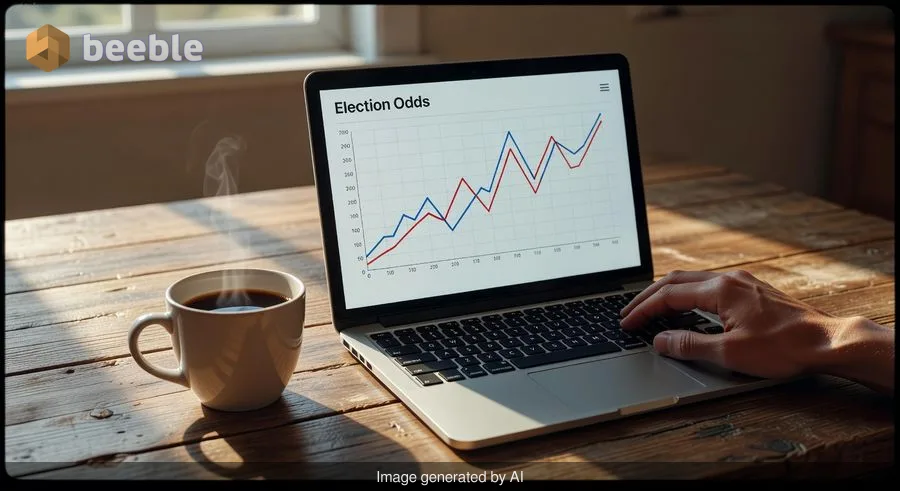
Despite the endless hype around decentralized finance, the most profound shift in how we interact with information isn't happening in a bank—it’s happening in a digital arena where you can trade the probability of a Fed rate cut as easily as a pair of sneakers. For years, prediction markets were dismissed as niche corners of the internet for political junkies and math nerds. However, recent data suggests a systemic transformation. These platforms have evolved from simple betting parlors into robust financial ecosystems that mirror the behavior of traditional stock brokerages.
Looking at the big picture, we are witnessing the birth of a new asset class. On platforms like Polymarket and Kalshi, the total volume has surged past $154 billion. But the real story isn't just the size of the pot; it’s who is playing and how they are moving their chips. When we look under the hood of the on-chain data, we see a pattern that looks remarkably like a Monday morning on Wall Street.
The Retail Revolution in Micro-Bets
Historically, financial markets were the playground of institutions, while "betting" was for the masses. That line is blurring. Today, over 80% of prediction market users are trading with less than $500. This isn't the behavior of a high-stakes whale; it is the fingerprint of the retail trader.
In simple terms, these users are treating prediction contracts like fractional shares of a company. Instead of betting $1,000 on a single outcome and walking away, they are managing small portfolios. This democratization of market access means that an average person can hedge against real-world risks—like a spike in gas prices or a shift in trade policy—without needing a sophisticated brokerage account. It turns the global economy into a tangible experience where even a $50 position feels like a meaningful stake in the future.
From One-Off Bets to Active Trading
One of the most striking industry statistics is the frequency of interaction. The average user on these platforms now executes roughly 25 trades per day. To put it another way, people aren't just placing a bet on who will win an election and waiting for the result; they are day-trading the news.
Think of the stock market as a global mood ring, reacting emotionally to every headline. Prediction markets operate similarly. If a major economic report drops at 9:00 AM, the price of a "recession in 2026" contract fluctuates instantly. Users buy the dips and sell the rips, treating the contract as a volatile asset rather than a static ticket. This constant rotation of capital is evidenced by a 0.71 volume-to-open-interest ratio, a technical way of saying that the money in the system is constantly moving, much like it does in a liquid stock market.
The Shift from Sports to "Finance-Adjacent" Verticals
If you walk into a traditional casino, the air is thick with sports talk and games of chance. But on modern prediction platforms, the category mix is shifting toward the interconnected world of macroeconomics and corporate earnings. Crypto and politics now dominate the volume, with "earnings" and "economic indicators" growing rapidly.
| Feature | Traditional Gambling | Modern Prediction Markets |
|---|---|---|
| Primary Driver | Luck / Entertainment | Information / Analysis |
| Asset Behavior | Binary (Win/Loss) | Tradable (Buy/Sell anytime) |
| Core Categories | Sports / Table Games | Politics / Economy / Tech |
| Regulatory Path | State Gaming Commissions | CFTC / Financial Regulators |
| User Intent | Consumption of risk | Hedging and Price Discovery |
This shift is foundational. When Robinhood—the poster child for retail stock trading—integrated a "Predictions Hub" via Kalshi, it sent a clear signal: predicting the future is now a financial product. For the average user, this means your brokerage app might soon treat a contract on the Consumer Price Index (CPI) with the same weight as a share of Apple stock.
Why This Matters for Your Wallet
Practically speaking, the rise of these markets provides something the world has lacked: a real-time, transparent ledger of what people actually believe will happen, backed by their own money. While polls can be biased and pundits can be wrong, a market price is a cold, hard reflection of collective wisdom.
For the consumer, this offers a unique tool for financial literacy. If you’re worried about inflation affecting your mortgage, you can look at the prediction market to see the "wisdom of the crowd" in real-time. It’s a streamlined way to digest complex global events without wading through hours of cable news. However, this volatility also brings risks. The ease of trading 25 times a day can lead to the same pitfalls as impulsive stock trading—over-leveraging and emotional decision-making.
The Bottom Line: A New Way to See the World
Ultimately, prediction markets are becoming the invisible backbone of how we price uncertainty. They are no longer just about who wins a game; they are about how we value information in an increasingly unpredictable world. As these platforms become more user-friendly and integrated into our daily financial apps, the distinction between "investing" and "predicting" will likely vanish entirely.
As a result, we should shift our perspective. Instead of viewing these platforms as digital casinos, we should see them as decentralized laboratories for price discovery. They allow us to see the world not as a series of random events, but as a set of probabilities we can navigate, trade, and ultimately, understand.
Sources
- Polymarket On-Chain Data Reports (March 2026)
- CFTC Regulatory Filings for Event Contracts
- Kalshi Platform Volume and User Demographics Study
- Robinhood Predictions Hub Integration Announcement
- Blockchain Research Institute: The Evolution of Decentralized Oracles



See you on the other side.
Our end-to-end encrypted email and cloud storage solution provides the most powerful means of secure data exchange, ensuring the safety and privacy of your data.
/ Create a free account
