


The new rules of the road for your digital footprint in Poland

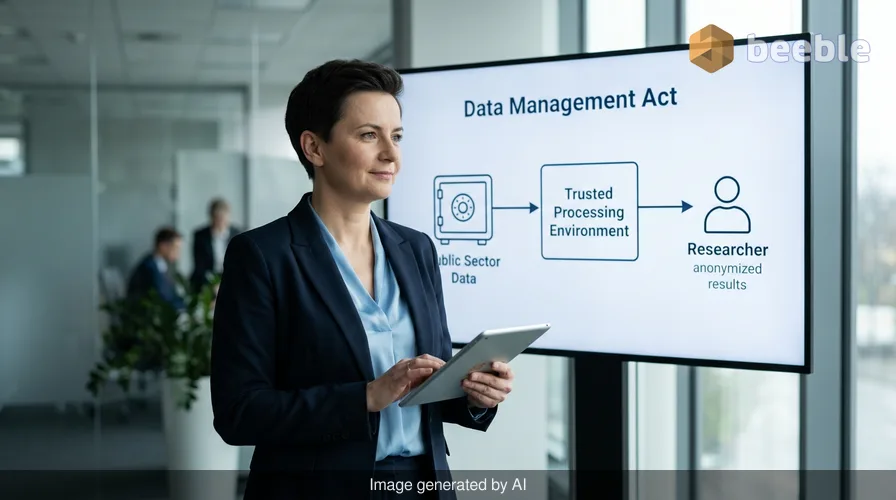
A medical researcher in Krakow needs thousands of anonymized health records to train an algorithm that detects early-stage lung cancer. For years, those records sat behind a wall of bureaucratic red tape and conflicting privacy rules. The data was there, but the mechanism to share it safely was missing. On July 23, 2026, the landscape of the Polish digital economy shifted. The Data Management Act entered into force, serving as the official implementation of the European Union’s Data Governance Act. This law provides the blueprint for how information moves between the government, private companies, and the public.
Most people think of data as a static list of names and numbers stored on a server. In reality, data is the fuel for modern innovation. However, fuel is dangerous if the pipes are leaky. The Data Management Act creates a sophisticated plumbing system for the digital age. It ensures that data flows to the people who can use it for the public good while keeping the individual’s identity under lock and key. This is a significant move for a country that is rapidly becoming a central hub for European technology and software development.
Opening the vault of public sector information
The Polish government holds a massive volume of information. This includes everything from real-time traffic patterns and weather statistics to anonymized medical trends and commercial registries. Under previous laws, much of this was either fully public or completely off-limits. There was no middle ground for data that contained sensitive information like trade secrets or intellectual property. The Data Management Act changes this dynamic by creating a framework for the reuse of protected public sector data.
Public entities are now required to facilitate the reuse of this information whenever possible. This does not mean your private medical history is suddenly for sale. Instead, the law mandates strict technical safeguards. If a university wants to study urban planning using mobility data from a state-owned transport company, the government must provide a secure environment for that analysis. The data stays on the government’s terms, but the insights move into the hands of researchers. This approach treats data as a national asset that should benefit society rather than gathering dust in a digital basement.
The rise of the neutral data broker
One of the most innovative parts of this law is the creation of data intermediation services. In the past, if a company wanted to share data with another business, they often relied on large tech platforms that acted as both the player and the referee. These platforms frequently harvested the data for their own profit. The new law introduces a formal system for trusted, neutral middlemen. These brokers do not use the data for their own ends. Their only job is to facilitate the exchange between the person who has the data and the person who needs it.
Think of these brokers as digital escrow agents. They provide a safe space where a small business can share its logistics data with a shipping provider without worrying that the provider will steal its client list. To operate in Poland, these services must register with the government and prove their neutrality. They cannot sell the data to advertisers or use it to develop their own competing products. This neutrality is the foundation of trust in a digital market where many users feel exploited by big tech firms.
Giving back through data altruism
Many people are willing to share their personal information if they know it will help solve a major problem. This concept, known as data altruism, allows individuals and companies to donate their data for goals of general interest, such as improving public health or fighting climate change. The Data Management Act creates a formal structure for organizations that want to collect this donated data. These organizations must operate on a non-profit basis and meet high standards of transparency.
To prevent scammers from posing as charities, the President of the Personal Data Protection Office (UODO) maintains a national register of recognized data altruism organizations. If you decide to donate your fitness tracker data to a heart disease study, you can check this register to ensure the organization is legitimate. This system gives citizens a way to contribute to scientific progress without sacrificing their privacy or falling victim to data harvesting schemes. It turns personal information into a tool for the common good.
The watchful eye of the regulator
A law is only as strong as its enforcement. In Poland, the President of the Personal Data Protection Office (UODO) takes on the role of the primary supervisor for these new digital services. This office is already well-known for enforcing the GDPR, and its new mandate covers the oversight of data brokers and altruism organizations. UODO has the power to conduct audits, request documentation, and monitor how these entities handle the vast amounts of information passing through their systems.
If an organization fails to follow the rules, the consequences are severe. The Act establishes a penalty system with fines reaching up to 2 million PLN for the most serious violations. These fines apply to entities that fail to register properly, breach their neutrality obligations, or mismanage the data they are supposed to protect. For a medium-sized enterprise, a fine of this magnitude is a significant deterrent. This high ceiling for penalties signals that the Polish government is serious about maintaining the integrity of the data sharing ecosystem.
How this affects the average citizen
While much of this law focuses on businesses and government agencies, the impact on the average citizen is direct. You may notice more options to share your data for causes you care about through certified altruism platforms. You might also find that local government services become more efficient as departments begin to share information more effectively. For example, your city might use shared data to optimize bus routes in real-time, reducing your morning commute.
From a legal standpoint, you gain more control over who uses your information and for what purpose. The law requires that data sharing remains transparent. You are no longer just a passive source of information; you are a participant in a regulated system. If a company claims to be a neutral broker but starts using your data for targeted ads, they are now in violation of a specific Polish statute, giving you clearer grounds for a complaint to UODO.
| Feature | Previous State | Under Data Management Act |
|---|---|---|
| Protected Public Data | Mostly inaccessible due to privacy risks. | Accessible via secure, controlled environments. |
| Data Middlemen | Unregulated big tech platforms. | Regulated, neutral data intermediation services. |
| Data Donations | Informal and often lacked transparency. | Formal "Data Altruism" with UODO registration. |
| Maximum Fine | General GDPR penalties. | Specific fines up to 2 million PLN. |
| Oversight | Fragmented across agencies. | Centralized under the President of UODO. |
Protecting your rights in the new framework
As this Act becomes part of daily life in Poland, it is important to stay informed about who is handling your information. The law acts as a shield against the unauthorized exploitation of your digital identity. However, a shield is most effective when you know how to hold it. You should always verify the credentials of any organization asking for your data under the guise of altruism or intermediation.
If you believe a company is misrepresenting itself as a neutral data broker, you have the right to file a formal report with UODO. Documentation is your best friend in these scenarios. Keep records of the consents you have given and the privacy policies you have agreed to. The goal of this law is to make data work for everyone, but that requires active participation from citizens who value their digital sovereignty.
Practical steps for moving forward
To navigate this new legal environment effectively, consider the following actions:
- Check the UODO register before participating in a data altruism program to ensure the organization is officially recognized.
- Review the terms of service for any new apps that claim to act as data brokers or intermediaries between you and other services.
- Request information from public entities if you are a researcher or small business owner who needs access to specific datasets for innovation.
- Monitor official UODO announcements for updates on how the 2 million PLN penalty framework is being applied to local businesses.
- Maintain a log of the data permissions you grant to third-party services to ensure you can revoke them if the service changes its practices.
Ultimately, the Data Management Act is about building a bridge between privacy and progress. It acknowledges that data is a powerful tool that, when handled with care, can solve complex societal problems. By setting clear rules and appointing a strong watchdog, Poland is attempting to ensure that this tool remains in the service of the people rather than at their expense.
Sources:
Data Management Act (Ustawa o zarządzaniu danymi) of 2026
EU Data Governance Act (Regulation 2022/868)
Official Statements from the President of the Personal Data Protection Office (UODO)
Polish Ministry of Digital Affairs Guidelines on Data Sharing
Disclaimer: This article is for informational and educational purposes only and does not constitute formal legal advice. Please consult a qualified attorney in your jurisdiction for specific legal issues regarding data protection or compliance.



See you on the other side.
Our end-to-end encrypted email and cloud storage solution provides the most powerful means of secure data exchange, ensuring the safety and privacy of your data.
/ Create a free account
