


The New Stage: Why AI Labs Are Recruiting Improv Actors to Teach Empathy

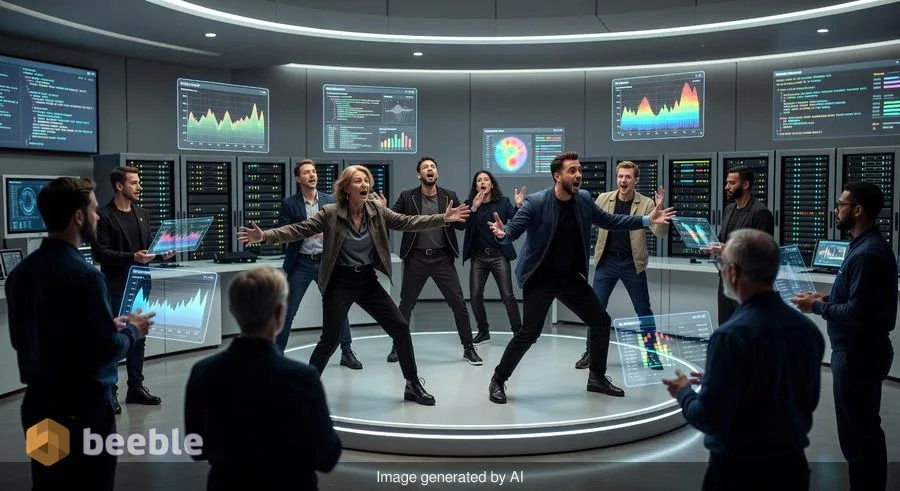
For decades, the path for a struggling improv actor was predictable: late-night sets in basement theaters, the occasional commercial audition, and perhaps a side gig in hospitality. But by 2026, a new and unlikely patron has emerged for the dramatic arts: the Silicon Valley AI lab.
As artificial intelligence moves beyond simple text generation and into the realm of sophisticated, multimodal companionship, the industry has hit a wall. While models can pass the Bar Exam or write functional Python code, they often struggle with the “human” element—the subtle shifts in tone, the timing of a joke, or the ability to maintain a consistent persona through an emotionally charged conversation. To bridge this gap, companies like Handshake, Scale AI, and Mercor are aggressively recruiting creative professionals to serve as the new architects of digital emotion.
The Problem of the “Jagged” Intelligence
In the tech world, current AI models are often described as having “jagged” capabilities. This means a model might demonstrate the reasoning power of a postgraduate researcher in one moment and the social awareness of a toddler the next. They are brilliant at logic but brittle at nuance.
This jaggedness is particularly evident in emotional intelligence (EQ). An AI might know the dictionary definition of “grief,” but it doesn’t naturally understand how grief affects the cadence of a voice or the choice of metaphors in a long-form conversation. To smooth out these edges, AI labs are moving away from generic data scraping and toward “expert-in-the-loop” training. They no longer just need people to click on pictures of traffic lights; they need experts to demonstrate what it means to be human.
Why Improv Actors Are the Perfect Trainers
Improv actors possess a specific set of skills that are remarkably difficult to program. The core tenet of improv—“Yes, and...”—is essentially a masterclass in context maintenance and collaborative logic.
When a company like Handshake AI posts a listing for creative talent, they aren't looking for someone to read a script. They are looking for people who can:
- Maintain Character Consistency: Staying “in character” over thousands of lines of dialogue is a form of data integrity. If an AI is being trained to act as a supportive therapist or a witty tutor, it needs examples of how that persona reacts to unexpected pivots.
- Navigate Emotional Transitions: Human emotions aren't binary. We move from frustration to humor to resignation in a single breath. Actors can provide the “gold standard” data that shows an AI how these transitions look and sound.
- Handle Edge Cases: Improv is built on the unexpected. By throwing curveballs at a model and then correcting its responses, actors help the AI learn how to recover from social blunders or awkward silences.
The Shift to Specialized Data Labeling
The recruitment of actors is part of a broader trend: the professionalization of the data labeling industry. In the early 2020s, data labeling was often outsourced to low-wage workers performing repetitive tasks. Today, the market has bifurcated. While basic labeling still exists, the high-end market is focused on “Specialized RLHF” (Reinforcement Learning from Human Feedback).
| Industry Specialist | Role in AI Training |
|---|---|
| Software Engineers | Debugging and optimizing model-generated code. |
| Attorneys & Doctors | Fact-checking high-stakes legal and medical advice. |
| Creative Writers | Enhancing narrative flow and stylistic flair. |
| Improv Actors | Refining emotional resonance and persona stability. |
Companies like Scale AI and Mercor have built massive platforms to vet these specialists, ensuring that the data fed into the next generation of models—like OpenAI’s latest iterations—is of the highest possible quality.
The Ethics of “Digital Soul” Harvesting
This trend is not without controversy. Many in the creative community view this as a double-edged sword. On one hand, it provides a well-paying, flexible income stream for artists whose traditional industries are being disrupted by the very technology they are training. On the other, there is a lingering fear that actors are essentially training their own replacements.
If an AI can perfectly mimic the empathy of a human actor, what happens to the demand for voice actors in gaming, or simulated patients in medical training? The industry is currently grappling with where “performance” ends and “data” begins. For now, the demand for human authenticity is so high that labs are willing to pay a premium for it, but the long-term impact on the creative economy remains an open question.
Practical Takeaways for the Creative Professional
If you are a creative professional looking to enter the world of AI training, the landscape is competitive but lucrative. Here is how to navigate it:
- Identify Your Niche: Don't just apply as a “writer.” Highlight specific skills like dialect coaching, character development, or crisis de-escalation.
- Understand the Platforms: Familiarize yourself with specialized agencies like Handshake and Mercor. These are the gatekeepers for the major labs.
- Focus on Quality over Volume: In the world of specialized RLHF, one hour of high-quality, nuanced interaction is worth more than ten hours of generic chatting. Labs are looking for the “edge cases” that the model hasn't seen before.
- Protect Your Rights: Read the fine print on data ownership. In most cases, you are selling the rights to your likeness or performance data permanently to train the model.
As AI continues to evolve, the line between the tech lab and the theater troupe will likely continue to blur. The goal is no longer just to build a machine that thinks, but to build one that feels—or at least knows how to act like it does.



See you on the other side.
Our end-to-end encrypted email and cloud storage solution provides the most powerful means of secure data exchange, ensuring the safety and privacy of your data.
/ Create a free account
