


The open financial system that remains too expensive to learn

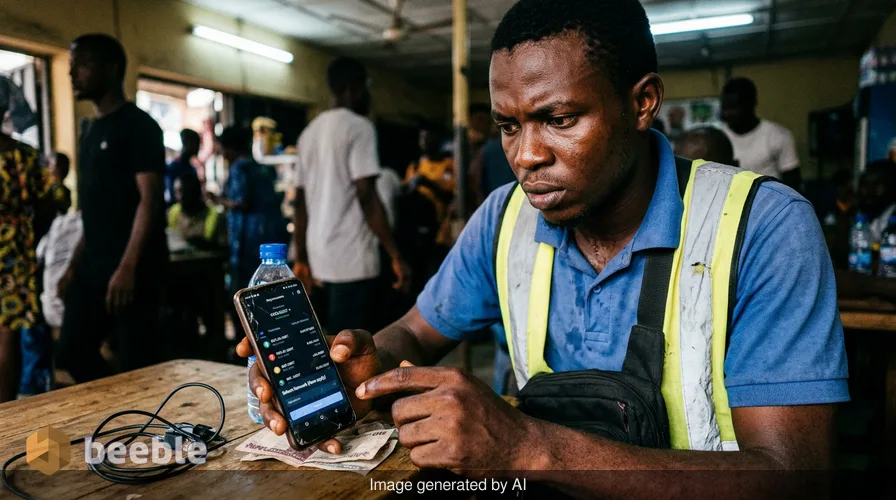
A courier in Lagos receives a payment in digital dollars for a week of deliveries. The funds arrive in a wallet he barely understands. To pay his rent, he must move these assets across three different networks, pay fees in two different native tokens, and bridge a gap between a decentralized protocol and a local exchange. One wrong click on a network selection screen and his entire weekly wage vanishes into the void of the blockchain. This is the reality for millions of users in Sub-Saharan Africa, where crypto is a necessity for survival rather than a speculative hobby.
Web3 promises a world where every individual holds the keys to their own vault, bypasses the gatekeepers of legacy banks, and moves value across borders with a simple click. This vision of total sovereignty assumes a level of technical perfection that rarely exists in practice, requires a mastery of fragmented protocols, and relies on the user to absorb every cost of a failed transaction. The industry presents a glass bank vault where the money is visible to all, but the lock is so complex that many people break their keys in the attempt to open it. Access is permissionless, but safety is currently a luxury for the wealthy.
The survival economy of digital assets
Financial systems are rarely built for the people who need them most. In traditional markets, inflation acts as an invisible leak in the wallet of the average saver. When local currencies lose value, ordinary people seek alternatives to preserve their purchasing power. Chainalysis reports that Sub-Saharan Africa recorded $205.7 billion in on-chain value between July 2024 and June 2025. Nigeria alone accounted for $92.1 billion of that total. These figures represent a 51.7% growth over the previous year.
This growth is not a sign of widespread tech enthusiasm. It is a symptom of economic pressure. In regions where inflation is rampant and foreign currency is restricted, stablecoins become a lifeline. People use these assets to pay for cross-border trade, send remittances home, and shield their savings from devaluing local tenders. For these users, the volatility of a decentralized network is often a lower risk than the predictable decline of their national bank account. They are not looking for a revolution; they are looking for a functional tool to store the value of their labor.
The concept of the error budget
Every person who interacts with a financial product operates within an error budget. This is the specific amount of money a user can lose while learning the system before the cost of usage exceeds the benefit of the service. A wealthy trader moving $10,000 might see a $25 gas fee or a failed bridge transaction as a minor annoyance. The loss is less than 0.3% of the total capital. The error budget is large enough to absorb the friction of a complex interface.
Zooming out to a retail user in an emerging market reveals a different math. A $25 mistake on a $100 transfer represents a quarter of the total value. When fees are high and mistakes are irreversible, the cost of learning how to use the system becomes a barrier to entry. Blockchain protocols are blind to the financial status of the user. They charge the same price for a transaction regardless of whether the sender is a billionaire or a student. This fixed-cost structure creates a regressive tax on the poor. The less capital a person has, the smaller their error budget is.
Why user error is actually product failure
Pauline Shangett of ChangeNOW argues that the industry often blames the client for mistakes that are actually design flaws. If thousands of users select the wrong network for a transfer, the problem is the interface. The current Web3 experience often feels like a digital wild west where the user is responsible for building their own fences. A person must understand gas tokens, wallet permissions, slippage, and finality just to complete a basic payment. This redirects the complexity of banking from the institution to the individual.
When a mistake happens once, it is an accident. When the same mistake happens to thousands of people, it is data. Developers have long treated user errors as a sign that the user needs more education. They suggest reading whitepapers or watching tutorials. In reality, a financial product should be intuitive enough to prevent predictable failures. A self-custodial wallet can identify when a user is about to send assets to an incompatible chain. It can simulate a transaction to show the final amount after fees. It can warn the user when a fee is disproportionate to the transaction size. Responsibility for assets should not imply a total lack of assistance from the software.
The illusion of choice in self custody
Self-custody is the cornerstone of the crypto movement. It offers a way to own money without a bank. Paradoxically, the complexity of managing private keys and network bridges often pushes users back toward centralized exchanges. People choose convenience and safety over true ownership because the risk of losing everything to a single typo is too high. The industry presents a false choice: either give up control to a centralized platform or manage every technical detail alone.
This gap is where the next stage of development must occur. The goal for platforms like ChangeNOW is to build a super app that handles the background infrastructure without taking away the user's keys. A user should be able to exchange, store, and send assets without knowing the technical specifications of the bridge or the specific gas requirements of a layer-2 network. The product should act as a guide through the glass bank vault. It provides the tools to unlock the money without requiring the user to become a locksmith.
Financial inclusion beyond the download
True financial inclusion is more than just providing a download link for a wallet. It requires a system where the cost of participation is predictable and the risks are manageable. If the barrier to entry is a series of expensive lessons, the system is not inclusive; it is just open to those who can pay for their mistakes. The current Web3 infrastructure functions like a global mood ring, reacting to the needs of different markets in ways the creators never intended.
In Nigeria and South Africa, retail adoption is driven by institutional failure. When the traditional system breaks, people find a way to route around it. However, a parallel financial system that is only safe for the tech-savvy and the wealthy will eventually replicate the same inequalities of the legacy banks. The focus must shift from adding more features to reducing the friction of existing ones. Every unnecessary technical decision forced upon a user is a point of failure that the most vulnerable users cannot afford.
Building for the next billion
The next billion users of digital assets will not be crypto enthusiasts. they will be ordinary people trying to navigate a volatile global economy. They will be parents sending money to children in other countries and small business owners trying to source inventory from abroad. These users do not care about the consensus mechanism of a blockchain or the intricacies of a smart contract. They care about whether their money arrives safely and how much it costs to get it there.
Web3 has already proven that it can move billions of dollars across the globe without a central bank. The technical foundation is resilient and transparent. The next priority is to make this infrastructure usable for the person with a $100 error budget. Financial freedom is not a reality if the price of admission is an expensive mistake. The industry succeeds when an ordinary person can manage their wealth with the same confidence as a professional trader.
Food for thought
Consider how much of your own financial stress comes from the fear of making a technical mistake. If a banking app makes it easy to send money, it is because the bank assumes the risk of the transaction. In crypto, you are the bank, which means you also own the risk. Reflect on whether your current digital wallet helps you manage that risk or simply gives you a list of buttons to click. The most valuable feature a financial tool can offer is not a high interest rate, but the peace of mind that comes from knowing your money will not disappear because of a network mismatch.
Sources:
- Chainalysis: 2025 Geography of Cryptocurrency Report.
- ChangeNOW: Product data and executive commentary on user error.
- World Bank: Reports on Sub-Saharan African inflation and remittances.
- Central Bank of Nigeria: Data on foreign exchange restrictions and retail payment trends.



See you on the other side.
Our end-to-end encrypted email and cloud storage solution provides the most powerful means of secure data exchange, ensuring the safety and privacy of your data.
/ Create a free account
