


The paradox of the digital minor: protected by law yet powerless in practice

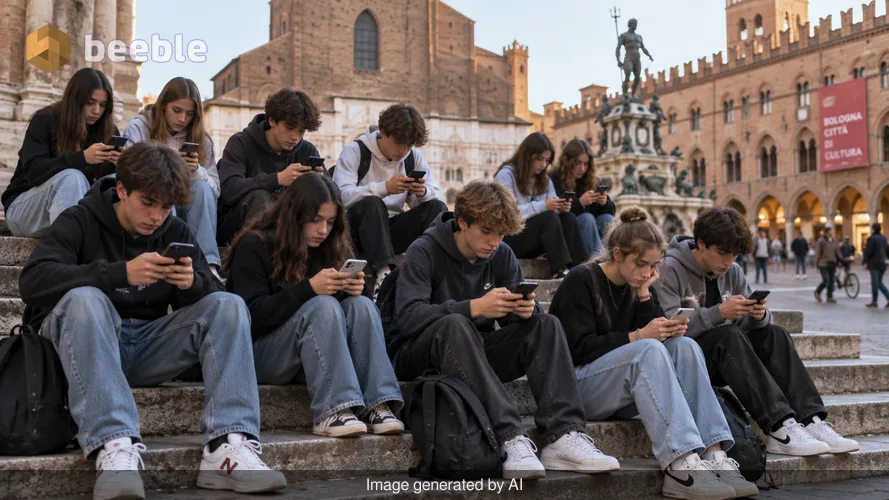
A group of fourteen-year-olds sat on the stone steps of a piazza in Bologna last Thursday. They occupied the same physical space for twenty minutes, yet they did not exchange a single spoken word. Each teenager was hunched over a glowing rectangle, their thumbs moving with a rhythmic, systemic precision that suggested a deep immersion in separate worlds. Culturally speaking, this is the modern archipelago: a collection of individuals who live in dense proximity but remain completely atomized by their screens. The digital feed functions as a hall of mirrors, reflecting their specific biases and interests back to them while the person sitting two feet away remains a stranger. This scene is a mundane reality in 2026, but it is also the visceral evidence of a massive sociological shift that the European Union is currently attempting to address.
Historically, the classroom was the primary site for the creation of conscious citizens; today, it is becoming the frontline for the protection of young consumers. In the 1990s, school curricula prioritized the physical safety of the neighborhood; currently, they must navigate the invisible architecture of the algorithm. The shift from physical to digital presence has happened with a speed that left traditional education systems in a state of paralysis. Consequently, the debate surrounding consumer education has reached the halls of the European Parliament in Brussels. On October 14, 2026, experts and policymakers will gather to discuss whether the current approach to digital safety is sufficient or if we are merely using legislation as a cultural anesthetic to numb our anxiety about an uncertain future.
The limitation of digital borders
The recent State of the Union address delivered by the Commission President on September 16, 2026, introduced a significant policy direction. The upcoming EU KIDS legislation proposes strict rules for minors online, including a ban on social media for children under the age of 13. On a macro level, this represents a transition toward protective restriction. Paradoxically, a ban does not address the underlying lack of literacy required to navigate the digital world once the restriction is lifted. In everyday terms, a child who is forbidden from using a platform until their thirteenth birthday does not magically acquire the critical thinking skills needed to handle algorithmic manipulation the moment they turn fourteen.
Moving beyond restrictions is the central theme of the event organized by Cittadinanzattiva APS. Hosted by MEP Denis Nesci, the meeting aims to show that consumer literacy must be a structured part of school curricula. The argument is simple: protection through law is transient, but protection through education is resilient. Without a shift in how we teach young people to exist online, we risk raising a generation that is legally shielded but intellectually vulnerable. The digital environment is not a separate reality; it is a pervasive layer of our daily routines that dictates how we buy, how we vote, and how we perceive ourselves.
Mapping the habitus of the young consumer
The CoRe - Consumer (Re)Generation project provides a detailed look at the current state of digital literacy in European schools. This 18-month journey involved 16 schools and over 600 students across Italy, Greece, and Romania. The pilot experience revealed a profound gap between technical proficiency and critical awareness. Students are adept at the mechanics of scrolling and posting, yet they are often opaque to the commercial interests that drive these actions. Bourdieu would call this a shift in the habitus: the ingrained dispositions and habits that young people develop within the digital ecosystem.
Behind the scenes of this trend, the project gathered data from 583 parents and 36 teachers. The results demonstrate that the digital divide is no longer about access to hardware. It is about the ability to decode the systemic pressures of the attention economy. A fast-food diet of digital communication is quick and accessible, but it lacks the deep emotional and intellectual nutrition required for healthy development. When a student cannot distinguish between a genuine recommendation and a paid influencer’s script, they are not a citizen; they are a target. The CoRe project argues that schools must provide the tools to dismantle these digital illusions.
When terms and conditions become a foreign language
Linguistically speaking, the digital world is an archaeological site of evolving power dynamics. The language of the internet is a complex dialect of legal terms and marketing jargon designed to be accepted rather than understood. To put it another way, the "Terms and Conditions" page is a symbolic barrier that reinforces the power of the platform over the user. Most adults click "accept" without reading a single word. For a child, this habit becomes a foundational part of their digital identity. They learn early that their data is a currency they must surrender to participate in social life.
Integrating concepts like data management and the countering of unfair commercial practices into school curricula is a structural necessity. Through this lens, consumer education is a form of philological training. It teaches students to analyze the discourse of the digital world and to understand the semantics of their own rights. In practice, this means teaching a thirteen-year-old that their privacy is not a commodity to be traded for a filter or a game skin. The upcoming meeting in Brussels will present concrete policy recommendations to make this literacy a mandatory part of the European educational experience.
From passive users to resilient citizens
The event on October 14 features a diverse delegation, including representatives from the European Commission’s DG CNECT and DG JUST. The presence of the European Consumer Union and industry players like Iliad indicates that the problem is multifaceted. On an individual level, the goal is empowerment. On a societal standpoint, the goal is the preservation of a sustainable internal market. A market cannot function if one side of the transaction is systematically disadvantaged by a lack of information.
Ultimately, the shift from protection to empowerment requires a new social contract. The proposal brought to the European Parliament is the result of extensive transnational exchange, including a major webinar held on September 23, 2026. Experts from across Europe agreed that integrating sustainability and consumer rights into schools is the only way to ensure future generations are active citizens. The current model of digital interaction is often a theater stage where young people perform social identities without realizing the script is being written by an algorithm. Education provides the means to step off the stage and view the production with a critical eye.
Food for thought
As we look toward the implementation of the EU KIDS legislation and the recommendations from the CoRe project, it is worth reflecting on our own digital habits. We often complain about the atomization of society while we contribute to it with every mindless scroll. Reclaiming the classroom as a space for consumer education is a profound step, but it is only the beginning. We should ask ourselves:
- When was the last time we read the fine print of a digital service we use every day?
- Do we treat our personal data as a resilient asset or as a transient necessity for convenience?
- How can we model critical digital behavior for the younger members of our own archipelago?
True citizenship in the digital age requires a visceral understanding that our choices have systemic consequences. The work being done in Brussels is a reminder that the most effective anchor in a world of liquid modernity is a well-informed mind. Observe your own daily routine tomorrow. Notice the moments where you are a citizen and the moments where you are merely a user. The difference between those two states is where the future of European education lies.
Sources
- Bauman, Z. (2000). Liquid Modernity. Polity Press.
- Bourdieu, P. (1977). Outline of a Theory of Practice. Cambridge University Press.
- Cittadinanzattiva APS. (2026). CoRe - Consumer (Re)Generation Project Results.
- European Commission. (2026). State of the Union Address by President von der Leyen.
- European Parliament. (2026). Event Agenda: Consumer Education in School Curricula.



See you on the other side.
Our end-to-end encrypted email and cloud storage solution provides the most powerful means of secure data exchange, ensuring the safety and privacy of your data.
/ Create a free account
