


The Patent Pulse: How Europe’s New Technology Dashboard Maps Our Digital Future

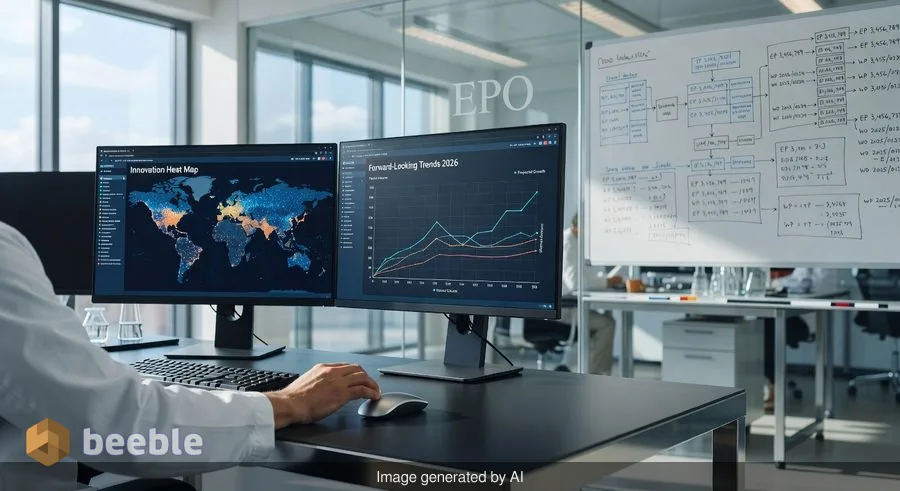
Despite the endless hype surrounding the latest consumer gadget launches, the real trajectory of our technological future is often decided years before a product hits the shelves, buried in the dense, legalistic archives of patent offices. While we wait for the next smartphone or electric vehicle to debut, the blueprints for the world of 2030 are already being filed, categorized, and analyzed.
Recently, the European Patent Office (EPO) unveiled its updated Technology Dashboard in Brussels. This isn’t just a spreadsheet for lawyers; it is a sophisticated, data-driven platform designed to give governments, researchers, and investors a high-definition view of the global innovation race. By aggregating vast datasets of global patent filings, the EPO aims to provide an early warning system for emerging technologies, helping Europe identify where it needs to double down to remain competitive in a volatile global market.
The Invisible Backbone of Progress
To the average person, a patent might seem like a dry piece of intellectual property—a legal hurdle that keeps prices high. However, looking at the big picture, patents are the invisible backbone of modern life. They represent the first tangible evidence of a company’s or a country’s strategic direction. When a firm files a patent for a new solid-state battery or a decentralized AI protocol, they are placing a high-stakes bet on what the world will need five to ten years from now.
Historically, Europe has been a powerhouse of foundational research, but it has often struggled with the transition from the lab to the living room. The Technology Dashboard is an attempt to bridge this gap. By offering a more granular and forward-looking view of innovation trends, it allows policymakers to see where innovation activity is accelerating and, perhaps more importantly, where it is stalling. Essentially, it turns a mountain of legal paperwork into a strategic map for the continent’s economic survival.
Under the Hood: Data as a Leading Indicator
Under the hood, the Technology Dashboard functions as a predictive engine. Most economic indicators are lagging; they tell us what happened last quarter or last year. Patent data, conversely, is a leading indicator. It captures the moment a researcher discovers a scalable solution to a systemic problem.
As EPO Chief Patent Research and Policy Officer Gilles Requena noted, this platform creates a vital link between administrative patenting and actionable intelligence. For a researcher in a lab, this data can highlight the 'sweet spot' for investment. For an investor, it provides a transparent look at which sectors are becoming overcrowded and which remain untapped. It’s a way of cutting through the corporate PR and seeing where the actual R&D money is flowing.
From a Consumer Standpoint: Why Should You Care?
It is easy to dismiss this as high-level bureaucracy, but from a consumer standpoint, these patent trends eventually dictate your daily reality. Think back to the early 2010s: the surge in patents related to lithium-ion chemistry and sensor miniaturization is exactly why you can now buy a resilient, high-performance drone for a few hundred dollars or drive an EV that doesn't feel like a golf cart.
When the EPO identifies a spike in 'green' hydrogen patents or decentralized energy grid tech, it is signaling a future shift in your utility bills and your carbon footprint. In simple terms, the Dashboard tells us which industries will be hiring in five years and which products will become affordable commodities. It’s the difference between being a passive observer of tech shifts and understanding the cyclical nature of the market before it hits your wallet.
The Innovation Race and the Global Relay Race
We often think of global trade as a competition, but it is more like a global relay race where one dropped baton—a missed technological shift—can delay an entire region for a decade. Europe is currently in a fierce sprint against North America and East Asia, particularly in fields like semiconductors and biotechnology.
The Technology Dashboard aims to ensure Europe doesn't drop the baton. By identifying disruptive technologies early, the EU can direct funding toward foundational infrastructure rather than playing catch-up. For the average user, this means more robust local industries and, ideally, a more streamlined path for European-made tech to reach the global market.
What This Means for You: Practical Foresight
While you might not be logging into the EPO Dashboard every morning, its existence marks a shift toward a more analytical, less reactive approach to technology. For the pragmatic observer, there are a few key takeaways:
- Watch the Trends, Not the Hype: If you see a sector like 'circular economy tech' trending on the dashboard, expect to see your favorite brands changing their packaging and repairability policies in the near future.
- Career Resilience: For those in the workforce, patent trends are a robust guide for upskilling. If patents in automation are skyrocketing, it’s a clear signal that those manual processes are being phased out.
- Investment Clarity: For the retail investor, this data provides a way to verify if a company’s 'innovative' claims are backed by tangible intellectual property or just clever marketing.
Ultimately, the EPO Technology Dashboard is an attempt to make the opaque world of global R&D more intuitive. It reminds us that while the future is often unpredictable, it is rarely a surprise to those who know where to look. By tracking the pulse of patents today, we can better prepare for the systemic shifts of tomorrow.
Sources
- European Patent Office (EPO) Official Press Release on the Technology Dashboard.
- Euronews Event Report: From research to global impact: how Europe can win the competitiveness race.
- EPO Annual Patent Index 2025/2026 Data Summary.
- Public statements by Gilles Requena, EPO Chief Patent Research and Policy Officer.



See you on the other side.
Our end-to-end encrypted email and cloud storage solution provides the most powerful means of secure data exchange, ensuring the safety and privacy of your data.
/ Create a free account
