


The quiet choice to protect instead of ban and what it means for the digital generation

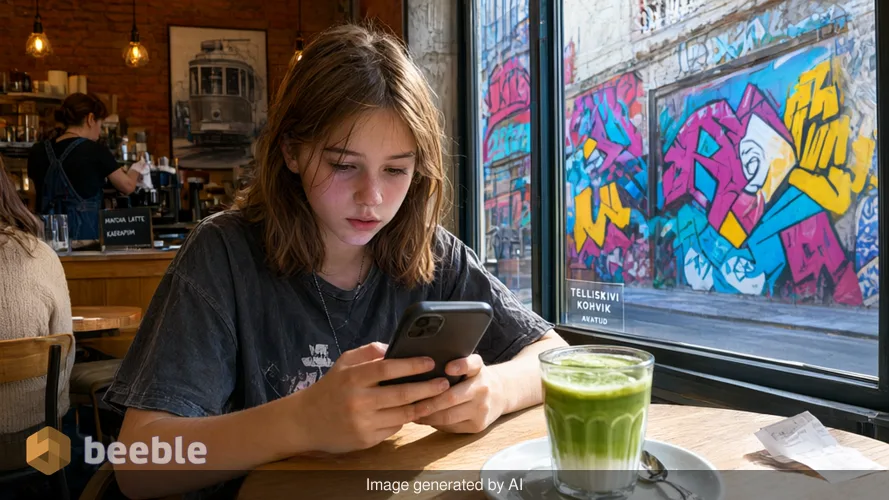
A fourteen-year-old girl sits in a sunlit cafe on Telliskivi Street in Tallinn. Her thumb moves in a rhythmic, visceral swipe across the glass of her phone every three seconds. She does not look at her matcha latte or the vibrant graffiti on the wall outside. Her focus is fixed on an ephemeral stream of short-form videos that disappear as quickly as they appear. This is the atomized reality of the modern afternoon, where the physical world remains static while the digital habitus is in constant, flickering motion.
Behind this individual moment is a systemic shift in how a nation views the well-being of its youngest citizens. On Monday, Estonia’s Prime Minister Kristen Michal formally moved to address this phenomenon. Rather than following the recent trend of total social media bans seen in parts of Australia or proposed in various European regions, Estonia is charting a different course. The state has convened an advisory board of ten experts to find evidence-based ways to mitigate the negative impact of digital environments on youth mental health.
The expert path over the blunt instrument
The composition of this board reflects a multifaceted approach to a complex problem. The group includes a vice-chairman of the Estonian National Youth Council, a neuroscientist, and a clinical psychologist. Their mandate is to provide recommendations for the state, parents, and young people by next year. This is a deliberate rejection of the reactive, broad-brush legislation that often characterizes modern political responses to technology.
Prime Minister Michal is clear about his stance. He believes that finding solutions that help young people is more important than imposing bans. This perspective recognizes that digital spaces are no longer optional additions to life. They are the infrastructure of modern social existence. In everyday terms, a ban for a teenager in 2026 is not just a restriction on a toy; it is an eviction from their primary social square.
Andra Siibak, a professor of media studies at the University of Tartu and the newly elected chair of the board, emphasizes the need for cooperation. The goal is to produce recommendations that are science-based and applicable in the eyes of the target group. Culturally speaking, this move acknowledges the agency of young people rather than treating them as passive victims of an algorithmic machine.
The data behind the digital anxiety
The impetus for this action is rooted in recent research that paints a sobering picture of youth well-being. According to the 2025 EU Kids Online Estonia study from the University of Tartu, students are encountering disturbing content and sexually explicit messages with increasing frequency. There is a direct link between online bullying, exposure to harmful content, and the overall mental health of children.
Data from the National Institute for Health Development reveals that problematic digital use is rising. In 2022, 8% of 11- to 15-year-olds reported symptoms associated with social media addiction. This is an increase from 6% in 2018. The statistics show that 13-year-old girls are a particularly vulnerable group. Among this demographic, the percentage of those reporting symptoms reached 10%.
Zooming out to a macro level, these numbers reflect a broader European trend. Several countries, including Bulgaria, Denmark, and Spain, are currently debating or implementing restrictions. In the United States, Meta recently reached an $18 billion settlement with 48 states, resulting in new features that lock children out of Instagram and Facebook at midnight. While these corporate shifts are significant, Estonia is looking for a more deeply rooted, local strategy that goes beyond time limits and filters.
Digital communication as a fast-food diet
To put it another way, the current digital environment often functions as a fast-food diet for the mind. It is quick and accessible, but it lacks deep emotional nutrition. The study found that 63% of girls and 47% of boys spend at least two hours a day on social networks. As usage increases with age, the consequences become more visible. Longer use of electronic media for communication is associated with shorter sleep, poorer academic performance, and more frequent depressive episodes.
Linguistically speaking, the discourse around these issues has shifted. We no longer speak of "internet use" as a hobby. We discuss it in terms of systemic health risks and rights. The digital feed has become a hall of mirrors, reflecting and amplifying the anxieties of a generation that has never known a world without a constant, scrolling audience. The fragmented nature of these interactions contributes to a sense of liquid modernity, where relationships and self-image feel transient and unstable.
A strategy of prevention and awareness
The advisory board will focus on four primary pillars. They will identify potential risks to mental health and work on preventing problematic digital use. They will also focus on raising awareness among both children and parents. Finally, they will explore ways to create a digital environment that protects the rights and health of young people.
This is not a simple task. In practice, it requires a deep understanding of how young people use technology as a coping mechanism for the pressures of an uncertain world. The board intends to work directly with youth representatives to ensure that the proposals are realistic. A policy that looks good on paper but ignores the social reality of a fifteen-year-old is destined to fail.
Food for thought
As Estonia begins this work, it offers a moment for reflection on our own digital habits. The move toward expert-led prevention suggests that the solution to digital anxiety is not to hide from the screen, but to change our relationship with it. We might consider the following shifts in perspective:
- How much of our digital time is spent in meaningful discourse versus passive consumption that leaves us feeling hollow?
- Can we reclaim the "third place" in our physical communities to reduce our reliance on digital scrolling for a sense of belonging?
- Do we view technology as a tool for agency, or has it become a default setting that we no longer question?
Ultimately, the Estonian approach treats the digital world as a lived environment that requires careful stewardship. By prioritizing science and youth input over the simplicity of a ban, the state acknowledges that the digital age is here to stay. The goal is to ensure that while young people navigate this complex space, they do so with the resilience and support necessary to protect their mental well-being.
Sources:
- University of Tartu, 2025 EU Kids Online Estonia study.
- National Institute for Health Development, Health Behaviour in School-aged Children study (2022).
- Official Press Release, Office of the Prime Minister of Estonia, September 2026.
- Meta Platform Settlement Reports, 2025-2026.



See you on the other side.
Our end-to-end encrypted email and cloud storage solution provides the most powerful means of secure data exchange, ensuring the safety and privacy of your data.
/ Create a free account
