


The quiet death of the single-purpose app

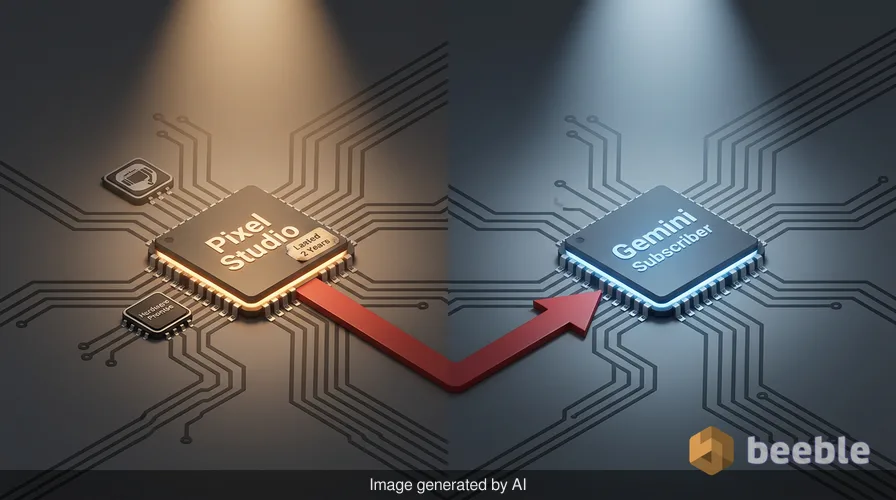
We once sought out discrete icons for our creative whims; we now submit to the single, blinking cursor of a centralized intelligence. Google launched the Pixel 9 with the promise of localized creativity; the company now mandates a connection to the cloud for the simplest of tasks. This shift marks the end of Pixel Studio, an application that lasted less than two years before its integration into the broader Gemini ecosystem. The app was a centerpiece of the 2024 hardware cycle. It gave users a dedicated space to generate images and create custom stickers. Today, that space is a redirection screen. This transition is not an isolated event. It is a calculated move toward a future where specific software tools vanish in favor of a universal AI interface.
Technically speaking, the dissolution of Pixel Studio began months ago. Google stripped the photo editor of its AI tools in a series of quiet updates. The most recent software version completes the process by replacing the entire interface with a prompt to open Gemini. For users who preferred the streamlined nature of a dedicated image generator, the change is a point of digital friction. They no longer have a tool that does one thing well. Instead, they have a general-purpose chatbot that attempts to do everything. This is the new reality of the Google ecosystem. The company builds specialized features to sell hardware, then absorbs those features into its subscription-based AI services once the marketing cycle ends.
The anatomy of an app in transition
Under the hood, Pixel Studio functioned as a bridge between on-device processing and server-side power. When it launched alongside the Pixel 9, it represented a push for "edge AI"—the idea that your phone could handle complex generative tasks without an internet connection. This was a major selling point for the Tensor G4 chip. The app allowed for the rapid creation of stickers and stylized illustrations. It felt like a toy, but it was a showcase for the hardware's architecture. On an individual level, it provided a low-stakes way to experiment with prompt engineering. A user could turn a photo of their cat into a digital asset in seconds. The interface was intuitive because it was limited. It did not try to write emails or summarize meetings. It only made pictures.
Paradoxically, the very simplicity that made Pixel Studio useful also made it redundant in the eyes of corporate strategists. In the current software industry, redundancy is a target for elimination. Google aims to train users to associate all intelligent features with Gemini. Consequently, a standalone app like Pixel Studio becomes a distraction from the brand's primary goal. By shuttering the app, Google forces its user base into a single funnel. The recent update even suggests that users try Nano Banana, a niche alternative for image generation. This recommendation feels like a concession to the fragmented nature of the current AI market. It acknowledges that Gemini may not suit every specific creative need, yet it still removes the primary Google-branded option.
Consolidation and the death of ownership
Zooming out to the industry level, the death of Pixel Studio reveals a broader pattern in how we consume software. Historically, we bought programs that stayed on our hard drives for years. We owned the functionality because the code was static. In contrast, modern mobile software is a fluid service that the developer can retract at any moment. This creates a sense of instability for the average user. You might wake up to find that a tool you used for your small business or hobby has been replaced by a link to a different store page. This is the logical conclusion of the move toward the cloud. When the code lives on a server, the user has no say in the product's lifespan.
From a developer's standpoint, maintaining Pixel Studio was likely a case of increasing technical debt. To keep a specialized app running, a team must update its APIs, patch security vulnerabilities, and ensure compatibility with every new version of Android. When those same features exist within Gemini, the cost of maintaining a second app becomes difficult to justify. Behind the screen, Google is likely reallocating those engineering resources to the Gemini core team. This is a pragmatic business decision, but it results in a more homogenized user experience. The "city infrastructure" of the operating system is being rebuilt. The small, quirky parks are being paved over to make room for a massive, centralized transit hub.
The paradox of the universal interface
In everyday terms, the shift from Pixel Studio to Gemini is a shift from a tool to a conversation. When you used Pixel Studio, you were a designer using a digital paintbrush. When you use Gemini, you are a client giving orders to a digital assistant. This change fundamentally alters the creative process. A dedicated app provides a specific set of boundaries that can actually aid creativity. A universal chatbot provides a blank void. For many users, this lack of structure is a form of cognitive load. You have to remember what the AI is capable of doing, rather than seeing the options laid out in a menu. The interface is cleaner, but the path to the result is more opaque.
This is the overarching trend of 2026. Tech giants are moving away from the "app for that" philosophy that defined the last decade. They are betting that users want a single point of entry for all digital interactions. Paradoxically, this makes our devices feel more complex even as the number of apps decreases. We are no longer managing a library of tools; we are managing a relationship with a single, complex entity. If that entity fails to understand a prompt or changes its terms of service, the user loses access to a wide range of capabilities at once. The walled garden is getting higher, and the gates are getting narrower.
Navigating the Google graveyard
Pixel Studio now joins a long list of projects in the Google graveyard. It sits alongside services like Stadia, Google Reader, and Inbox. Each of these products had a dedicated following and a specific purpose. Each was eventually consumed by a larger, more generic service or simply deleted. For the Pixel 9 owners who bought the phone specifically for its unique AI features, this is a lesson in the fragility of modern hardware promises. A phone is only as good as the software support it receives. When that support is tied to a rapidly evolving corporate strategy, the features you see on the box might not exist by the time you pay off the device.
Ultimately, the closure of Pixel Studio is a reminder to look at software with a more critical eye. We should observe our own digital habits and notice when a tool we enjoy is being pushed toward a centralized platform. Is the new version actually better, or is it just more convenient for the provider? In the case of Pixel Studio, the answer is a mix of both. Gemini is more powerful, but it lacks the charm and focus of the original app. Through this user lens, we see the trade-off of the modern web. We trade specialized, reliable tools for a single, powerful, but unpredictable assistant. We give up the stickers to get the LLM.
Takeaways for the digital citizen
This update is a prompt for us to rethink our relationship with the apps on our home screens. We must recognize that the icons we click are often just temporary interfaces for cloud-based services. To reclaim a sense of control, users might consider exploring open-source alternatives for image generation. These tools are often more clunky than Google's offerings, but they cannot be bricked by a remote server update. They offer a form of digital resilience that proprietary apps lack.
Another point for reflection is the value of specialized software. If you find an app that does one thing perfectly, enjoy it while it lasts, but do not make it the foundation of your workflow. The industry trend is moving toward consolidation. The boutique experience is being replaced by the department store. By understanding the business motives behind these software shifts, we can better navigate the changes without being caught off guard. The death of Pixel Studio is not just a headline about a deleted app. It is a signal of the new direction of the entire software world.
Sources:
9to5Google report on Pixel Studio shutdown
Google Pixel 9 product specifications and launch documentation
Google Gemini service updates and integration notes
Android system update logs for June 2026



See you on the other side.
Our end-to-end encrypted email and cloud storage solution provides the most powerful means of secure data exchange, ensuring the safety and privacy of your data.
/ Create a free account
