


The quiet decline of the boomer bar tab and the new age of moderation

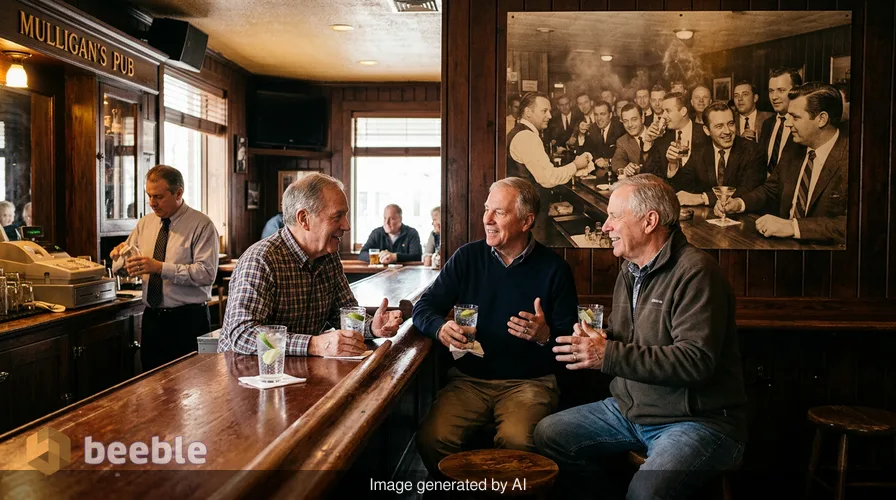
A man in his late sixties sits at a polished mahogany bar in a suburb of Chicago and asks for a club soda with lime. His friends, men who spent the better part of the 1980s navigating corporate hierarchies fueled by three-martini lunches, follow suit. This scene is far from an isolated health kick or a temporary recovery from a heavy holiday season. It is a manifestation of a structural shift in how the most established generation in the West interacts with social ritual. In the 1970s, the neighborhood tavern was a cornerstone of the collective habitus; in 2026, it is a relic of an era that valued social lubrication over long-term wellness.
Recent data from IWSR, the global authority on beverage market research, identifies a surprising demographic leading the charge toward sobriety. While popular discourse often frames Gen Z as the generation of the "sober-curious," the reality is quite different. Seventy-one percent of Baby Boomers—those born between 1946 and 1964—consumed alcohol in the past six months. This is the lowest participation rate of any living adult generation. This figure represents a decline of two percentage points from three years ago. During the same period, 74 percent of Gen Z drinkers at the legal age reported alcohol consumption. The younger cohort is actually catching up to the national adult average of 76 percent. The narrative of youth-led moderation is a facade.
The debunking of the generational myth
For years, marketing executives and social commentators predicted a dry future driven by the youngest consumers. They pointed to the rise of functional beverages and the perceived health consciousness of twenty-somethings. However, the IWSR study of 32,000 people across the 15 largest global markets suggests these assumptions are incorrect. Marten Lodewijks, President of IWSR, confirms that the narrative of Gen Z being the generation of moderation is now conclusively debunked. Young people are re-engaging with drinking as they exit the restrictive years of their late teens. They are entering the workforce and seeking the social validation that historically accompanies the shared glass.
Boomers are moving in the opposite direction. They drink the fewest number of drinks on the fewest occasions, averaging just 2.6 drinks per event. This shift is not a temporary reaction to inflation or the high cost of a bottle of Napa Cabernet. It is a lifestyle choice. The moderation trend is a structural change rather than a cyclical one. High-income earners in Boomer circles are choosing to preserve their health as they enter their 70s and 80s. They are prioritizing cognitive clarity and physical longevity over the ephemeral pleasure of intoxication.
The atomization of the evening ritual
Sociologically speaking, the decline in Boomer drinking reflects a broader trend of urban atomization. In the mid-twentieth century, alcohol was the glue for the social contract. It facilitated the transition from the professional sphere to the private one. Today, the modern home has become a theater for a different kind of performance. Digital communication and streaming services provide the entertainment that once required a trip to the local lounge. The tavern was a "third place" that bridged the gap between work and family life. As this space disappears, the necessity of the social drink fades.
This trend is most visible in the West, where the Boomer generation holds significant wealth and social influence. Paradoxically, the global drinks industry sees growth in emerging markets. In India, participation rates among high-income urban drinkers rose from 67 percent to 77 percent in three years. In China, the rate climbed to 89 percent. These regions are experiencing the rise of a new middle class that views alcohol as a symbolic marker of status and modernity. While the West moderates, the East adopts the rituals the Boomers are currently discarding. Alcohol consumption does not keep pace in Western regions where incomes rise. This is a sign of a deep cultural decoupling of wealth and excess.
The philology of moderation
Linguistically speaking, the word "moderation" has undergone a semantic shift. It no longer implies a simple act of restraint. It is now a badge of identity. In the past, someone who declined a drink was often viewed with suspicion or concern. Now, the refusal of alcohol signifies a nuanced understanding of one's own body. It suggests a person who is in control of their habitus. Boomers are reclaiming this term. They are not abstinent in a clinical sense; they are selective. They choose quality and health over the pervasive social pressure to consume.
This linguistic shift occurs against a backdrop of liquid modernity. Zygmunt Bauman described our era as one where social forms melt and reform rapidly. Our relationship with substances is no different. The rigid traditions of the cocktail hour have evaporated. They are replaced by a fragmented series of personal choices. A Boomer might drink an expensive glass of scotch on a Tuesday but remain completely dry for the rest of the month. The routine is no longer an anchor. It is a transient preference influenced by a desire for systemic health.
Economic consequences of the new sobriety
Global spirits groups like Diageo and Pernod Ricard are feeling the visceral impact of this shift. Their share prices have languished as the demand for traditional spirits softens. The debate within the sector focuses on whether this is a result of economic pressure or a permanent change in human behavior. The data points toward the latter. Even as economies stabilize, the Boomer participation rate remains low. The industry's woes are structural. They are not the result of a temporary dip in discretionary spending.
Consumer behavior now favors a diverse range of non-alcoholic options that provide the same symbolic value as a cocktail. The glass of sparkling water with a garnish of botanical herbs allows the Boomer to participate in the social choreography without the physiological cost. This is a visceral reaction to the aging process. The Boomer generation, which once defined itself through rebellion and excess, is now redefining itself through restraint. They are the true generation of moderation.
Food for thought
This transition invites us to look at our own social habits with a more observant eye. Consider the following questions when you next find yourself in a social setting where alcohol is present:
- How much of your drinking is a result of a genuine desire, and how much is a performance for the benefit of others?
- Does the disappearance of the "third place" in your community make you more or less likely to seek out social drinking?
- In what ways does your current language around health and wellness influence the choices you make at the dinner table?
- Can a social ritual maintain its power if the primary catalyst—the alcohol—is removed from the equation?
A perspective on the evolving social contract
Ultimately, the shift toward moderation among Baby Boomers is a profound reflection of a society in transition. We are moving away from the collective rituals of the twentieth century toward a more atomized, health-centric existence. The Boomer generation is not just growing older; they are pioneering a new way of aging that rejects the standard tropes of decline. They are choosing a life of clarity over the fog of the past. Gen Z may be catching up to the drinking averages of their parents, but they are doing so in a world that increasingly values the sober mind.
We should view this not as a loss of culture, but as the evolution of one. The social contract is being rewritten to prioritize the individual's long-term resilience over the momentary comfort of the group. As we navigate this fragmented social landscape, the choice to abstain or moderate becomes a resonant act of self-determination. The Boomers have always been a generation of change. Their current rejection of the bar tab is their latest, and perhaps most significant, cultural shift.
Sources:
- IWSR Global Database 2024-2026: Beverage Market Analysis and Generational Trends.
- Marten Lodewijks, "The Myth of Gen Z Moderation," Industry Report, 2026.
- Zygmunt Bauman, "Liquid Modernity," 2000 (for sociological framework).
- Pierre Bourdieu, "Distinction: A Social Critique of the Judgement of Taste," 1979 (for concept of habitus).



See you on the other side.
Our end-to-end encrypted email and cloud storage solution provides the most powerful means of secure data exchange, ensuring the safety and privacy of your data.
/ Create a free account
